A Repeat Destination?
Evaluate what's next
After conducting a tour pilot, it's time to pause and reflect. Did the actual outcomes match your expectations? Did it help advance your goals? Were the operations sustainable? This final section will help you assess whether to grow, maintain, or sunset tours.
Case study: Newsberg
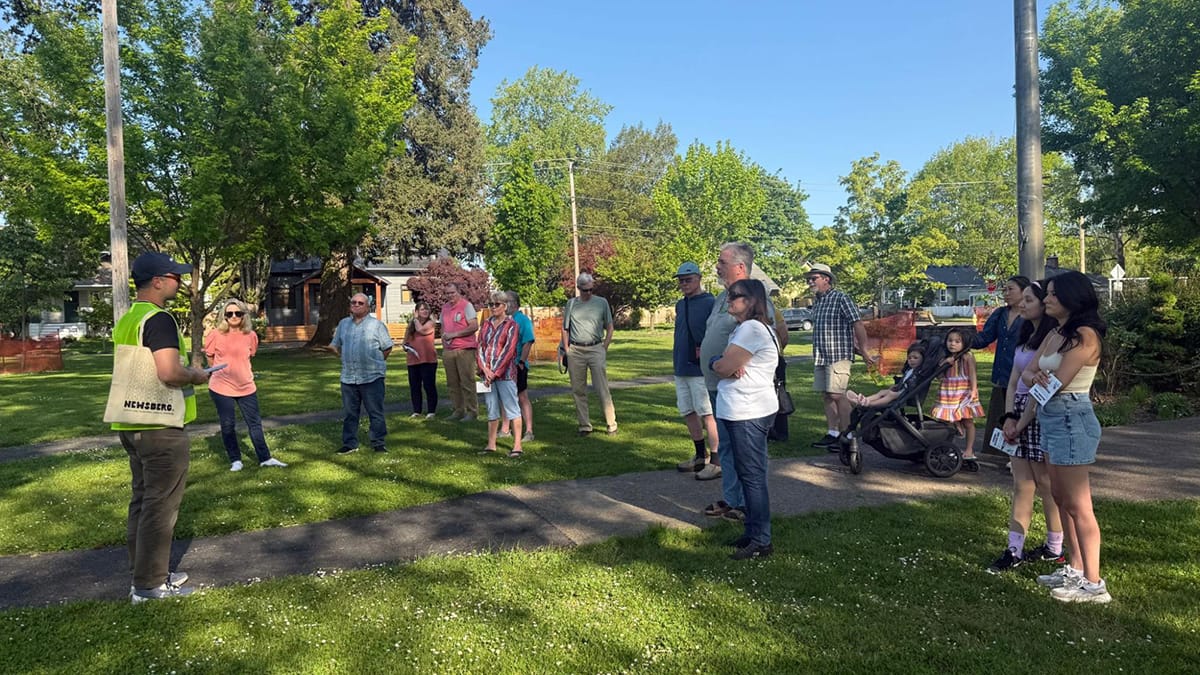
Founded by Branden Andersen, Newsberg is community supported news for Newberg, Oregon which is in the outer reaches of the Portland metropolitan area. Andersen launched Newsberg in 2023 after moving to the Newberg-Dundee area and getting to know the town and its residents through walks.
After learning about Future Tides’ tour pilot in September 2024, Andersen partnered with RJI’s Innovation in Focus program to plan and launch Newsberg’s first walking tour on May 1, 2025.
Andersen said the tour went well but was a bit of a time commitment, especially as a solo operator. He decided to pause on planning more tours for two reasons:
- He wanted to offer tours with some consistency.
- He became a new dad.
“I also realized how much I didn't know and what the people actually wanted from a walking tour, which I found was more historical-related, so to find ways between history and current events,” Andersen said.
Andersen knew some of Newberg’s history, but since he only moved there a few years ago, there’s a lot he doesn’t know. This gap created an opportunity for a new partnership.
The local historical society previously organized walking tours in town, but Andersen said they are no longer active. Instead, he connected with a local historian who used to lead those tours.
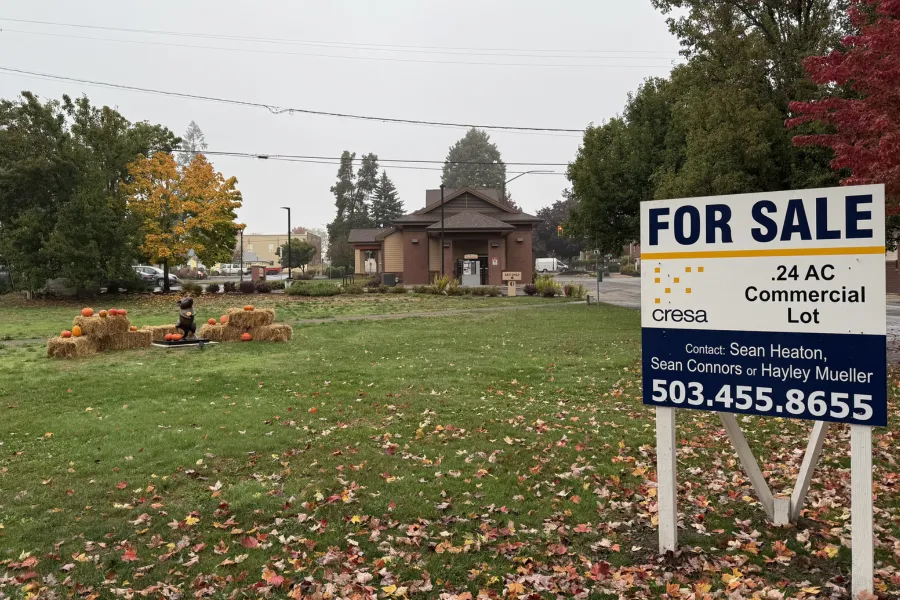
Together they’ve developed a plan for a walking tour that covers both historical and current events. People will pay a small contribution which Andersen and the historian split. This will provide people with more historical context, while also pointing out recent news and events.
Andersen hopes to kick those off as a series in late spring or early summer 2026.
“Then we’ll go dormant again in the late fall, early winter,” he said.
Why he’s continuing on this path
“We've gotten so used to this idea that the news media is separate from our communities,” Andersen said.
“It's a company or a corporation that's looking over our communities and reporting on things, but you generally don't know who they are. You don't see them in your community very frequently anymore.”
This sentiment — and the reality of news operations in many places — is part of why journalists and non-journalists are starting up independent news organizations for their own communities.
“Nowadays, I think it's so much more important, with eroded trust in communities, with the news media relationship, that people understand who you are. They see your face. They trust you because you're behind the work. You're living in their community. You're telling their stories on the ground,” he said.
Andersen is always looking for ways to do that more frequently, and show he truly cares about the town and is a neighbor.
“A good way to do that is to show up and answer questions,” he said. “As much as it is informative for my community, I think that the other side of it is that it's community listening.”
- Started in a public park and ended near a restaurant for a "Post-Tour Pint"
- The 10-stop route through downtown took less than an hour
- Attendees received a zine-like handout with a map of the route
On the first tour, attendees asked a lot of questions. Some were based on rumors, other times people were legitimately curious. He found these to be opportunities for sharing additional context that wasn’t always included in the news article.
Andersen feels that for him, tours are probably the lowest lift way to do community listening, besides sitting on stage and taking questions from a crowd. The tour dynamic is different though.
“It's a good interactive, low pressure way to connect with my community in this way and offer a little bit of two-way communication on top of promoting the brand,” he said.
There’s the added benefit of other residents seeing Andersen in his Newsberg shirt, walking through town with a crowd of people. With these potential upsides, he’s invested in making tours part of his strategy, while finding a way that works for him and for the community.
Advice for after a tour pilot
Over the course of five case studies, we’ve covered a lot of ground from operating tours at scale to experimenting with a single tour. Here’s some final words of advice from the most seasoned contributors.
Augustin Pasquet, Untapped New York
1. Get as much feedback as possible. Think of your first tours like a focus group, invite trusted people to come for free.
- Did they like it?
- Would they recommend it to a friend?
- What do you think could be better?
- How much would you pay for this?
If everybody tells you it’s absolutely amazing, they want to come back with others because they think more people should see this — maybe you have something nice.
2. Set a goal for why you’re doing tours. After the first tour, assess if it met expectations. Did you deliver on the goals that you were after?
- Is your goal financial, to bring in a certain amount of money?
- Do you want to see people and see their reaction when they consume the content?
- Did you like it personally?
- Do you want to raise awareness about a place or cause?
Do it with at least one, two or three goals in mind and see if your test tours will allow you to achieve them.
Justin Rivers, Untapped New York
“Identify somebody who can spearhead that initiative for you, even if it's part time,” Rivers said.
Imagine having a department entirely focused on tours, who might build that out? Ask what their vision would be for these experiences.
When he was asked, Rivers said he’d take Untapped’s “editorial and bring it onto the street.” He then ran with it while the others focused on operating the publication.
He recommends identifying someone “who understands what tours are and understands the relationship between your content and what tour content can be.”
Rivers recognized that not all publications will be able to do this. In that case, he said make sure to devote enough time to creating experiences.
“It's two different sides of the brain to a certain degree, and it's a lot of work, both are a lot of work.”
It could also be reversed: If you find you’re good at tours, then find a great editor.
Rivers said if you’re working with other guides and identify a guide who’s really strong not only giving tours but with ideas for new tour content, figure out how you can grow together.
On why he still enjoys leading tours:
“It restores my faith in the whole thing. Because sitting at a desk behind a screen...you just start losing energy, and it's like, ‘oh, God, I've lost sight of land’ at some point. And then you go back and you do a tour, and you're like, ‘No, this is exactly it. This is why I do this.”
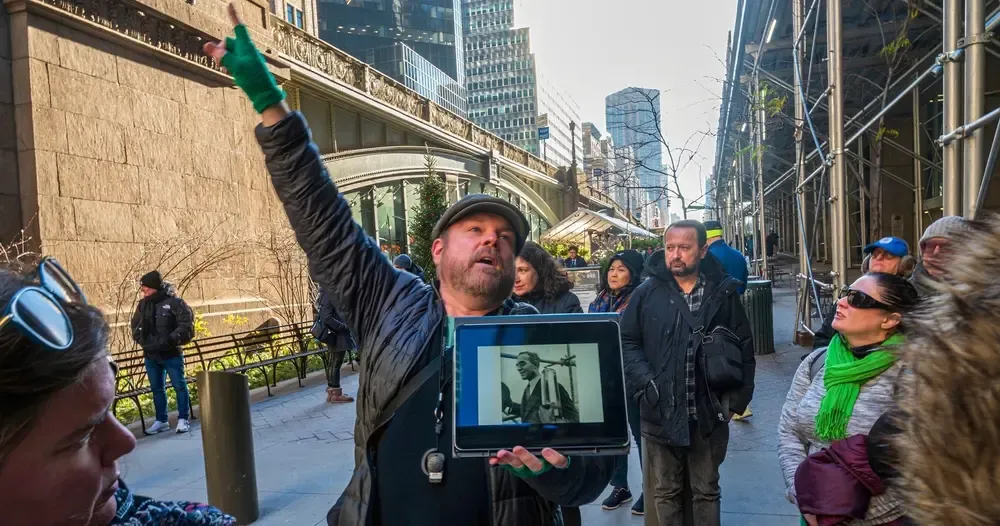
David B. Williams, Author
“Are you having fun?”
“That's the first thing,” Williams said without hesitation. “I mean, I'm always making sure that I'm still having fun doing them.”
Are you getting comments that make you feel like you’re succeeding in what you’re doing, however you want to define what success is?
Williams finds a “great deal of satisfaction” doing tours, especially as a writer who doesn’t often interact with his readers.
“If you enjoy that interaction, then the walk is a really nice way to go,” Williams said.
Even after doing his walks repeatedly, someone might say, “Hey, have you noticed?” or “Hey, did you know?” and teach Williams something in return. He values this learning experience, and uses the walks to keep building his own awareness and connection to place. Plus, he likes to talk.
“As a writer, that's what I'm trying to do is establish, help people sort of strengthen their connections to place,” Williams explained.
“I'm also trying to help me strengthen my connections to place, and so I feel that I gain from doing the walks. It's always more of a gain than a loss in the walks…if you don't feel that way, then it'll show. Don't do it. Don't feel obligated.”
Adapting to detours
Planning and leading walking tours is a lesson in adaptability. The journalism industry needs to be more adaptable than ever before.
Tours as a medium for journalism won’t work for everyone or every publication, but it is something to try and test. With more testing, the theories and opportunities outlined in this guide will evolve and, hopefully, become more of a beeline than a detour.
After that test or pilot, it will be time to decide whether to stop, adjust or expand. In some cases, factors unrelated to whether or not the tours worked will be the deciding factor to stop, and that’s alright.
For others, maybe the pilot becomes the tour program with some modest adjustments. Consider this if what you created for the pilot can still take you further. That might be an example of choosing simple and sticking with it.
Then there’s the decision to expand the tours. An exciting option that promises a lot more learning with greater impact. Lead the way and let us know what you discover.
We’ve covered a lot together through this guide. As I say at the end of each walking tour “Thanks for coming! I hope you enjoyed it and I’m available if you have questions.”