Bellingham’s waterfront: What’s now and what’s next
What's up with the waterfront redevelopment? Why do cranes keep showing up? Will the container village remain?
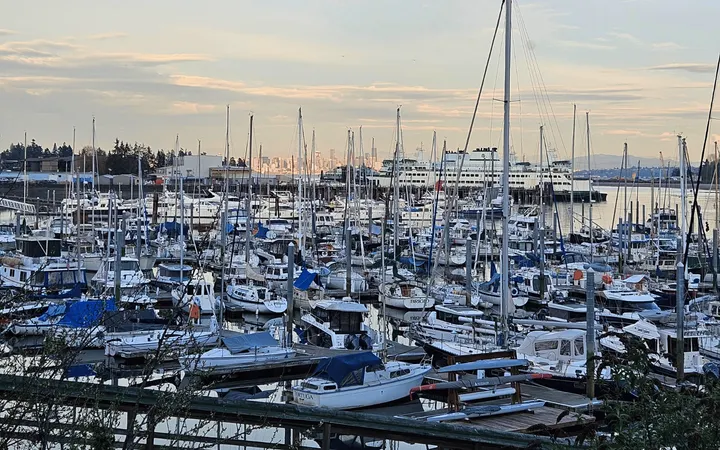
Bellingham’s waterfront on Bellingham Bay is an inextricable part of the city’s economy and identity.
Today, the broader Whatcom County waterfront contains several community institutions, dozens of state, county, and municipal parks, and employs over 6,000 people in the maritime industry.
The Port of Bellingham manages maritime facilities across Whatcom County, including harbors in Bellingham and Blaine. As people hit the water this summer, several highly visible waterfront redevelopment projects drew attention to long-term initiatives from the port authority and its partners.
Why is the waterfront district being redeveloped?
Between various projects in shipping, waterfront recreation, and the marine trades, there are multiple reasons Bellingham’s waterfront is being updated, alongside other ports across Washington.

For one, the shipping terminal is getting up to speed with modern technology.
As it stands, ports in Europe are over a decade ahead of the United States in adopting renewable energy in their shipping networks, according to Dan Tucker, the executive director of Whatcom County’s Working Waterfront Coalition. The 120-member coalition works closely with the port, but is an independent nonprofit.
“That doesn’t just mean that Europe has advanced technology that we don’t, it is reflective of regulation being further along as well,” Tucker said in an email. “We have [the technology] here — but we don’t have it to their scale. We have regulation, but it isn’t as refined or iterated.”
Adrienne Douglass-Scott, the Port of Bellingham’s sustainability program manager, said that the large number of options, paired with a lack of clear policies from state and federal government, have prevented the port from investing further in green shipping technologies and fuels.
It’s also hard to commit to the rapidly evolving renewable technologies, according to Tucker. Many places are reluctant to make the switch as these technologies become more efficient year after year. Even with funding, companies and governments may hesitate to purchase a new ferry, bus, or other machinery, when next year’s model is going to be even better.
Nonetheless, the Port of Bellingham has sustainability on the mind. In 2023, the commission adopted a “climate action strategy” and also joined Green Marine, a voluntary environmental certification program aiming to spur on action beyond regulatory requirements.
In its strategy document, the port set targets to reduce its greenhouse gas emissions by “at least 90% from 2019 levels by 2030 and 100% from 2019 levels by 2050.”
To reach their goals, the port began investing in certain eco-friendly technologies. One example are Rotainers — rotating apparatus that dump bulk cargo into ships — which are installed in many ports abroad, but not yet on American shores. The Port of Bellingham hopes to be the first, and is working with the manufacturer to bring them to the city.
According to Douglass-Scott, the use of Rotainers at the port would minimize dust and noise while decreasing cargo loss compared to systems like conveyors.
Incorporating Rotainers will enhance the port’s competitiveness and sustainability by creating fewer piles of loose cargo, she said.
Looking to the future, Douglass-Scott said, “we are currently working on a three-year, EPA Clean Ports grant funded energy transition plan which establishes the baseline fuel and electricity uses and forecasts the future demand and options for the port.”
Beyond the shipping industry, Whatcom County is not new to maritime innovation. The first-ever ferry powered entirely by hydrogen fuel cells was built in Bellingham by All American Marine. The ferry, MV Sea Change, entered service with San Francisco Bay Ferry in 2024.
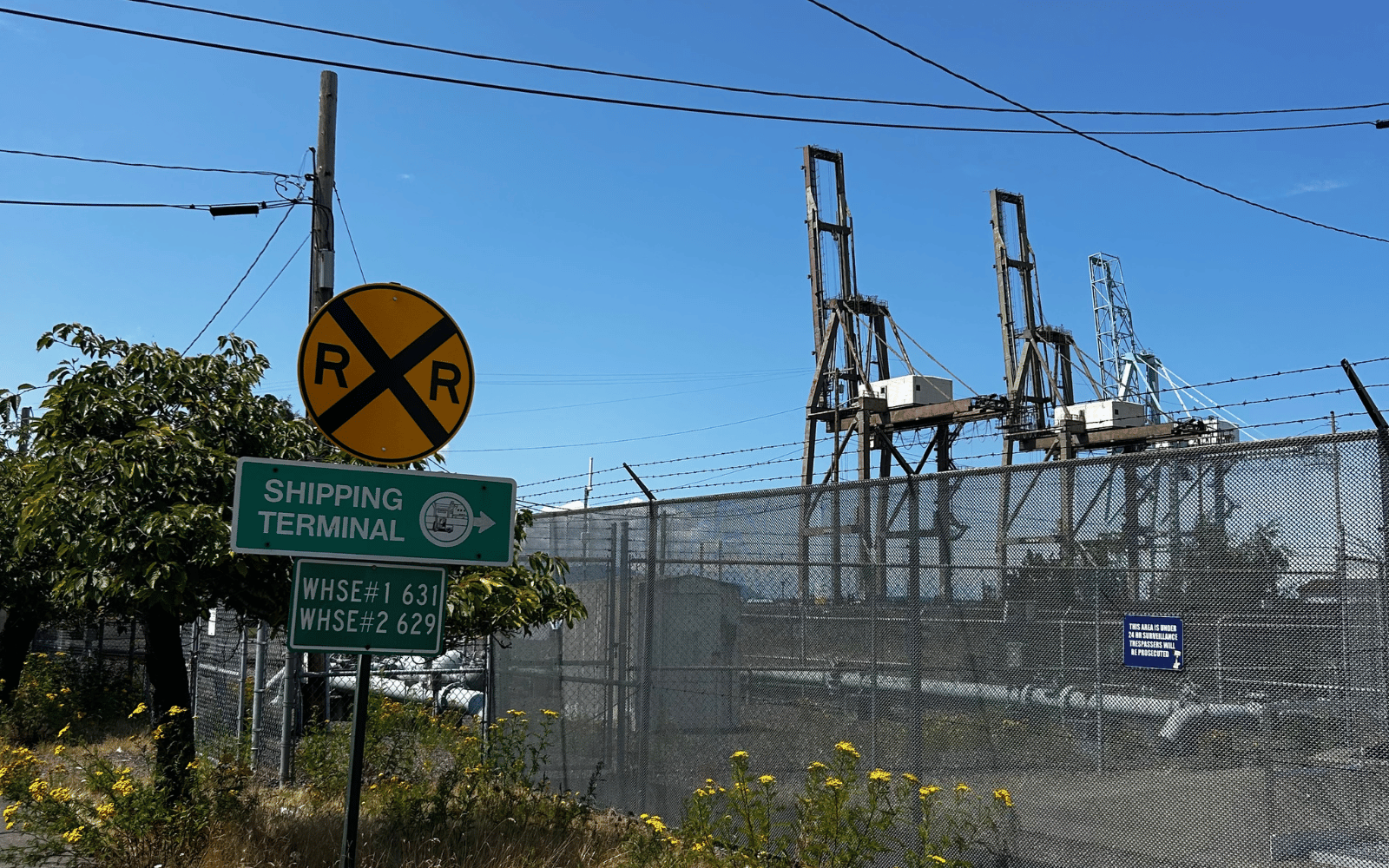
Another project — building a rail spur for direct ship-to-rail connection — is being undertaken in collaboration with BNSF Railway. Without the spur, the port is limited to only cargo that can fit on trucks.
Rail transportation is more efficient than trucking in terms of greenhouse gas emissions. Additionally, connections to the international rail network will make the shipping terminal more appealing for companies looking to unload.
Port of Bellingham public affairs administrator Mike Hogan shared in an email some estimates of the impacts once shipping terminal renovations are complete.
“At full capacity, revenue will depend on the commodities being shipped, but the Bellingham Shipping Terminal is projected to generate more than $64,000 a year in county tax revenue and over $550,000 for the state. Once reactivated, the terminal is expected to generate more than 200 family-wage, full-time jobs,” he said.
Tucker, with the Working Waterfront Coalition, noted the port is funded by levies, and that greater utilization of the port facilities could decrease pressure to raise the rates.
“The port takes money to operate and build — the more they get from business, the less they need from the tax base,” Tucker said.
Where is all the noise coming from?
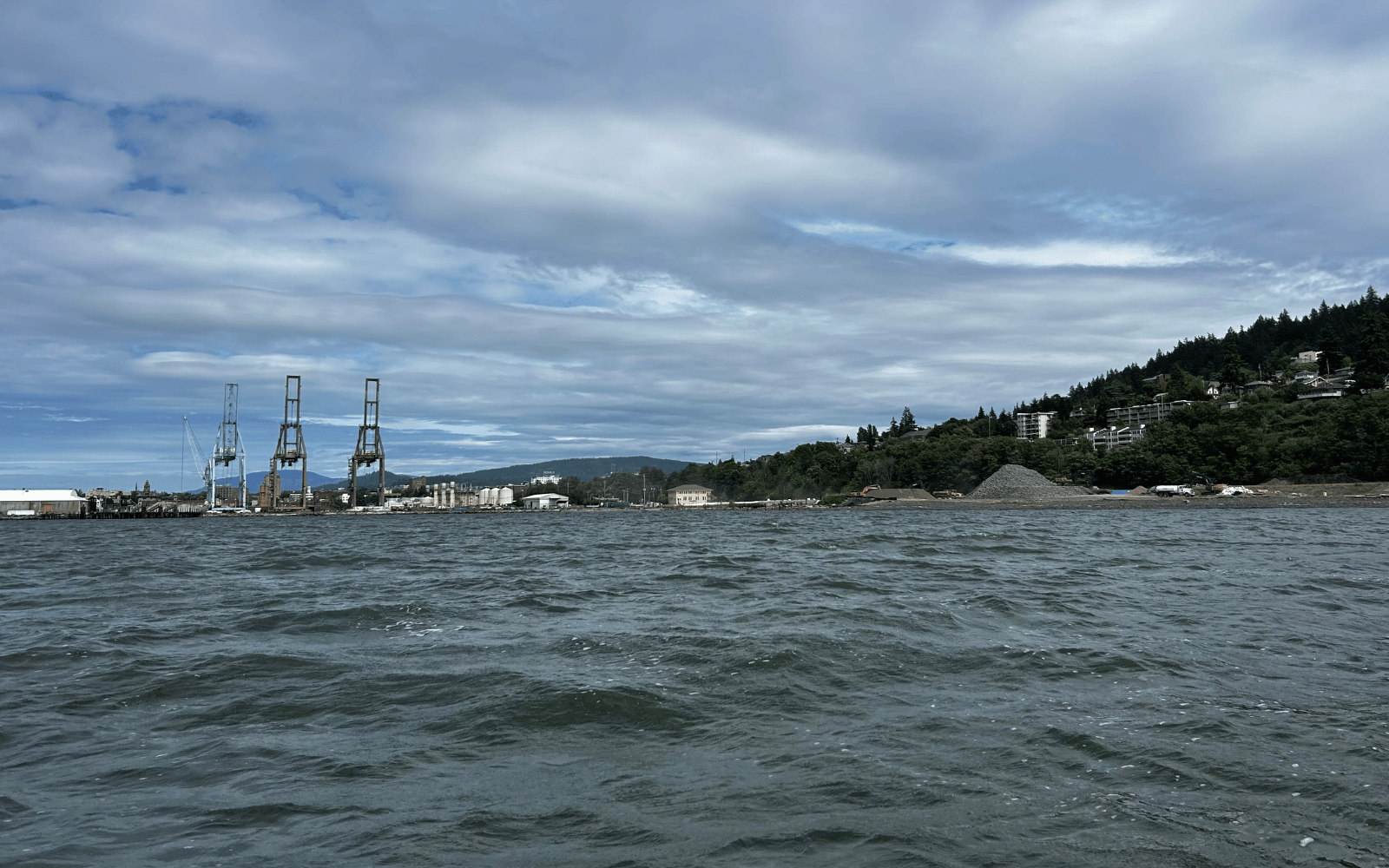
Residents can see, and hear, excavators and dump trucks throughout the day working to convert a former landfill and industrial site at Cornwall Beach, into the new Salish Landing Park.
Located next to the South Hill and Sehome neighborhoods, the site was once home to a wood treatment facility and a landfill. Mounds of waste sat covered by white tarps for years. The port declared the parcel surplus in 2012 and transferred it to the City of Bellingham.
In September 2025, the city awarded a development contract to IMCO General Construction, who submitted a $49 million bid for the work. Cleanup work began at the site in January.
Salish Landing will be a 17-acre park managed by the city’s Parks and Recreation Department, with beach access, multiuse trails, and a new boat launch. At present, there are only two marine public boat launches in Bellingham, both managed by the port.
This summer’s work, part of the project’s first phase, focuses on cleanup, installing utilities, and stabilizing the beach for future recreational use.
The environmental cleanup is projected to take around three years, according to the city’s website, and will take place alongside phase one of building the park.
Why do cranes keep on showing up at the shipping terminal?
The Bellingham Shipping Terminal is already getting some use during the modernization process.
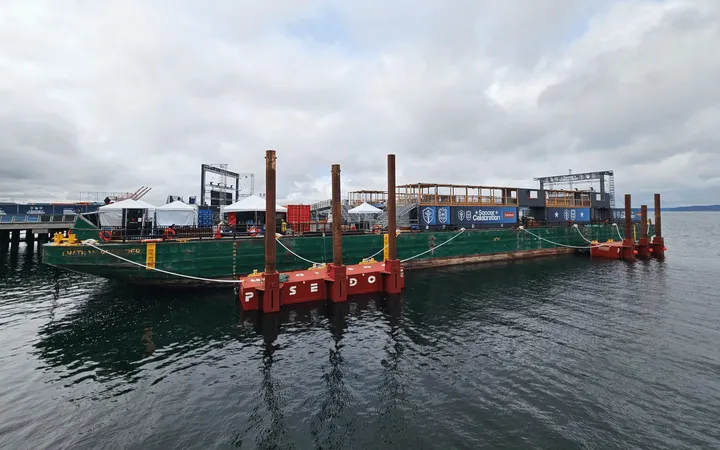
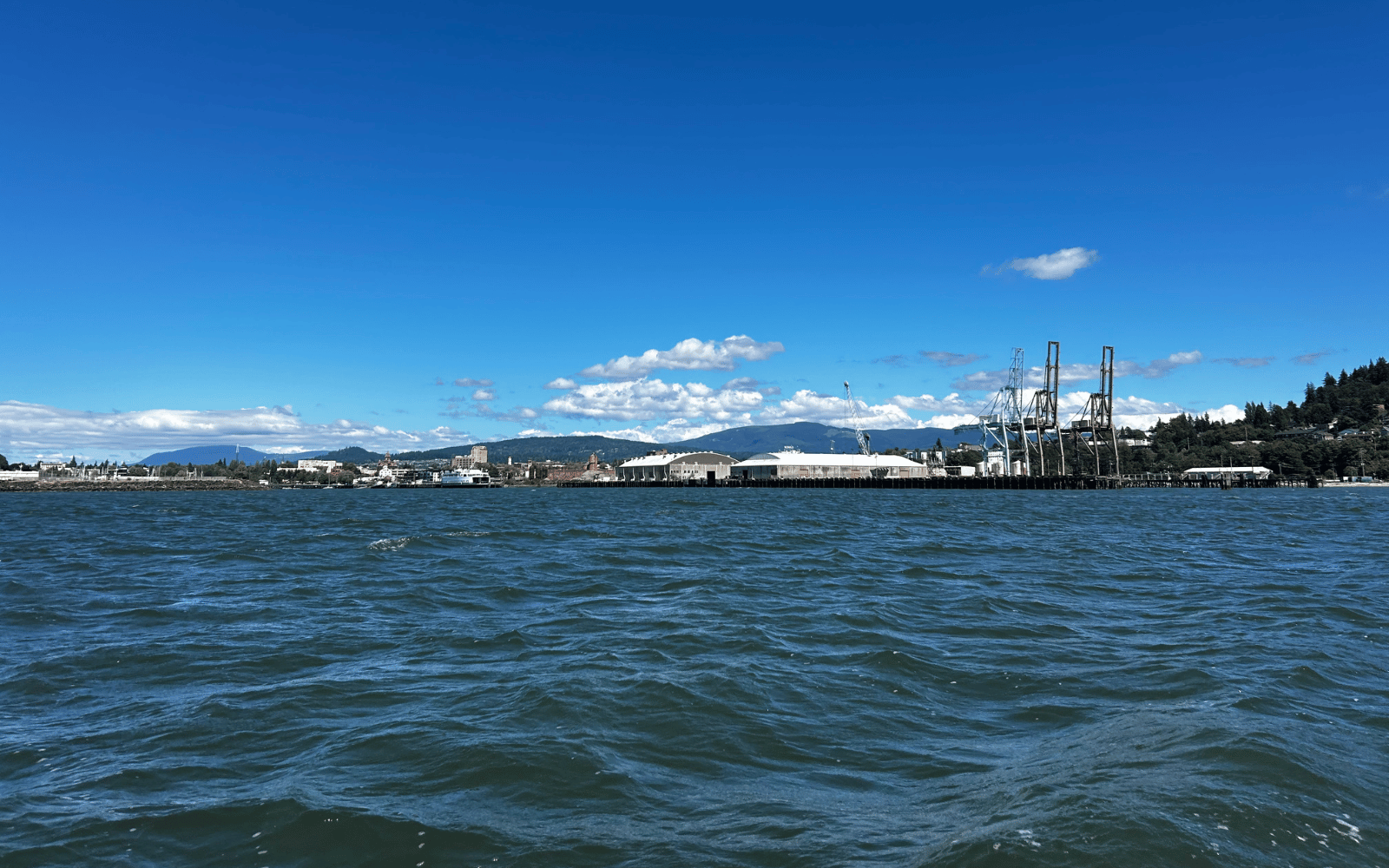
Last December, two cranes from the Port of Tacoma arrived by barge and were unloaded in Bellingham to be disassembled. Local laborers found work for several months by unloading the barges and dismantling the giant cargo.
On June 1, three more cranes, this time from the Port of Seattle, were shipped in and placed at Bellingham’s shipping terminal for dismantling.
“It’s exactly the kind of maritime work our terminal modernization was designed to attract, and we are happy to see increasing interest,” Hogan explained.
“This project is a great example of interim use of the available space. ... The operation employs skilled ILWU [International Longshore and Warehouse Union] workers and utilizes our new heavy-lift capabilities.”
Keep Future Tides cruising by becoming a Crew Member today!
Your support drives stories like this one and buoys a community-centered publication.
What will be the fate of the container village?
The departure of Georgia-Pacific left a void in Bellingham’s Downtown Waterfront. The property now contains a park and condominium complex on one side of Granary Avenue, though the other side has only stopgap developments, such as the popular pump track and container village.
The Georgia-Pacific paper company first moved into town in 1947 and operated a pulp mill for decades before shutting it down in 2001. The Port of Bellingham purchased 137 acres of waterfront land from the company in 2005, vowing to clean up the industrial contamination and restore the site.
Early ideas included demolishing the granary building in the waterfront district and turning GP’s aerated stabilization basin into a luxury marina. Neither of those panned out, a pattern that’s repeated itself over the past decade.
In 2013, the port requested proposals for redeveloping the land — and received only one response. Irish developer Harcourt Developments was named master developer by default.
After missed deadlines, the port clawed back rights to over half of Harcourt’s allotted acres in 2021. Harcourt lost the remainder of their exclusive development rights in 2023, and in 2025 the port severed development rights with their master developer.
Six acres were set aside for Western Washington University to use, but that plan was also scrapped in 2022. The city did open a new 1.5-acre park, Waypoint Park, in the area.
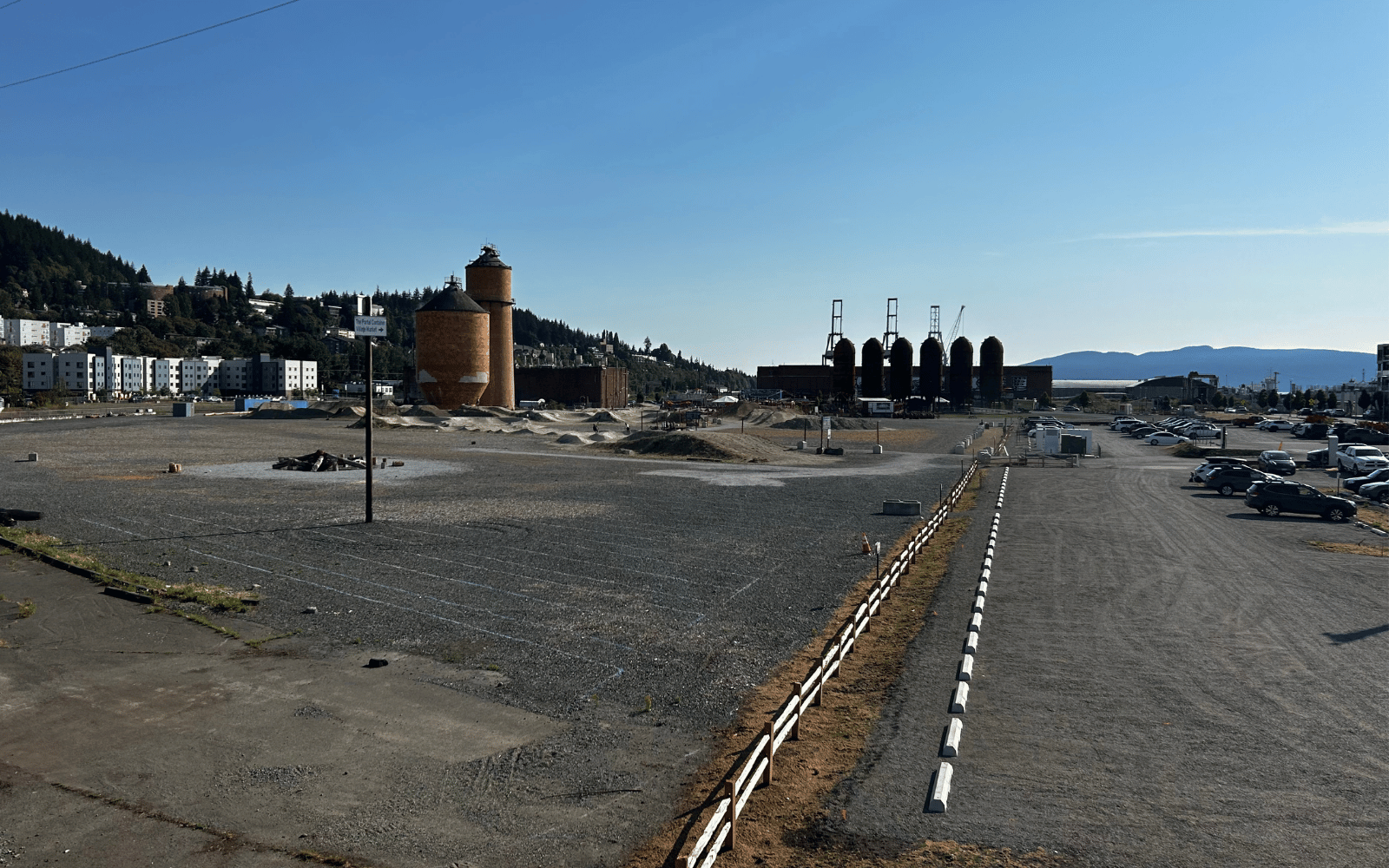
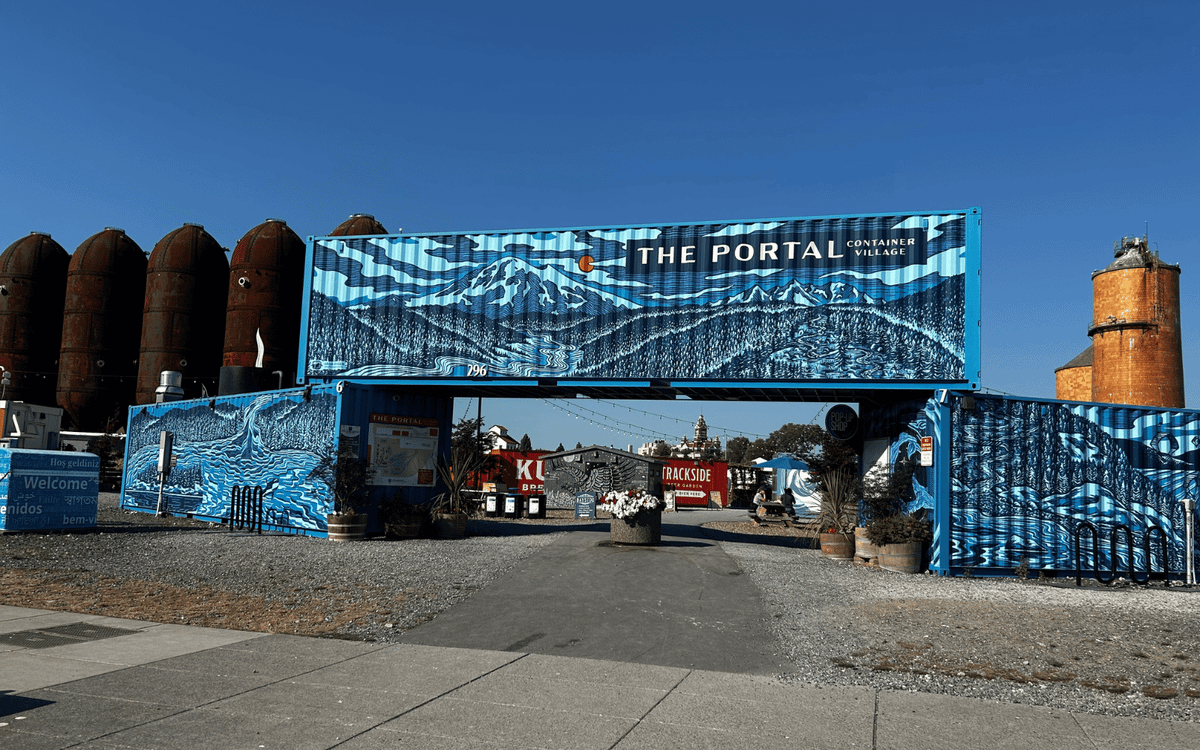
The pump track — a bike park featuring rollers and berms — was unveiled in 2019. In 2021, shipping containers were placed to form a “container village” known as The Portal, which today features a beer garden, food trucks, and event stages.
Both were intended only as interim solutions, but they have managed to stick around.
Hogan said that the Port Commission led a session this year “to discuss next steps on the waterfront after moving on from the previous master developer.”
The port is now soliciting input from developers, beginning another public process post-Harcourt. “We expect that work to be conducted over the next year,” he noted.
“Now that the final litigation between Harcourt and the port was settled last summer. It reclaims for the port the ability to issue development rights — or to develop themselves — that area,” Tucker, with the Working Waterfront Coalition, explained.
That doesn’t mean the beer garden or bike park is going away soon, though, according to the port representative.
“We anticipate The Portal container village will continue to operate as it has. Although the area [is] available for redevelopment in the long term, there are no immediate plans to move the container village or our existing tenants,” Hogan said.
In anticipation of keeping The Portal, the port signed 10-year leases with most of the container village’s tenants in 2023.
Additionally, officials recognize how cherished the food and recreation area is, joking they would be “greeted with a mob” if the “temporary” village were dismantled, according to the Cascadia Daily News.
“Elements of existing themes like the public and communal spaces will most likely be in whatever plans are drawn due to their popularity and adaptability in bringing events and festivals to the waterfront and town,” Tucker observed.
What about that ferry docked downtown?
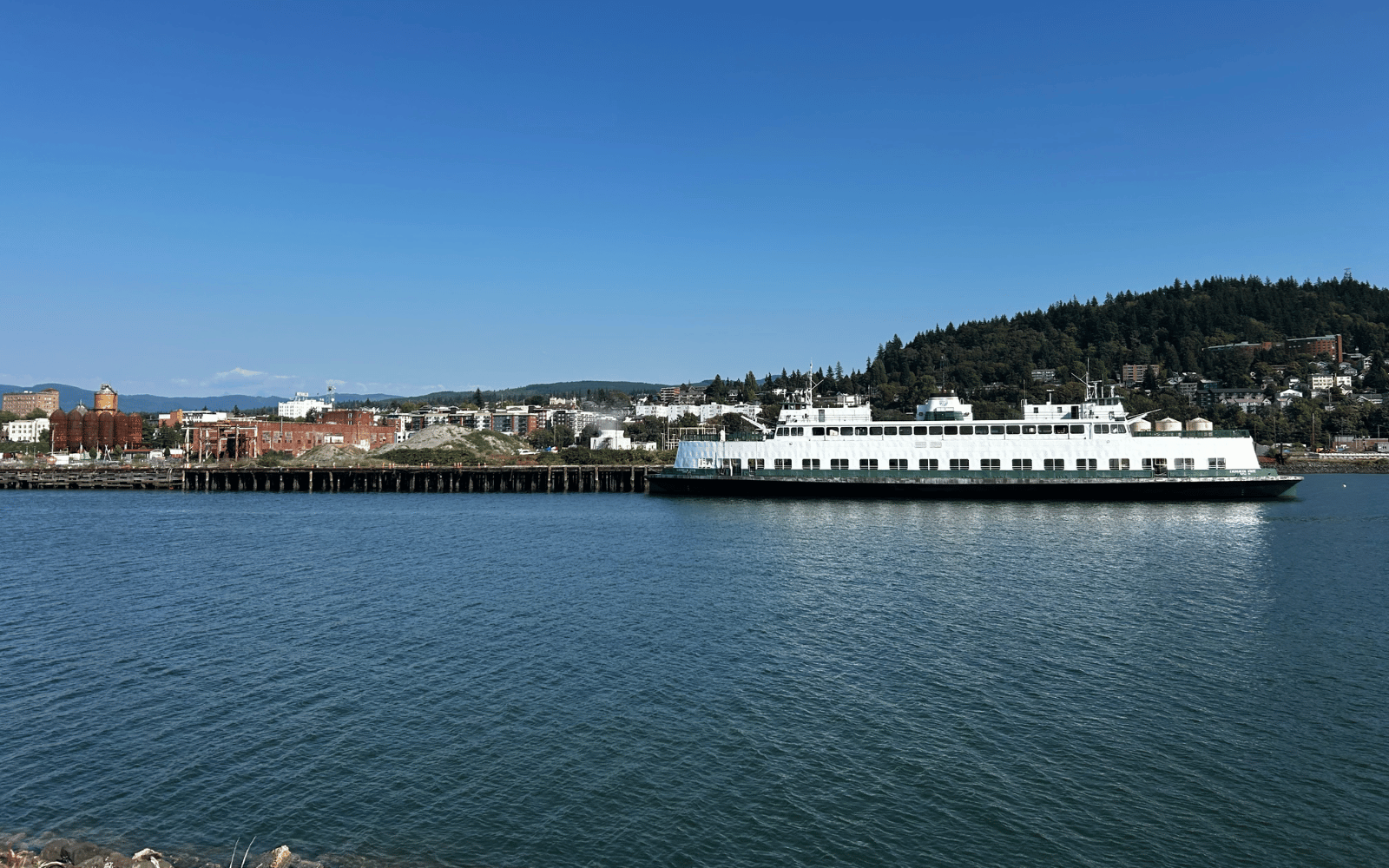
Docked next to the Georgia-Pacific site is a former state ferry, moored in Bellingham since 2022. The vessel, MV Evergreen State, was in service from 1954 until its retirement in 2015.
Since its decommissioning, the Evergreen State has changed hands multiple times.
The current owner, Bart Lematta, purchased it in 2020. As of 2022, he planned to convert it to electric power, making it “the country’s first emission-free vessel of its size.”
Lematta told the Washington State Standard last year that moorage at the port-owned pier is running him over $70,000 a year.
The ambitious project appears to still be waiting on momentum. Future Tides attempted to contact Lematta but did not hear back.
Hogan said that “the port is allowing this vessel to [be] moored at the former Georgia-Pacific dock on a month-to-month basis.”
That pier will eventually be removed to support cleanup projects in Whatcom Waterway, though Hogan said new docks will be added “to support public access and/or moorage opportunities” later on.
What’s next?
Increased public access continues to be a priority for the waterfront community.
“Currently our only visitor moorage options are behind gated piers or on private properties,” Tucker said. That leaves Bellingham with fewer options for tourists to arrive by boat, compared to Washington cities with public docks.
There are numerous other projects on the port’s back burner, too. One such project — replacing the crane at the fishing dock — “would mean quality of life improvements to our local fishing fleet,” according to Tucker, but is out of reach financially.
“The port does not have funding in the 2026 budget to replace this crane,” Hogan confirmed.
The state’s funding situation directly impacts the port’s funding and projects.
“Model Toxins Control Act funding is the pool that was set aside by the state to do many of the clean up projects we need to get done here — but for the last many years, the state has swept over $170 million out of that fund into the General Fund to balance the budget,” Tucker said.
The fishing crane is just one example. Due to this re-appropriation, cleanup projects across the county and state have been pushed back indefinitely.
The Bellingham port commission, which will expand from three to five members after the November general election, is constantly considering new improvement projects, and whether they have the funds to get it done.
With so many factors involved, the redevelopment process is far from linear. The goal, as the port defines it in its 2019 master plan, is to “restore the health of the land and water, improve waterfront access, promote a healthy and dynamic waterfront economy, and reinforce the inherent qualities of the waterfront.”