Carving out space for canoe culture in the center of Seattle
The first Northwest Native Canoe Center building is on track for completion this fall.
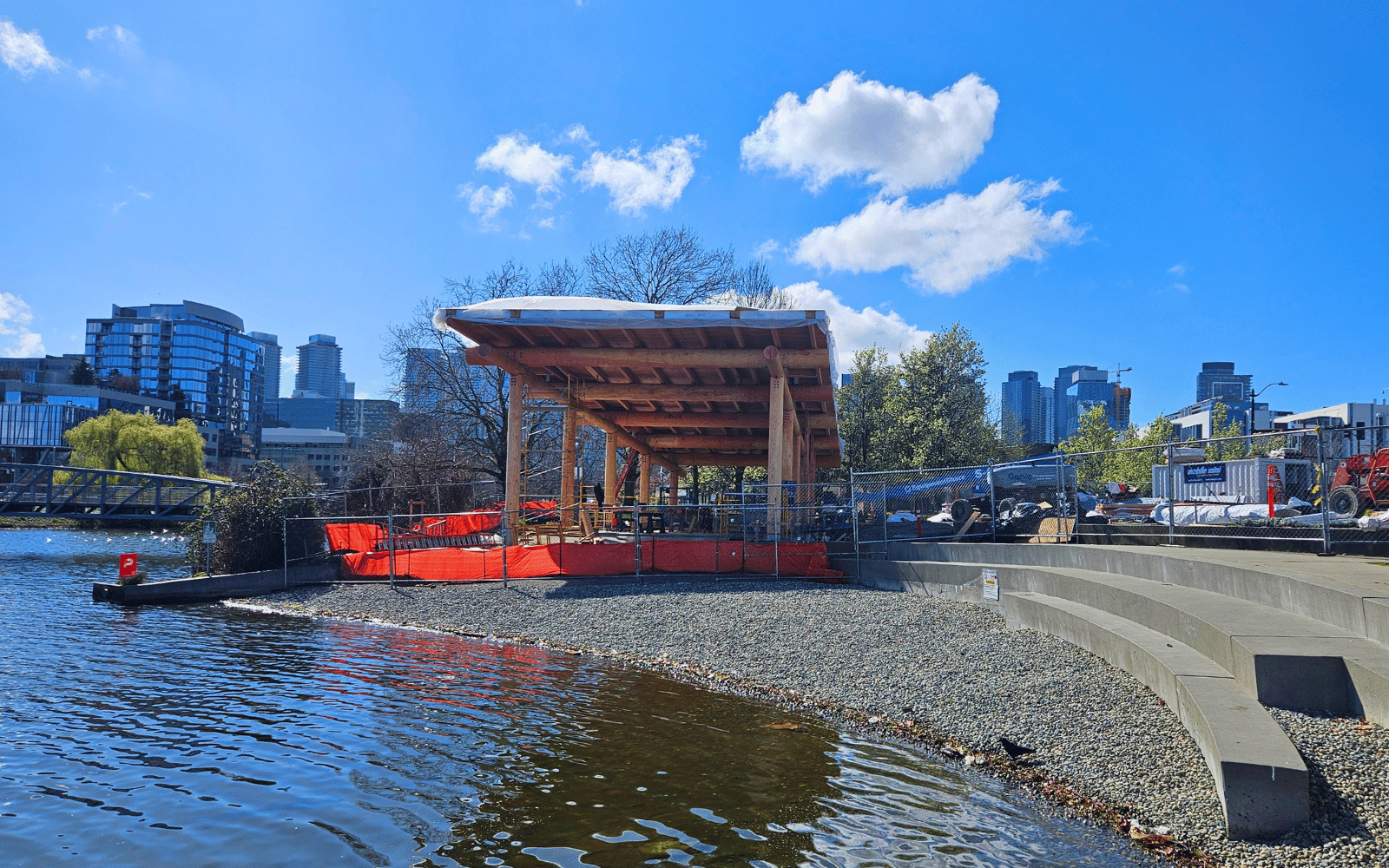
South Lake Union is full of offices, apartments, restaurants, salons and even doggy daycare. A 12-acre city park sits between the increasingly urbanized neighborhood and its namesake lake. Within the next year, alongside all this, there will be a dedicated space for an ancient and ongoing Northwest tradition: Indigenous canoe culture.
For millennia, Coast Salish and Northwest tribes traveled the region's waters by canoe. For decades, a coalition has worked to bring that canoe culture — a symbol of resilience and sovereignty — to Lake Union Park in the heart of Seattle.
Construction of such a cultural center is now underway and on track to open this fall.
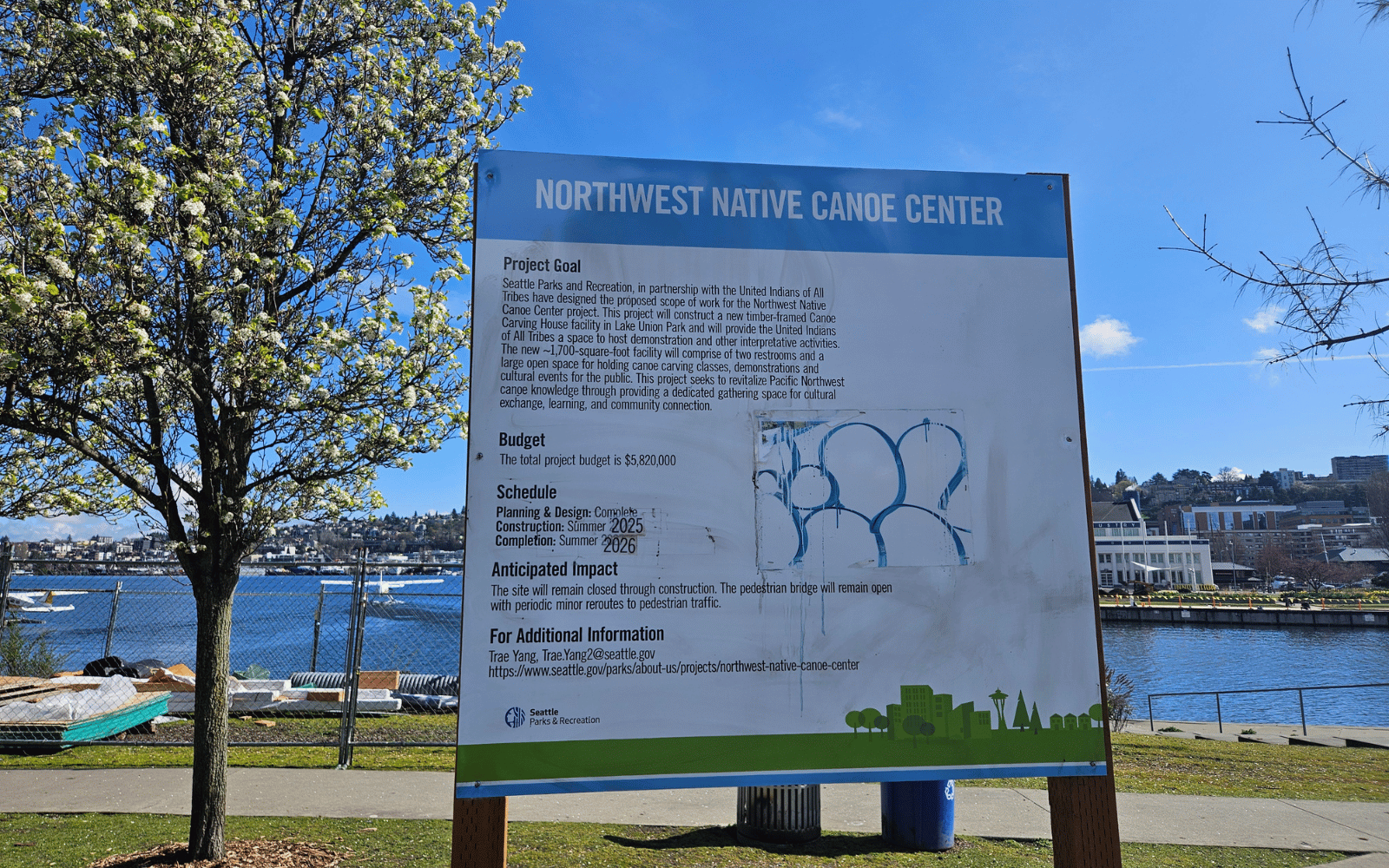
Part of the park’s master plan since 1996, construction on the Northwest Native Canoe Center finally broke ground 30 years later in June 2025. It will consist of a canoe launching beach and two buildings: a Canoe Carving House and a Welcome House.
“The project will provide opportunities for visitors to physically interact with and participate actively within a portion of Native Culture that is largely unseen today and provides a space where practices and thousand-year-old traditions can be witnessed once again.” — City of Seattle project description
Until approximately 1880, the Duwamish people maintained villages along the freshwater lake now known as Lake Union. A glacial lake, industry and urban expansion shaped and continues to reshape the lake and its shoreline. Today it’s a recreational boating hub, a thoroughfare for commercial maritime activities, and an international seaplane base.
United Indians of All Tribes Foundation, a nonprofit serving Seattle and King County’s urban Native community, first requested land for a Native presence on Lake Union in 1970. UIATF’s Daybreak Star Culture Center, situated on 20 acres within Discovery Park, is such a model and the result of persistent Native activism and municipal negotiations.
The Northwest Native Canoe Center is a partnership between Seattle Parks and UIATF.
UIATF Facilities Director Tony Monroe told Future Tides the project is moving along. With the final roof structure in place, passersby will now see the shape of the Canoe Carving House. Next will come the framing, walls and a green roof. Tulalip master carver James Madison was selected to create a Welcome Figure for the beach.
A long journey
Officially announced in July 2021, UIATF Executive Director Mike Tulee called it “a dream of ours for many years.”
“The facility fits directly into our mission and will provide educational and cultural opportunities that reconnect Indigenous people to their heritage and will strengthen their sense of belonging,” he said in a statement at the time.
Jesús Aguirre, who served as superintendent of Seattle Parks and Recreation from 2015 - 2018 and again from 2019 - 2022, acknowledged the project location as the traditional lands and waters of the Duwamish people.
“The Northwest Native Canoe Center incorporates Seattle Parks and Recreation’s values of equity, opportunity, access and sustainability. We are excited to be moving into the construction phase of this project,” Aguirre said in the 2021 announcement.
The construction phase did begin, but three years after the 2022 target. A relatively minor delay for a project envisioned 55 years earlier, and dedicated to a cultural practice many thousands of years old, but it adds to the anticipation around the center’s long awaited completion.
'50 feet of goo'
In a 2023 presentation, Bruce Arnold of Jones and Jones Architects detailed the project's long history including delays caused by neighboring projects, economic downturns, and lack of dedicated funding. The center's location was also moved from one part of the park to another, without any consultation.
Once the project finally progressed, a geotechnical investigation found the shoreline site is made of "unconsolidated fill," including debris from mill operations.
“A risk when you’re building on a shoreline site anywhere, you’re going to find unexpected things,” Arnold explained.
Without a deep foundation, the Carving House would be at risk of sliding during a seismic event. That added approximately $800,000 to the project.
"Because there’s 50 feet of goo underneath," he said.
"Nobody anticipated back in 1996, 2000, 2005, 2007, 2009 — nobody anticipated the nature, the magnitude of this issue.”
The solution involved placing steel pilings down 70' and filling those with rebar and concrete. Federal funding helped cover the added expense.
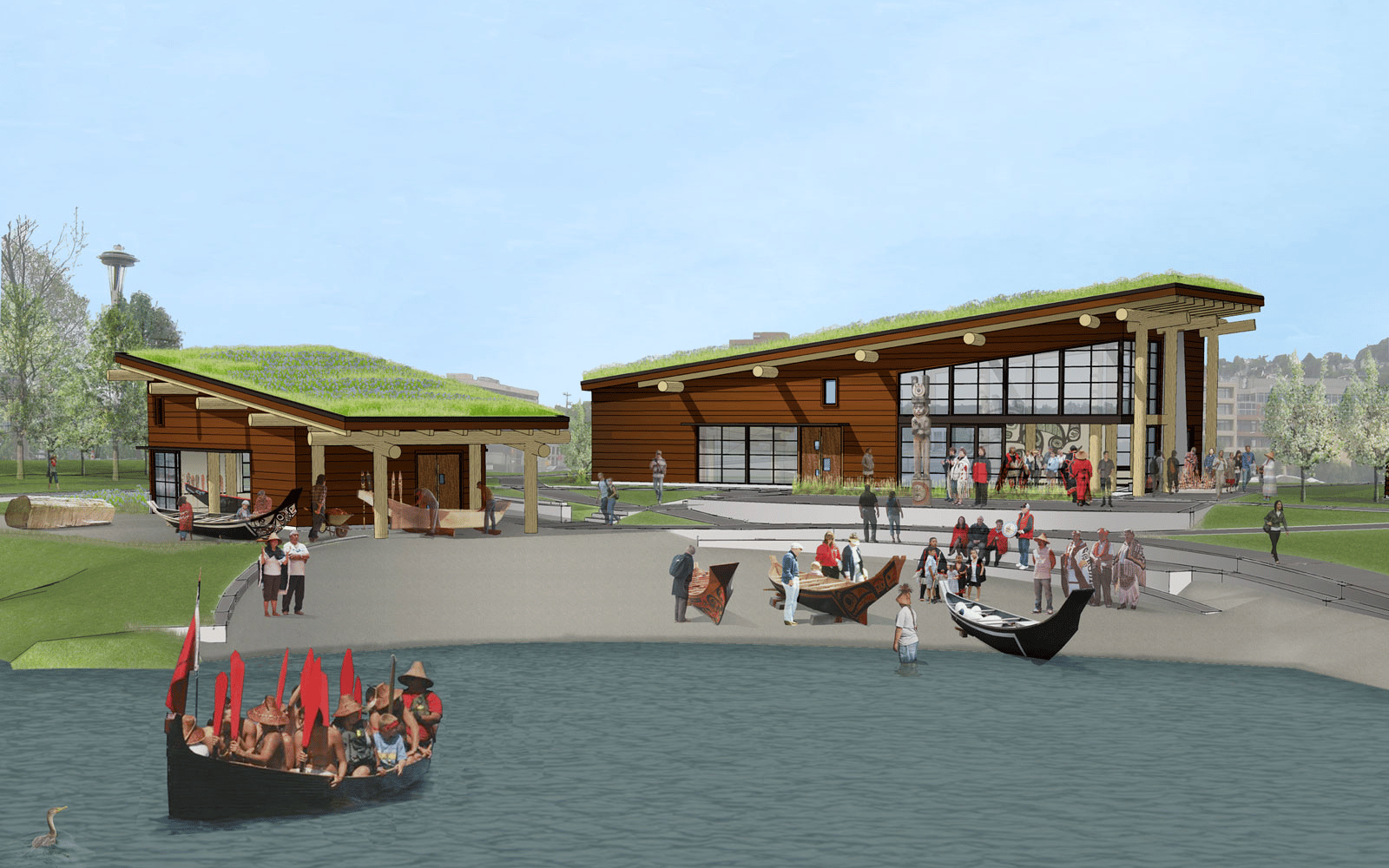
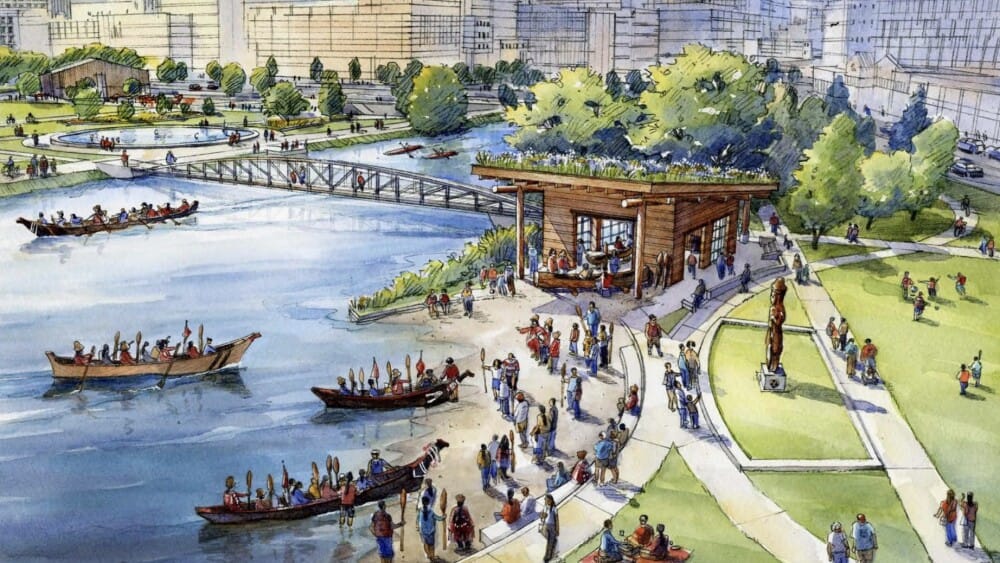
Arnold described other limitations due to city regulations, funding constraints, and environmental considerations that the architects had to work around. While the design takes inspiration from Coast Salish buildings, its big moveable walls create an open air space, compared to the protective nature of traditional longhouses.
The designs kept evolving as they tried to maximize the available space and practical considerations. At 1,200 square feet, the final Canoe House design is roughly one-quarter the size of a professional basketball court.
“Would love for it to be three times the size. But United Indians are adaptive and they’re going to make it work. And it’ll be successful and it’ll be great,” Arnold said.
Native-led expansion
Despite the long journey, Native history and canoe culture persisted in Lake Union Park, in part through the Museum of History and Industry and the Center for Wooden Boats.
MOHAI’s permanent exhibits feature the area’s Native American cultures and their roster of events delve into Duwamish family histories, Indigenous hop workers, and salmon’s continuing cultural importance.
The Cheshiahud Loop Trail that passes through the park and around Lake Union is named for the the Duwamish village chief Cheshiahud.
For 15 years, Haida master canoe carver Sáádúúts has been CWB’s artist-in-residence. He’s carved a number of canoes along the shores of Lake Union, including holding a steaming ceremony that coincided with MOHAI's grand opening in 2012.
In July 2024, a 40-foot long, 10,000 pound, 650-year-old Western Red Cedar arrived at CWB from Alaska. Longer than the open air shelter and platform it sits under, Sáádúúts is carving this latest canoe with his grandchildren. It will be used by their canoe family for the Intertribal Canoe Journey, an annual tradition that began in 1989.
However, when the Northwest Native Canoe Center opens alongside its neighbors, it will put canoe culture in the spotlight with programming and projects directed by Native leadership.
CWB Executive Director Josh Anderson said in an email that he’s not sure what’s next for canoe projects on their property, but that they’re in discussions with UIATF about partnering on programming.
“It’s really exciting to see the building start to go up,” Anderson said.
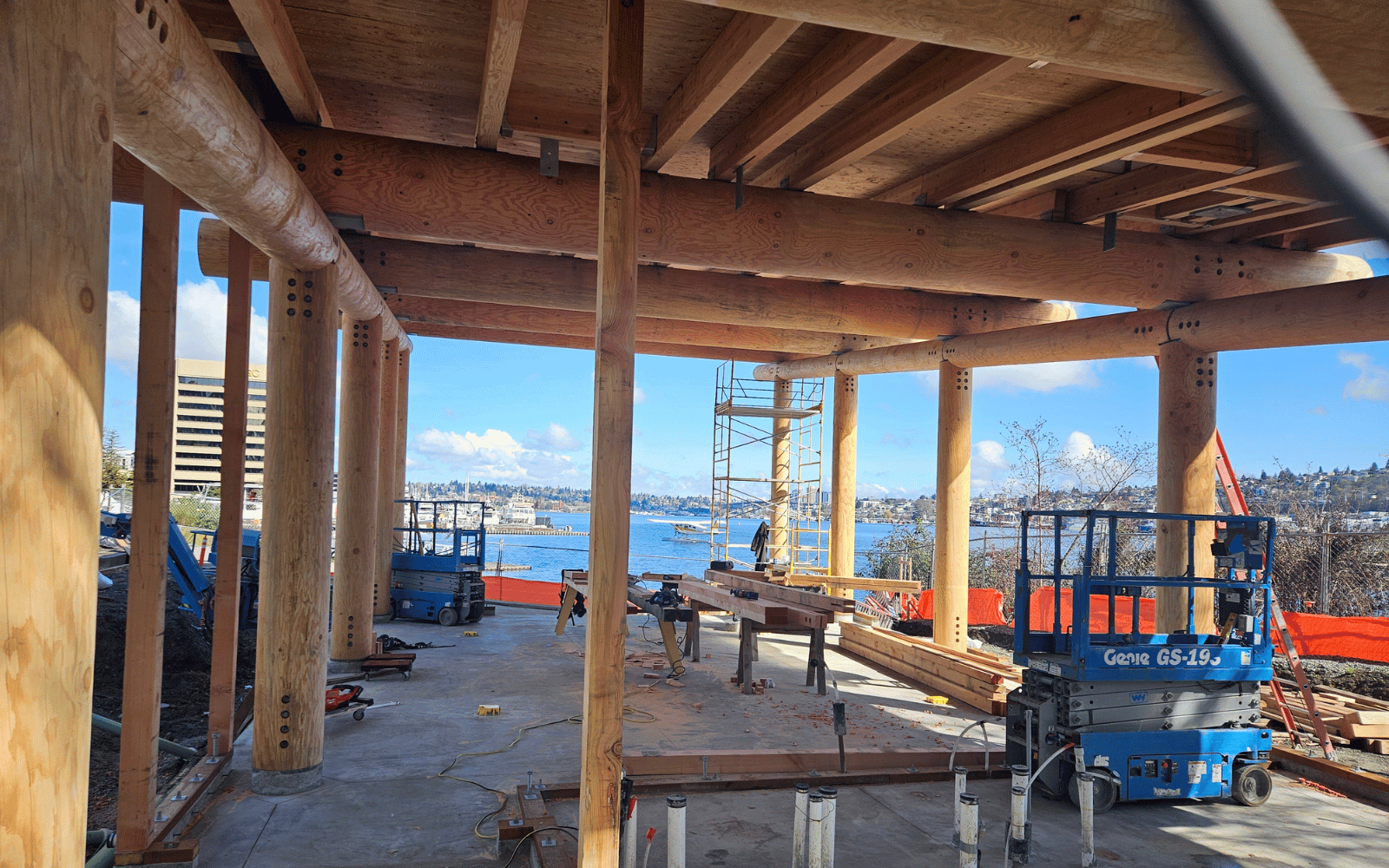
Monroe, the UIATF facilities director, said completion is scheduled for Sept. 30 and that they hope to occupy the Canoe Carving House by October.
“Phase 2” of the project will construct the Welcome House, a larger building with educational displays, a multi-use event space, and administrative offices. UIATF is currently raising funds for this portion of the project, and will accelerate that campaign after the Carving House is completed. Monroe said UIATF has contributed almost $4 million to the construction and development effort.
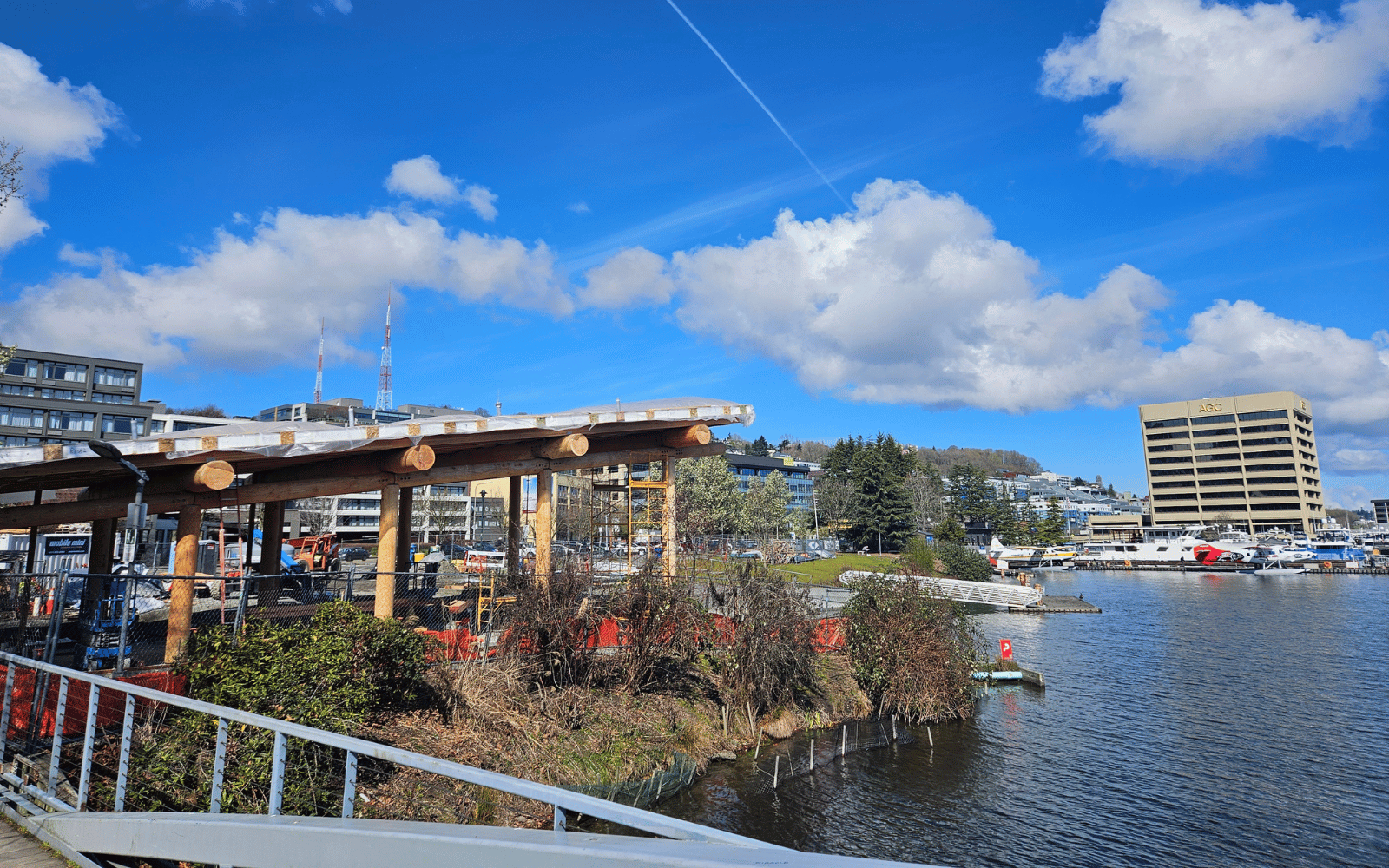
In his role, Monroe meets weekly with Seattle Parks, the architect and general contractor. He is also working on finalizing an operating agreement and long term lease with Seattle Parks.
UIATF has not yet selected any carvers or artists in residents for the Canoe Carving Center, but Monroe said they anticipate several carvers teaching and demonstrating canoe, paddles, masks and other art projects.
“The programing will be a UIATF lead effort with opportunities to engage with Native carvers to share their knowledge and teachings,” he said.
Monroe pointed out that UIATF was founded to both connect urban Natives with their own tribal traditions and cultures, while also sharing and teaching the world about the original peoples of the Pacific Northwest.
Sharing canoe culture with others
Asked what boaters should know about the new Northwest Native Canoe Center, Monroe said as people who are on the water, we all have a lot in common.
“We all have a love and respect for the water and the ecosystem, and the environment. Our canoes serve us well, and we take great care of them,” he said, adding that canoe families take great pride and respect for their canoes.
Monroe explained that their cultural protocols are about respect and ceremony more than performances.
“This is taken seriously, and we look forward to sharing the thousands of years of traditional and oral knowledge we have learned about and on the waters of the Salish Sea,” Monroe said.
“Lastly, they are canoes, not boats. That is how we always refer to them.”
More canoe news
The Stillaguamish Tribe partnered with Olympia-based Devlin Designing Boatbuilders to build and launch two new plywood canoes.
The 2026 Canoe Journey will be hosted by the Nisqually Tribe and take place from July 31 - Aug. 6. Last year, canoe families paddled to Elwha and faced challenging weather conditions along with a tsunami warning.
See live canoe carving at Cannonball Arts, a contemporary arts space in downtown Seattle opened in partnership with the Muckleshoot Indian Tribe.