Commercial fishing defined Gig Harbor. A new city-funded dock might keep it there
The Homeport project includes space for 17 vessels in the affluent community.
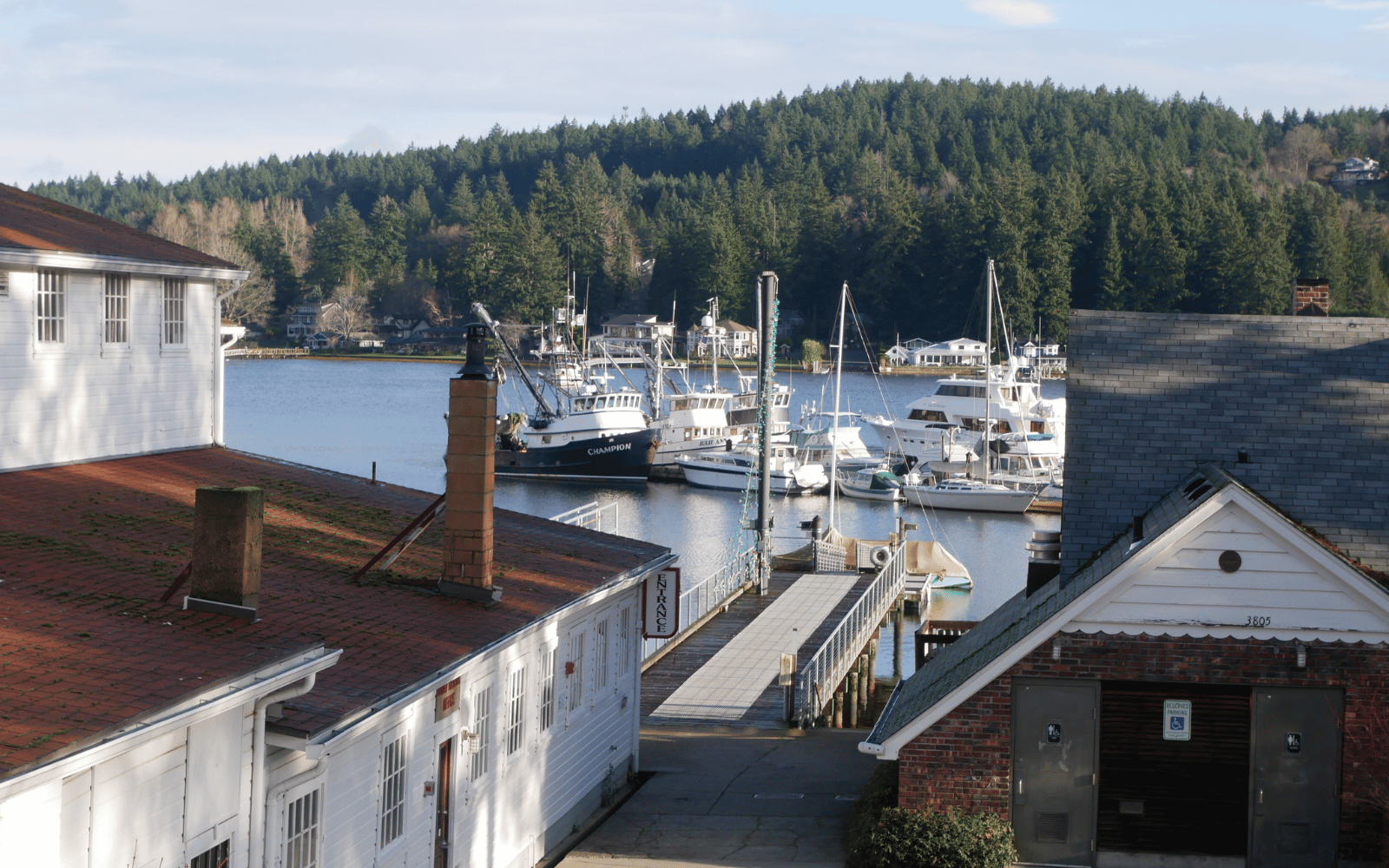
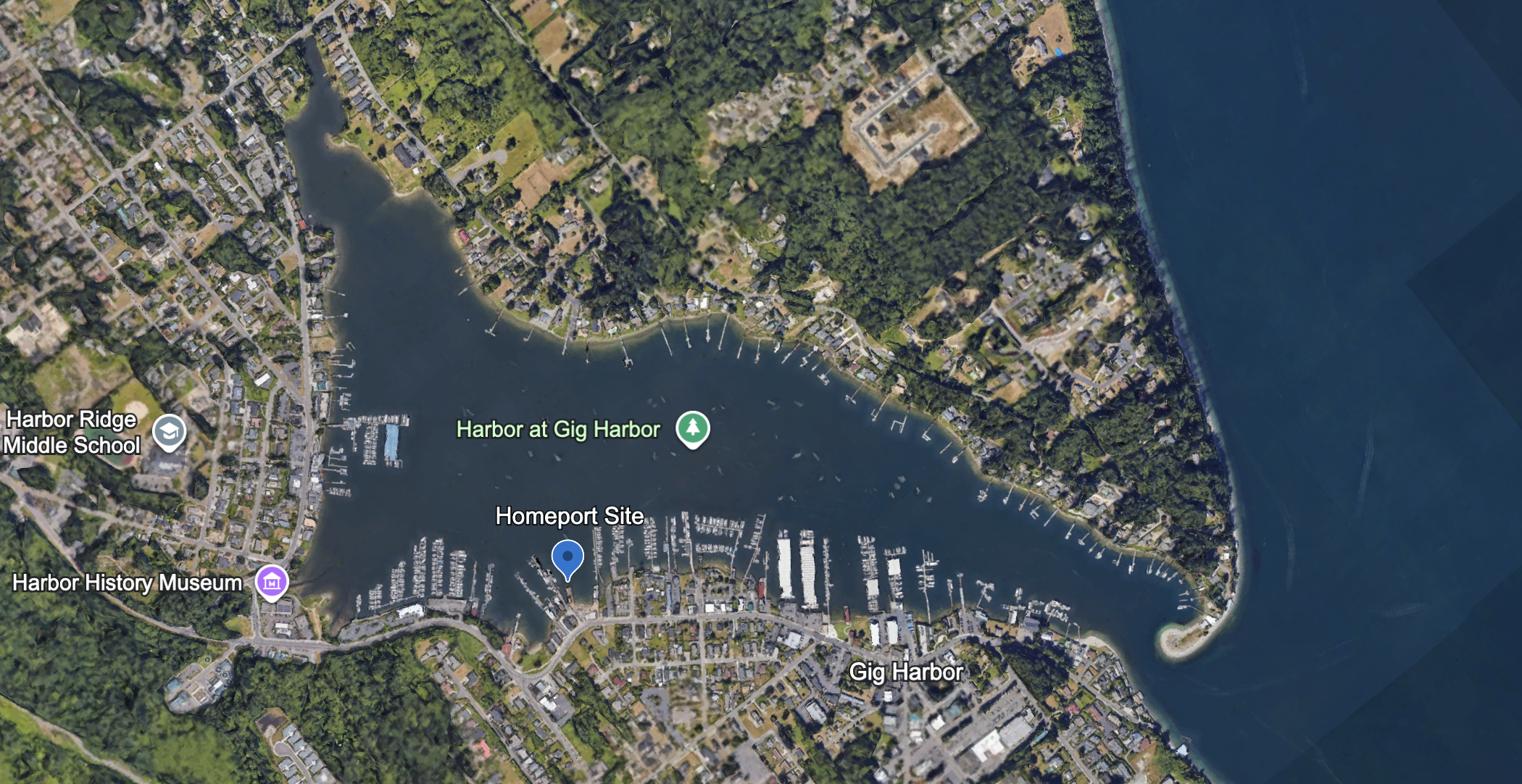
In Gig Harbor, Washington, the aging mariners of a heritage fishing fleet rely on a handful of privately-owned docks for their businesses, spaces that are likely to be lost to pleasure craft as fishers retire and Gig Harbor grows. But, after more than 10 years of development, the Gig Harbor Homeport project is a light on the horizon for Gig Harbor’s commercial fishing fleet.
Only a few hurdles remain before the project is ready to break ground, restoring hope to those eager to preserve more than 100 years of history and economic prosperity to Gig Harbor.
The Twa-Wal-Kut band of the Puyallup Tribe kept a longhouse and permanent camp in the natural harbor for centuries prior to the arrival of Croatian and Slavic immigrants in the late 1800s. They established Gig Harbor as a major “purse seine” fishing port. Their net sheds still line the waterfront, adapted as homes, restaurants, and a museum, but rarely as places for modern, working fishers to repair and replace the nets critical to purse seine fishing.
Several of the early families who established their businesses in Gig Harbor remain, but face rising moorage prices, limited space to keep their large vessels, and an aging workforce without steady replacement by young fishers.
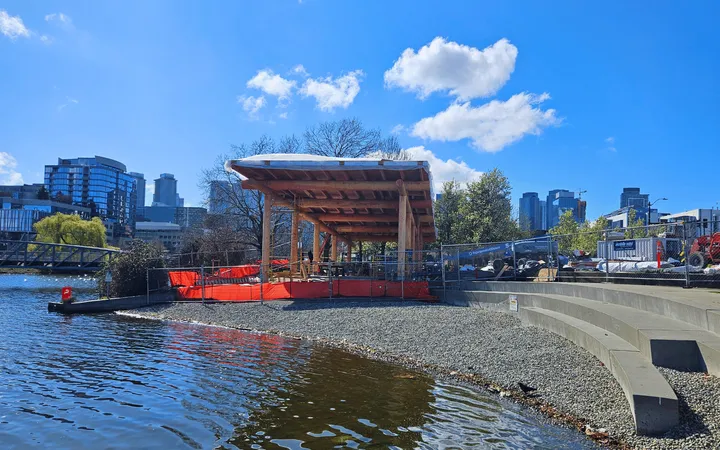
The proposed solution? A city-funded dock project with enough space to keep 17 fishing vessels, each around 58 feet long, built out of a park with an existing heritage net shed in the heart of Gig Harbor.
Gregg Lovrovich, president of the Gig Harbor Commercial Fishermen’s Club, is a familiar name in town. The Lovrovich family net shed, established in the early 1900s, is between the Gig Harbor Boatshop and the Harbor History Museum. The Fishermen’s Club has promised $200,000 for the Homeport project, hoping it will provide a space for younger fishers to moor.
“There’s fishermen that are in Seattle, that live in Federal Way, or in Poulsbo and would much rather keep their boat here, rather than drive the traffic to Seattle all the time,” Lovrovich said. “We're just trying to keep it so there's a presence of fishing boats in Gig Harbor.”
From private to public homeport
At the Commercial Fishing Homeport at Ancich Waterfront Park, fishing vessels will have a space away from the luxury yachts that now crowd the harbor’s private docks. For 140 years, local fishing families have retired and sold off their waterfront spaces; this project aims to stop that retreat.
Fishers who have lived in Gig Harbor for decades often dock in Seattle, Anacortes, Bellingham, or even as far afield as Astoria, Oregon. This distance adds a heavy financial burden to high-cost businesses, especially as they consider the constant maintenance their working vessels require.
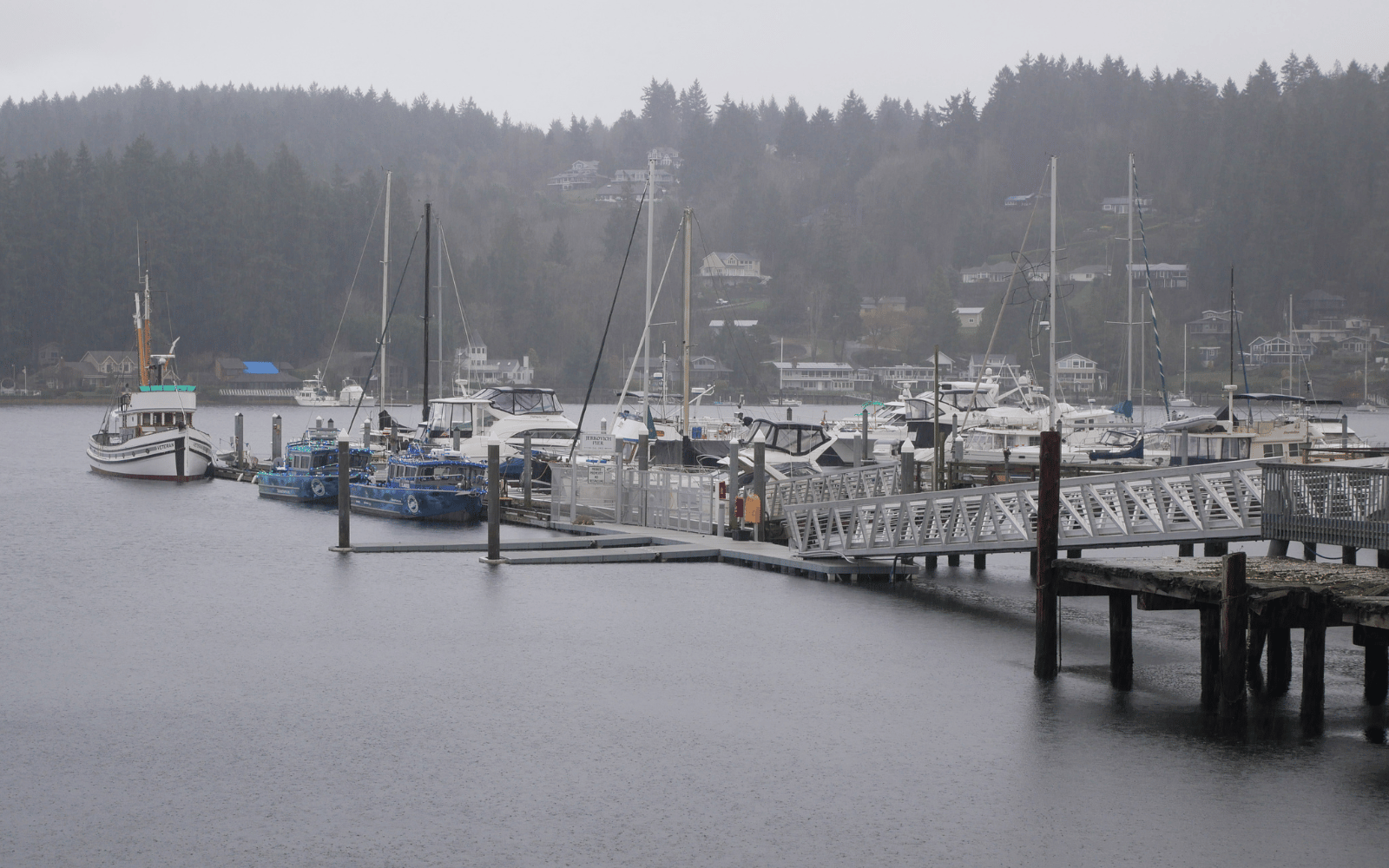
“We are the only place that I know on the West Coast of North America that has a significant fleet that relies on private property for moorage,” said Guy Hoppen, executive director of the Gig Harbor Boatshop and commercial fisherman.
“I mean, it's just a weird anomaly that Gig Harbor's waterfront retains a handful of private fishing family waterfront properties available for commercial moorage.”
Having a publicly-owned homeport would mean that fishers could work on their vessels without impacting yachts and bring income to the city through berth fees and secondary economic benefits like employing other contractors. Beyond the projected economic benefits, advocates also hope it will preserve the fishing heritage of the city and mitigate some effects of the “silver tsunami.”
Never miss a maritime story. Sign up for Future Tides email newsletter
The silver tsunami
Gig Harbor’s small maritime community was relatively isolated until the 1950s, when the Tacoma Narrows Bridge opened and connected Gig Harbor to Tacoma and greater Washington state. Since 2000, that isolation has been completely erased, as Gig Harbor boomed at an astonishing rate into a wealthy, suburban community.
The city’s growth, combined with an industry-wide lack of young replacements for aging mariners, creates a perfect storm for the heritage fishers of Gig Harbor. The Homeport could give younger generations a chance to see Gig Harbor's working waterfront in action or join fishing crews.
 Gillian Dohrn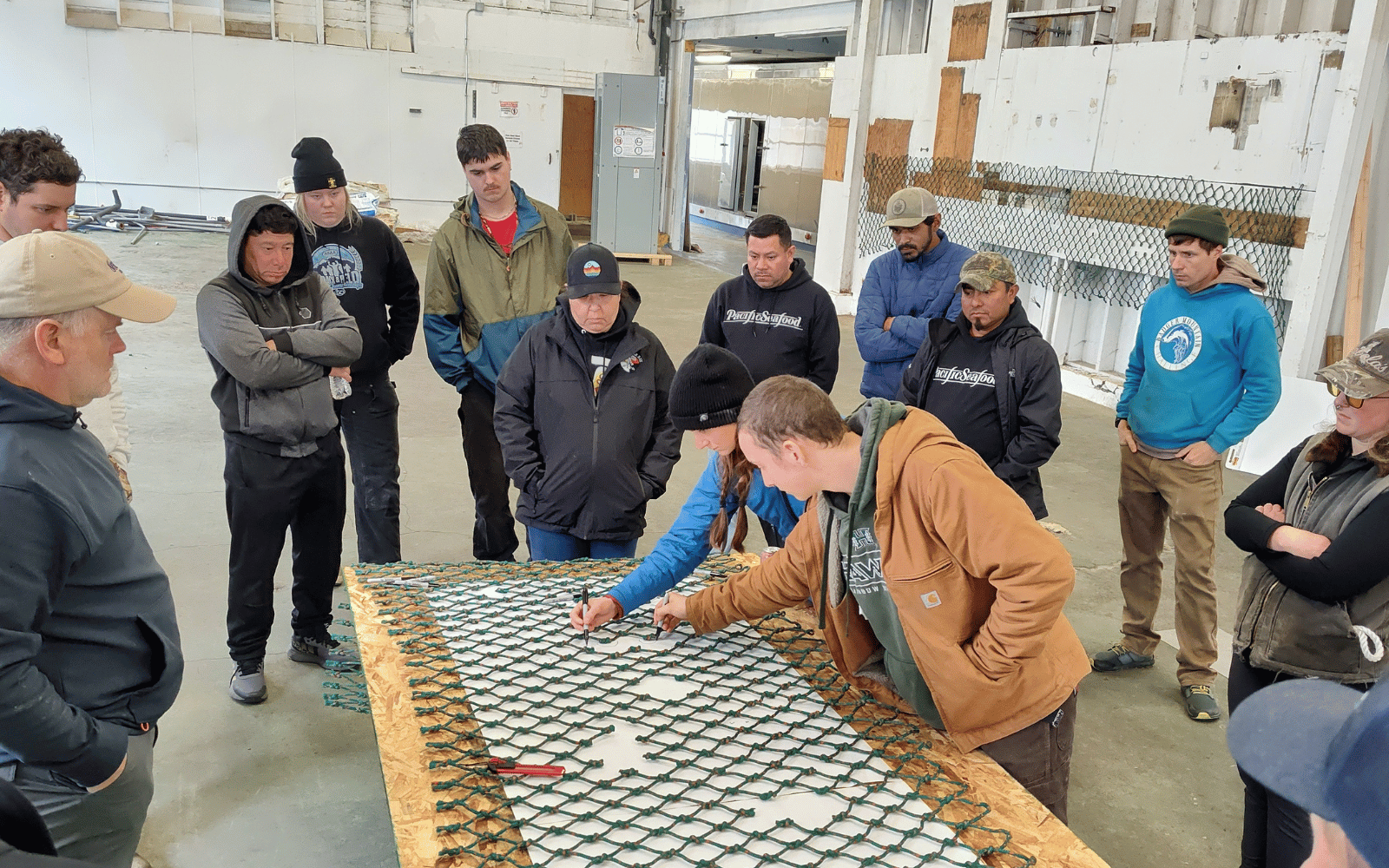
Washington and Alaska's seafood industries are tightly intertwined, and a 2024 NOAA report confirmed what many fishers felt: fishing jobs and revenue are down. However, it remains a multi-billion dollar industry, with opportunities for a younger generation to fill the fleet.
Matt Munkres, 43, grew up in Gig Harbor and fished commercially since his teens. He typically fishes in Alaska, Oregon, and Puget Sound. He’s about a decade younger than the average age for a permit holder and pushed against that idea that there aren’t young people interested in fishing. Munkres said that there are lots of young fishers from Alaska and even within Gig Harbor who would happily homeport there, if they could get past the barriers to entry.
Alex Phil, 29, is one of those fishers. He grew up in Ketchikan and was attracted to Gig Harbor by the maritime community and beauty of the area. He keeps his boat, the Paige Marie, at Seattle’s Fisherman’s Terminal or in Westport, Washington, but lives in Gig Harbor.
Phil started fishing at 17 and has ran his own boat since he was 22. He recently bought the Paige Marie from Gig Harbor fisherman David Sorenson, who retired.
“Hopefully once the homeport is completed my boat will be moored in Gig Harbor,” Phil said. “Having to drive two hours to get to your boat becomes cumbersome.”
Economics of fishing
The Homeport project is nearing construction. In 2025, the city finalized input from the U.S. Army Corps of Engineers and received approval from the U.S. Fish and Wildlife Service for their mitigation plan.
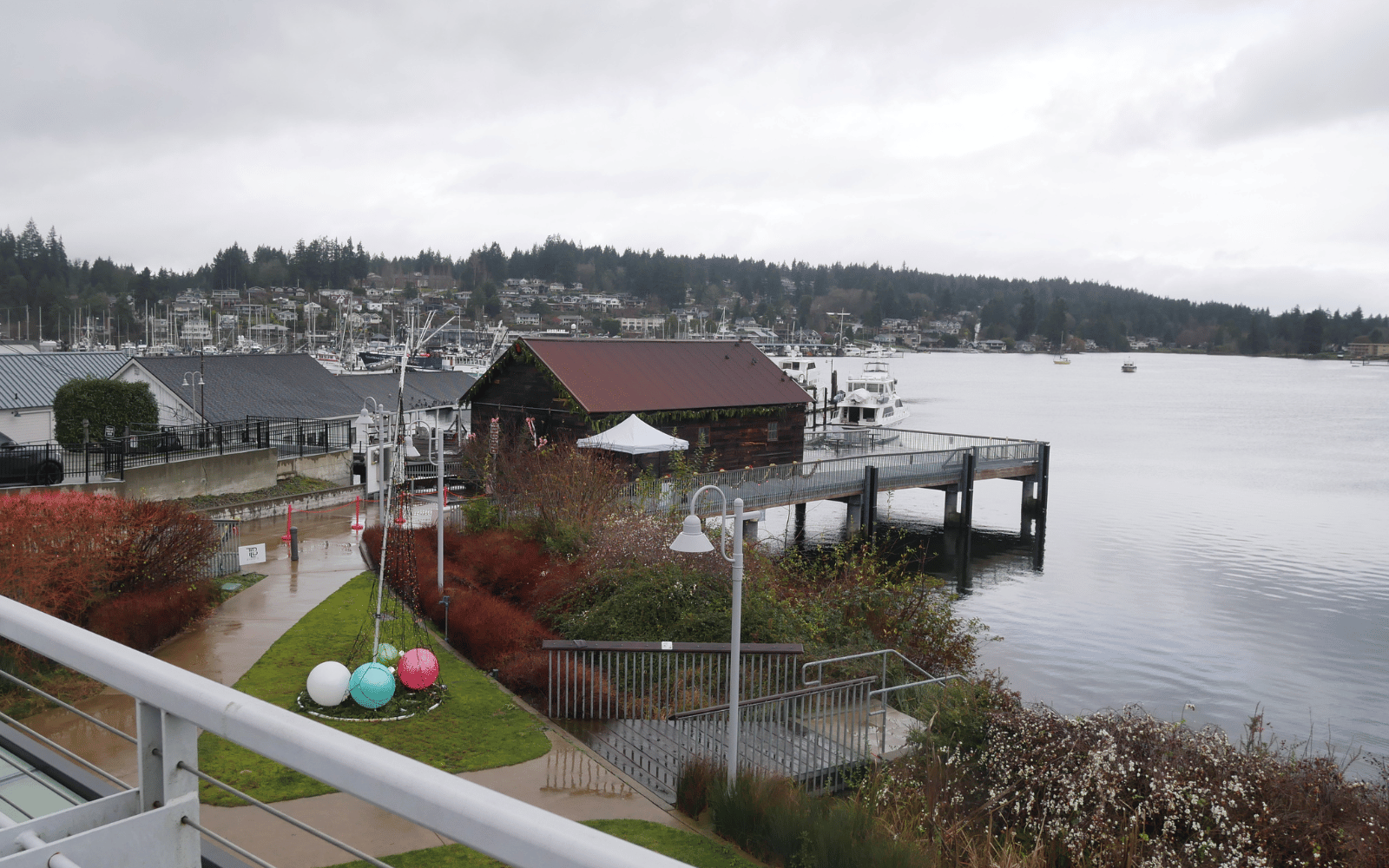
According to the USFWS, the mitigation plan didn’t meet the requirements for protecting two species listed under the Endangered Species Act: marbled murrelets and bull trout.
Some neighbors also expressed concerns about parking, lighting, and the visual impact of 17 large vessels blocking the harbor view, but according to the City of Gig Harbor’s Public Works Director Jeff Langhelm, USFWS approved the three mitigation measures the city proposed. After one final step of approval from the USACE, the project will be ready to go to bid.
Those three mitigation measures include the removal of a “dilapidated” pier near Ancich Park, mitigating beach erosion that happens at the end of Soundview Drive during high rain events, and paying for nearshore conservation credits through the Puget Sound Partnership. Final approval rests with the USACE, who will issue a permit on behalf of all federal agencies. Once that is in place, the city can begin their process of local and state permitting, followed by bids and construction.
“All said and done, we hope to see construction completed by the end of 2026,” Langhelm said. He acknowledged that is an ambitious timeline, but said “we’re going to push hard for it.” Hoppen and Lovrovich said there has been near-unanimous support for this project from city council members across the years.
The City of Gig Harbor’s 2025-2026 biennial budget allocates $3,480,000 to this project, funded by the Hospital Benefit Zone, the Port of Tacoma, the donation from the Gig Harbor Commercial Fishermen's Club, and the Real Estate Excise Tax.
The Homeport is expected to cost $30,000 to maintain annually, with projected revenue of $15,000 to $40,000 from moorage fees.
Hoppen emphasized the different economic impacts of commercial versus recreational vessels. According to the Port of Seattle's 2025 Economic Impact Analysis, commercial fishing has about seven times the economic impact compared to the Port's recreational marinas.
For fishers like Phil, Hoppen, and Lovrovich, the stakes are more than just a place to moor; it’s a campaign to ensure the harbor remains a place where people still work on the water.