Practical Information
The basics of tours
A tour is a journey that requires four things: a guide, a route, attendees and a script. Operating a tour is different than attending one, but tour guides learn from taking other tours too. A good tour experience blends education, theater, discovery, and now, journalism.
Tour basics
When you really boil it down, what does a tour consist of?
- Tour guide - someone who is a subject-matter expert or trained to speak about a topic.
- Transportation - A tour can be on foot or involve vehicles. There’s also transport to the starting and end points.
- Itinerary - The tour follows a planned route and stops over a set period of time.
- Sights - There are destinations or particular locations to see.
- Price - The experience is made available for free or at a cost. Attendees may also tip.
- Services - Consider attendees’ needs during the duration of the tour such as restrooms or meals.
Tours can be very simple or increasingly complex.
Inspiration from the tourism industry
Often, the word “tours” immediately brings to mind out of town visitors. These types of tours are for sightseeing, leisure, or as a means of travel.
Locals can be “hometown tourists” without even realizing it, creating direct and indirect economic impact akin to the tourism industry. This might take the form of attending a concert or show in a different part of town, spending a day out in another neighborhood, or exploring a nearby museum.
A tourist, on the other hand, might pack a lot more experiences in a short time or utilize services specifically tailored to a sightseeing traveler. Their stay is temporary, as are their local news and information needs.
“Journalism tours” share similarities with the tourism and live experience (or entertainment) industries. One key difference is the target audience for these tours.
For tours to help a news publication engage with the community it serves, the tour attendees should also be part of that community.
This guide focuses on developing tours for local residents and audiences. “Tours for locals” can be a confusing concept, especially when talking to potential partners. Defining where the overlap does, and doesn’t exist will help, while benefitting from these growing industries.
Journalism vs. Tourism
The content of a tour for locals will be different, veering into current news and events rather than an exclusively historical or overly commercialized itinerary. The experience doesn’t end after the tour either, it’s a building block for listening and mutual trust.
However, while not the primary audience, a visitor might also be interested in these tours. For example, Future Tides Tours are marketed for “locals and curious visitors” and past attendees have brought out-of-town guests. Untapped New York also receives a mix of locals and tourists across their tours.
Whether for locals or visitors, tours generate revenue, facilitate cultural exchanges, and capitalize on a strong sense of place. Another key similarity, which also overlaps with the entertainment industry, is providing an experience.
Journalism vs. Entertainment
Demand for experiences has grown over the past several decades, driven in part by younger generations. This hasn’t escaped the journalism industry’s notice, as publishers branched out with conferences, festivals and other events.
Tours take a different path than events, but they both offer live experiences. Research shows people are seeking out experiences while traveling, and at home.
Authenticity is also in high demand, and the experience greatly depends on the guide. Both offer opportunities for local news organizations, while also building a new source of revenue.
Tours, like concerts or other cultural activities, have a role to play in a local economy. Paid tours generate revenue and require local employees. Indirectly, they might lead to new partnerships or tour attendee spending at nearby businesses.
How then are “journalism tours” different from other experience providers?
Defining the differences
There’s a lot to learn from these two adjacent industries, especially with regards to operations, marketing and revenue. Choose parts of the established playbook to borrow from, then set the rest aside to stay focused on building a journalism organization rather than a tour business.
Two key differences to keep in mind:
- Journalism is intertwined with the tour content and purpose. Tours are a different medium to share news and information, while also listening to our communities.
- Tours are a service for locals, but don’t necessarily exclude tourists. Research shows both audiences are seeking local experiences.
Mastering one industry is tricky enough, but journalism prepares you to dig in and learn about new topics. Research tailored to your local community can help you tap into these major industries.
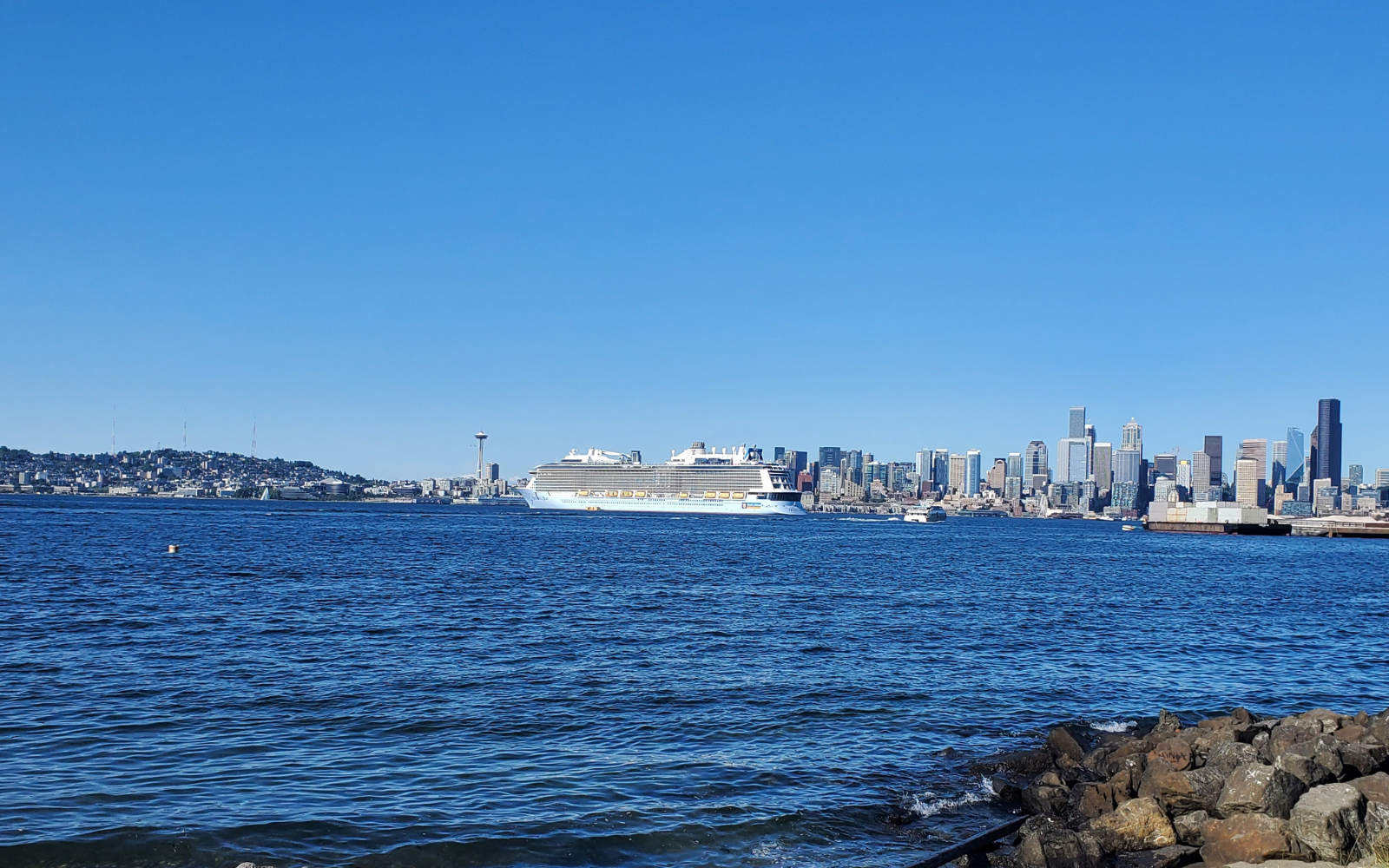
The differences will influence potential partnerships. For example, a tour operator trying to connect with tourists might join a destination marketing organization or set up agreements with a travel agent or cruise operator. These associations would not be relevant when offering tours for local residents.
4 factors to consider
The following elements are the building blocks of a tour. Consider what makes your publication, the place and people you serve unique, and how that translates into each of these elements. In the next section, you’ll customize these for your own tour pilot.
Geography
Identify if there’s a good place to convene a walking tour in your community. This is the simplest type of tour. Consider the distances, public versus private property, and the news that takes place in that space.The right route goes a long way.
For Future Tides’ tours on the Seattle waterfront, there are a few potential locations but the pilot route started in a city park because as long as the tours are free and under 50 people, no permit is required. The route, identified using Google Maps and visiting the area on foot, is 1.5 miles long.
What really made Lake Union Park a great place for these tours is all the activity taking place in, and around, the park. It provides ample examples of the modern maritime community that Future Tides covers with natural segues into recent news, and is unique to the city.
Newsberg Founding Editor Branden Andersen created a route (shown above) through downtown Newberg, Oregon. It’s centralized and takes less than an hour to walk. But, after doing his first tour, he learned how loud the highway through the middle of town is, making it hard for people to hear.
It’s important to walk your route before leading a tour, and visit the area multiple times. Even with scouting ahead, tour guides need to adapt to changing environments.
Consider public versus private property. If there’s a private property you could arrange exclusive access to, not so different from a press tour, that may be a value add.
“What we specialize in is getting access to places that other people don't have access to so you have exclusive access to an abandoned building or exclusive access to a person in charge of a place, a building.” — Untapped New York CEO Augustin Pasquet
In some cases, there may not be a central location to walk. Consider covering more ground with public transit, buses, golf carts, bicycles or boats.
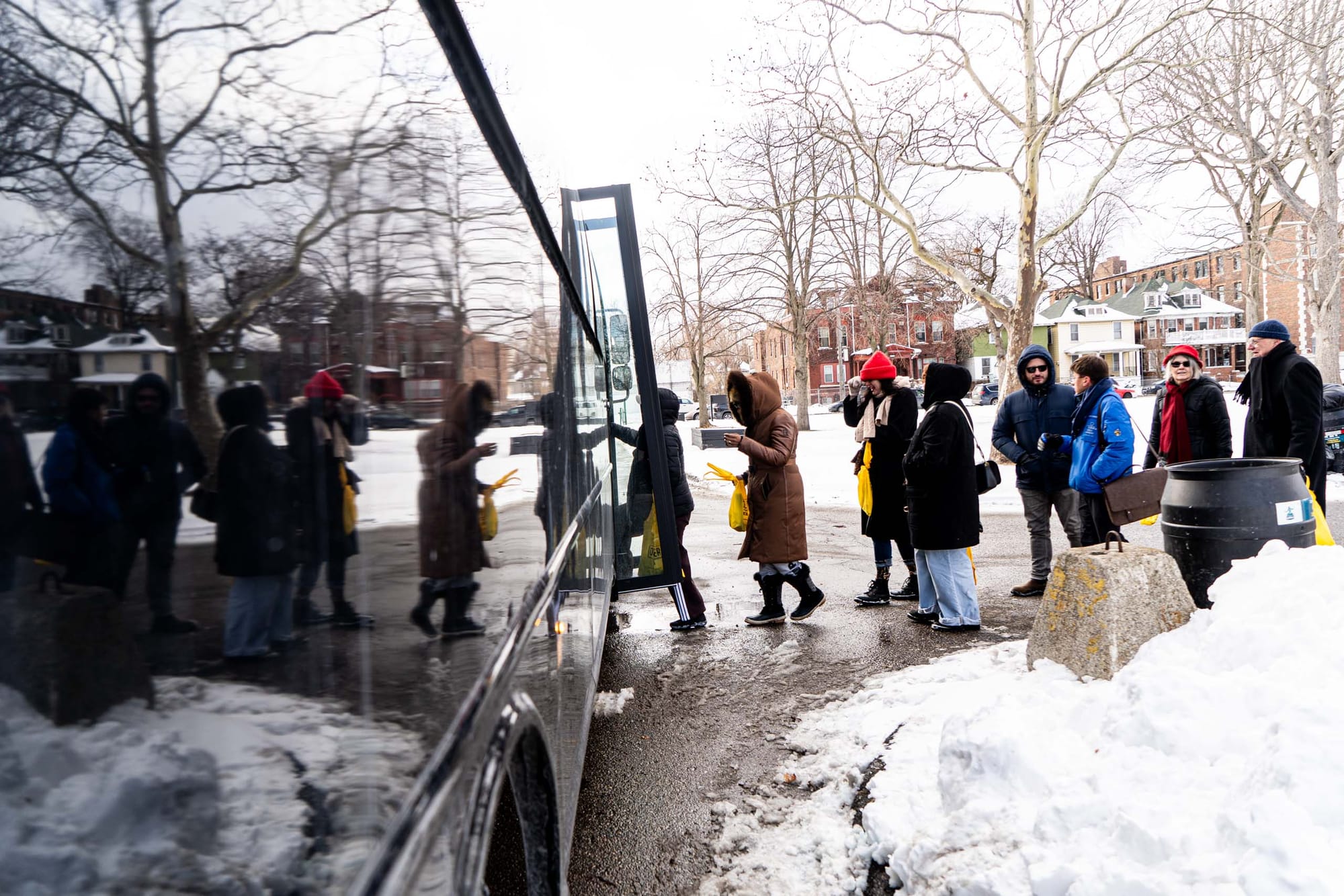
These will introduce additional logistics and expenses but also additional opportunities, especially for new partnerships. For example, Outlier Media in Detroit partnered with City Institute for the sold out “One Good Bus Tour” based on their reporting.
1. Toggle between Layers to look at the same area with different overlays such as satellite, bike routes and transit.
2. Search the area using “Things to do” or “Museums” or “Attractions Nearby”
3. Drill down with Street View but check the image capture date in the bottom left corner, especially in areas with recent development
Content
Like with good journalism, good tour content wins the day. In the “Destination Overview” section, you read about the importance of editorial content in tours.
“Whatever was your most popular, well viewed post or article or piece, try to make it into a tour, that has struck fire for us twice.” — Justin Rivers, Untapped New York
Local journalists should already know a lot about a place. Some background information that you might take for granted, or as evident, is probably perfect for a tour. Don’t assume what people know, but also don’t oversimplify or shy away from complex or contentious issues.
Start with a list of topics tied to stops along the route. Refine this list after each tour, eliminating or expanding on some topics, and rearranging the order as needed. Decide how to include key facts, practical directions, pronunciation notes, and ask for financial contributions.
A tour “script” shouldn’t be read verbatim. It’s more of a talking points list, there for reference. The script should evolve to fit different guides or as news happens. Think of it as a news article with a note that reads: This is a developing story and will be updated.
Consider how to handle local history, this comes up often. Some newsrooms partner with local historians or museums. In Seattle, there are a number of great history tours and museums, so the Future Tides script includes only a little history for background and primarily focuses on the present day, while directing people to those other sources.
Even with a lot of information packed in, good tour content isn’t dry. Passion and a little bit of humor go a long way, which is why selecting and training guides is extremely important.
“It's one thing to write articles. It's one thing to dive into a topic, even for the research of a tour, and it's a very different thing to deliver the content… It's a show, it's a moving show, it's a performance.” — Augustin Pasquet, CEO of Untapped New York
Staff
Tours take staff time, but not 40 hours/week, especially not for a pilot. Whether paid or unpaid, account for time spent developing and operating tours to make the effort measurable.
Is there existing event, marketing or operations staff who can allocate some of their hours to a tour pilot? For editorial input, do you want full newsroom participation or to partner with a specific journalist?
If you’re solo, which is the situation in three out of the five case studies in this guide, how can you apply work you’re already doing to a tour?
Developing a tour is like reporting a feature, it requires research, maybe a few interviews, and then writing and editing to adapt it into a script.
Allocate additional time for:
- Marketing the tour
- Practicing the tour script
- Leading the tour (including arriving early and transit time)
- Debriefing after each tour and the pilot as a whole
This could add up but with discipline, it can be manageable.
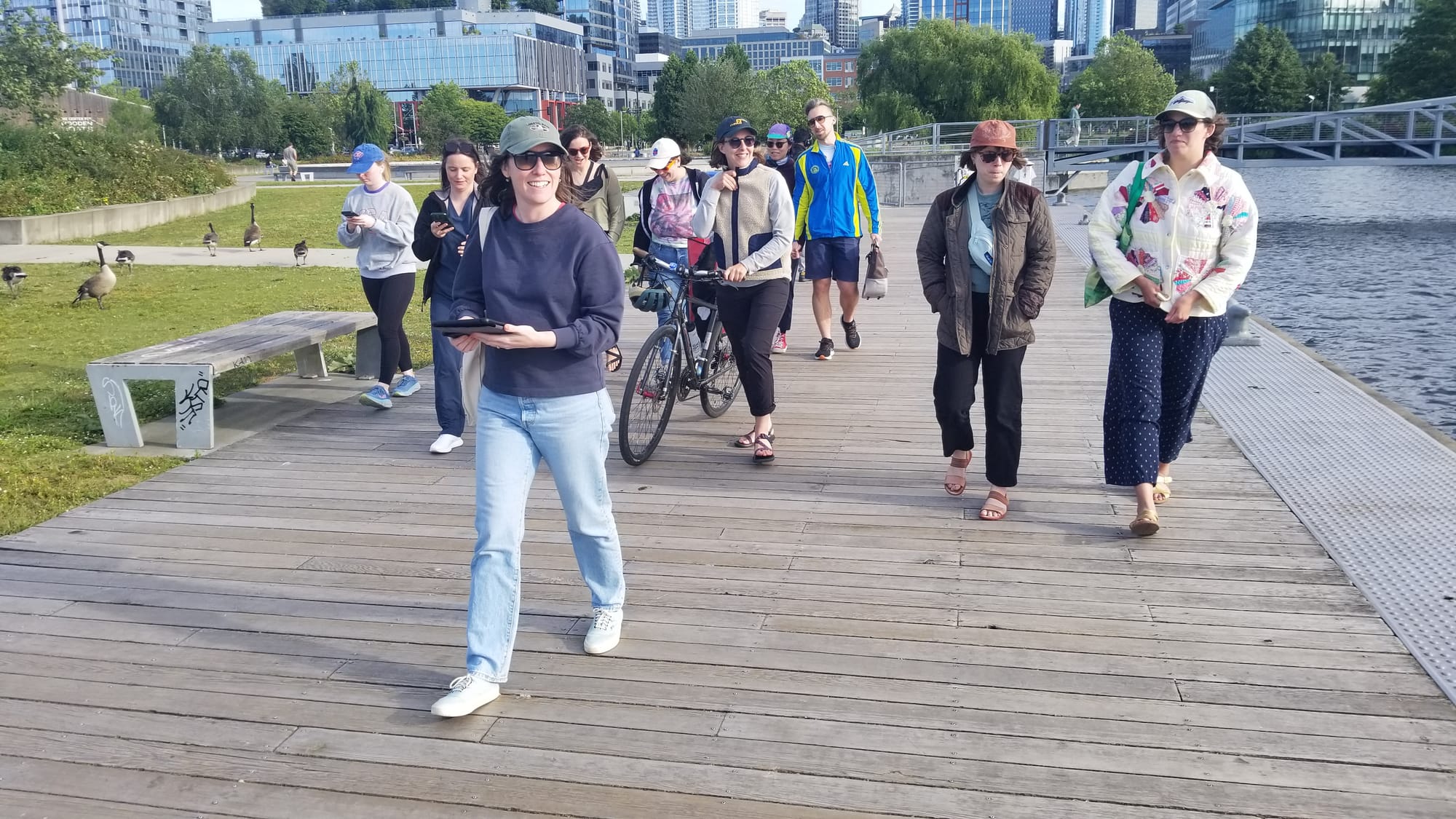
Future Tides’ 2024 walking tour pilot took an estimated 40 hours for both planning and execution. This will shift over time too. In year two, more time was spent on marketing than research, and doing tours twice a month instead of monthly.
Time is limited but consider both the short term (new subscribers, in-person audience engagement) and long term (cultivating members, brand awareness) value.
Some journalists and news leaders will personally enjoy leading tours. But that might not be everyone’s preference nor is it scalable. Adding one other tour guide or partnering with a colleague may help.
“It’s very, very much two worlds. The researching, editing, publishing and then delivering a tour. The content is the same, but the end delivery is so different. So maybe you like doing the first part, but not the delivery. So then you can partner with people and train them or work with people who are already doing tours” — Augustin Pasquet, CEO of Untapped New York
Tours could also be led by paid part-time guides or volunteers trained to deliver your unique tour content. Depending on the structure, guides could be managed by operations, events, membership or audience engagement roles.
Strategic partnerships may also help with staff time. Outlier Media in Detroit and Seattle author David B. Williams both work with partners who manage the tour logistics for them.
Audience
You’ve mapped a promising route, found synergy between your reporting and tour content, and identified someone ready to talk loudly and potentially walk backwards, but: Who is your tour for?
Tours, like publications, shouldn’t try to be for everyone. Additionally, your target tour audience should be a subset of your publication’s audience or target audience.
Some examples:
- Outlier Media is a nonprofit newsroom for Detroiters. To date, their tours are for current or prospective members and donors.
- The Future Tides pilot brought out both current subscribers and a new audience. In the second season, most attendees were engaging with Future Tides for the first time via the tours.
- Newsberg serves neighbors in the Newberg-Dundee area (about 40 minutes outside of Portland, Oregon). Many attendees on the Newsberg tour moved to the area within the past year.
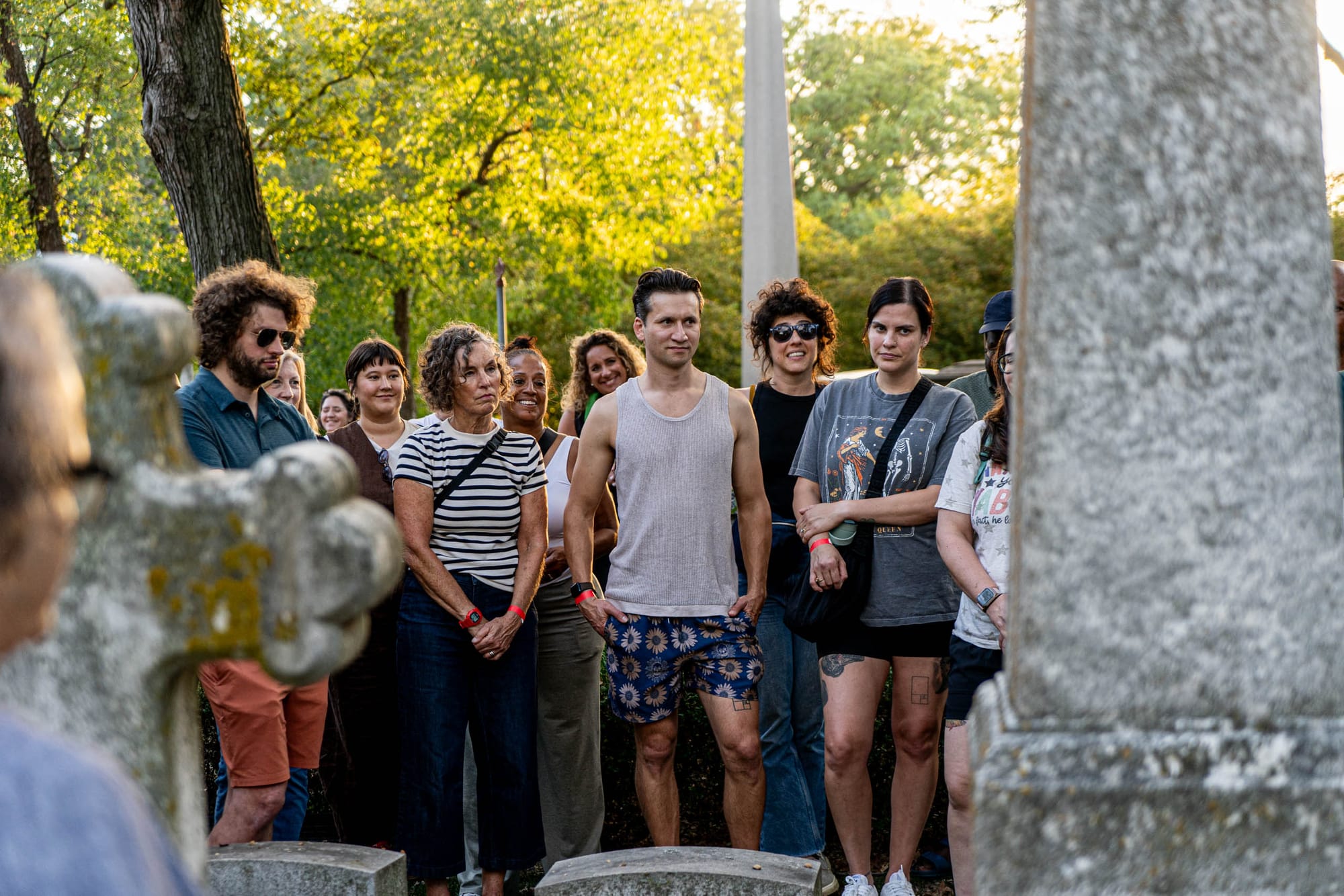
Who your tours are for might change over time, whether that’s intentionally or unintentionally. Pay attention to who you want to attend in comparison to who is actually attending. Their direct and indirect feedback will help you answer “who is this tour for?”
Revise or make multiple tour audience funnels, depending on what you learn.
While your tour audience isn’t the exact same as your publication’s audience, they must be connected so that tours support your audience development and revenue strategies.
Essential systems checklist
Untapped New York CEO Augustin Pasquet's most important advice for anyone starting to do tours is to make sure the right systems are in place.
These systems will look different for a pilot versus an ongoing tour program but they are nonetheless essential. Make sure you have:
✔️ Proper insurance coverage. Review your business insurance policy, ask about tour-specific insurance, and be prepared to provide an insurance certificate if asked.
✔️ An understanding of your local regulations. Check the city, county and state for any regulations related to tours or limits on group sizes in public spaces.
✔️ Registration software. An online form builder (Google Forms, Typeform, Jotform, etc.) will work for a pilot. Beyond that, look for tour-specific online booking software instead of trying to use a platform designed for events.
A good software setup will also help guides check people in and convert attendees into email subscribers.
✔️ A plan for customer service. Especially for paid tours, provide contact information and establish a plan for responding to attendees up to the last minute.
✔️ A post-tour survey. Send an automated follow up after the tour and include a survey to help improve the experience.
Insights from Untapped New York’s Chief Experience Officer
Justin Rivers is a playwright and former teacher in charge of everything related to the “Experience” department of Untapped New York, which started as an online magazine. This department includes Untapped’s Insiders membership program and their public walking tours.
Rivers, who also studied journalism in school, started working with Untapped New York as a tour guide 10 years ago. Rivers develops new tours, runs them himself, and then will train guides to deliver tours, including best practices for guiding. He personally hires and trains every guide.
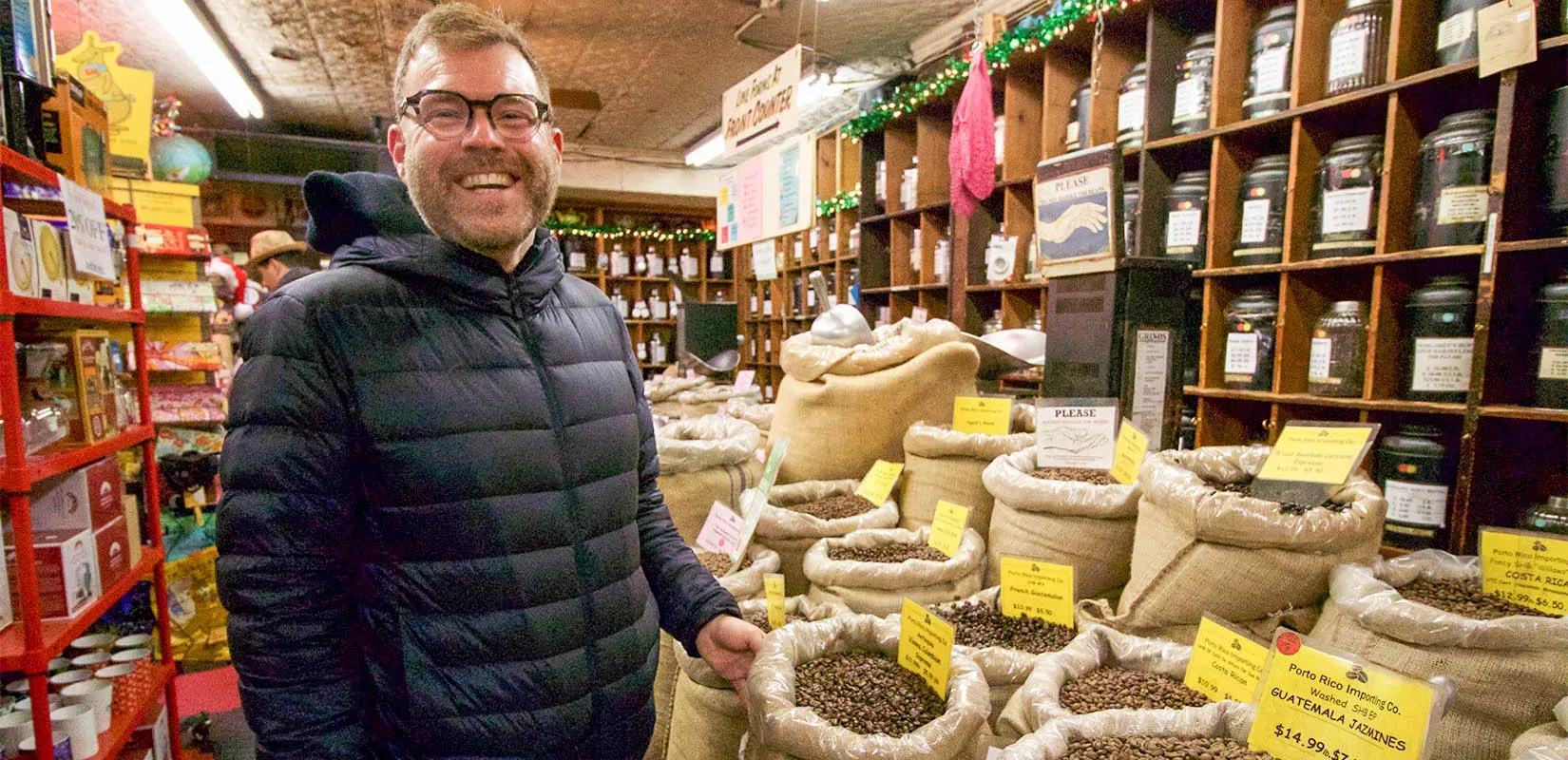
What makes a good tour guide
“It's customer connection from the very beginning. Connect with your customer in any way you can.”
- Asking attendees where they’re from — In New York, a mecca of tourism, this is very important. This could also include learning what neighborhoods (or boroughs) guests are from, or how long they’ve lived in the area. In addition to connecting with people, it will help inform how much guides say about certain topics or highlight connections to that place.
- Remembering attendees’ names — Rivers admits it’s very hard to memorize everybody’s names but it makes a big impression and always gets mentioned in reviews. “It is a really, really impressive tool in the toolbox for a guide, but it's also very tough.”
How to recruit tour guides
“One of the things I learned really early on not to do in judging a potential guide, is judge them by their cover letters or their emails,” Rivers said.
Potential guides, at least in the New York market, come from many disparate backgrounds and age groups. He’s had guides from age 17 to 81.
Rivers instead sets up an introductory conversation with anyone who expresses interest in being a guide. His first question is if they have, or are willing to get, a Sightseeing Guide License which involves a 150-question test.
“That weeds out a lot of people right in the very beginning,” he said. “Then you never hear from them again, because the process of getting the license takes a little bit of dedication.”
Next, Rivers asks “why do you want to be a guide?” This gives him a sense of their ability to work with an audience. He is looking for very impassioned people and great storytellers. An acting or theatrical background can be helpful.
“I don't hire guides who are looking to parrot scripts back, because I don't give them scripts for our tours. I give them outlines and notes and I let them shadow,” he explained.
While Rivers does ask about their past experience, he doesn’t find past guiding experience incredibly important. Of their 30-person guide team, he estimated that 30% started as first-time guides.
He’s also looking for someone that is good with people, or that will be with work and training. Sometimes that process includes “falling flat on their face,” which can be tricky from a customer service perspective, but Rivers said he’s seen it pay off.
A tour guide candidate must be motivated and is responsible for following up after the initial phone call. Rivers’ next step is to have them shadow Untapped’s three top performing tours, which run almost daily, seven days a week.
“I want to know that they know what kind of product we're putting out into the world and the level of quality that product has,” he said.
After shadowing, some candidates decide it’s not for them. If they’re still interested, Rivers sends notes and visuals from the tours and asks them to put together their own version of the product, on their own timeline.
“Again, the responsibility is always on them. And I find that for my sanity, and also it really does whittle down the people who are committed and passionate and love to do this.”
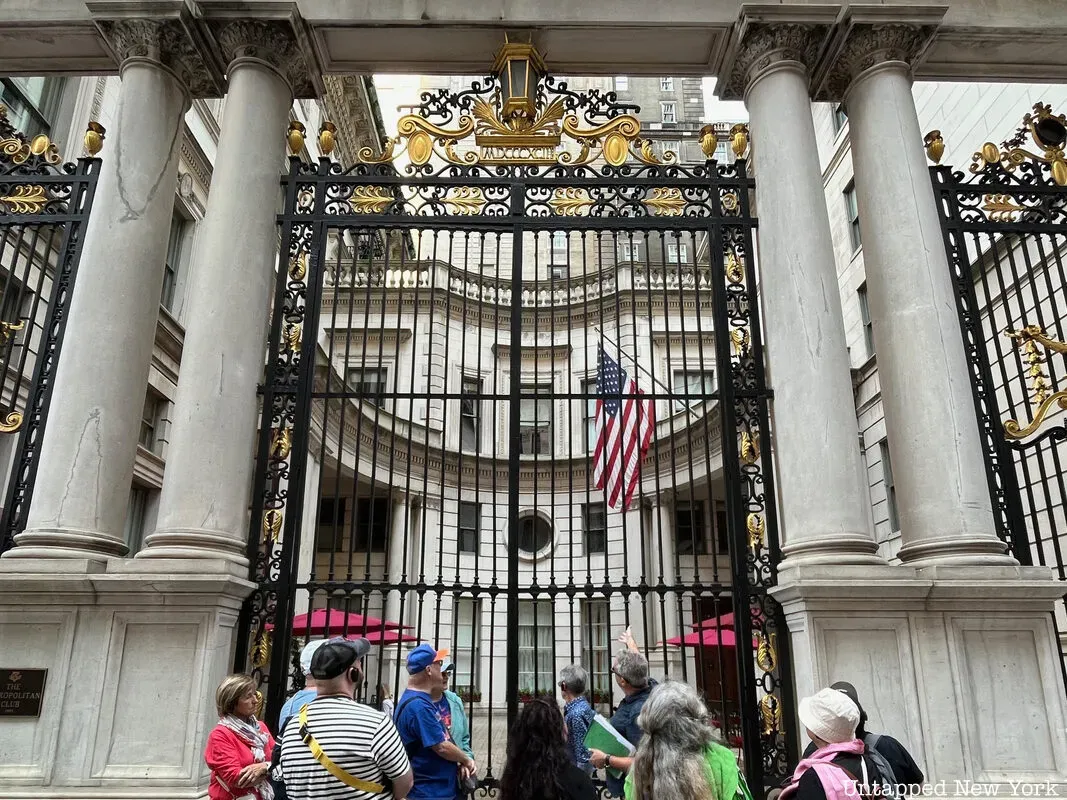
Curating a good tour
Rivers said a tour isn’t that different from a written article, or a series of articles.
“You start with your lead and you keep the information at the top of the tour topical and easily accessible. And then if you've got the time and the people are still reading — or they're still with you — then you get more detailed. And if they're not, okay, then end the article quickly,” he said.
Rivers recommended that guides talk about things that are important to everybody, that speak to the reason people are there. He used Untapped New York’s Grand Central tour as an example.
“People are there because they want to learn about the building you're standing in. And you may have a lot of information about that building, and that's great, but start with talking about the things that you can see and point to in the room or in the space, or out wherever you are, and then move a little bit deeper from there, if you find that the people are into it.”
Rivers advised reacting to the guests and their interests. His guides have all their “i’s dotted and t’s crossed” when it comes to their facts, but much of that might remain unsaid unless someone asks.
At the same time, guides should be careful to not go off topic. That can alienate most everybody on the tour if you are, for example, talking at length about boats miles away from any water.
Rivers provides the guides with way more information than they need, and each guide makes the tour their own by extracting what they think is most important.
“I want to train guides who are talking about the space they're in and about the topics they're interested in, because, guess what, they'll be interested in it too,” he said, referring to the tour guests. “If you have enthusiasm, if you are pepped up about it, they will be too.”
The magic of the right size group
When it comes to tour size, the sweet spot for Rivers is eight to 10 people. He said this is for a few reasons:
- You can remember everyone’s names and engage them in conversation
- Guests get to know one another a little more
- You can easily move around “anywhere” with this size group
That said, Untapped usually caps their experiences at 17 people because they feel it's a manageable number.
The larger the group, the more opportunity that someone will have specific needs, whether that’s a physical disability or someone needing more time and attention from the guide. It can also become more difficult to keep all the attendees engaged and interested.
“I feel like the smaller the group, the more tailor made it can be, the more intimate it can be, the more fun people can have, because they get to know each other,” he said, speaking from his extensive experience.
“I did an Art Deco tour last week with nine people, and God did we have a good time! It was just great,” Rivers said. “There's so much magic that can happen with that kind of group.”
Routes 101
There’s practical and editorial considerations for a good walking tour route. It also might not be where you first expect. Rivers developed his first tour at New York’s notorious Penn Station as a guerrilla marketing tactic for a play.
“That is not something anybody on the planet would have ever thought to give a tour of,” Rivers said. “It’s one of the worst public spaces in the world.”
A decade later, Untapped New York still offers a “Secrets of Penn Station” tour, so how did that work out?
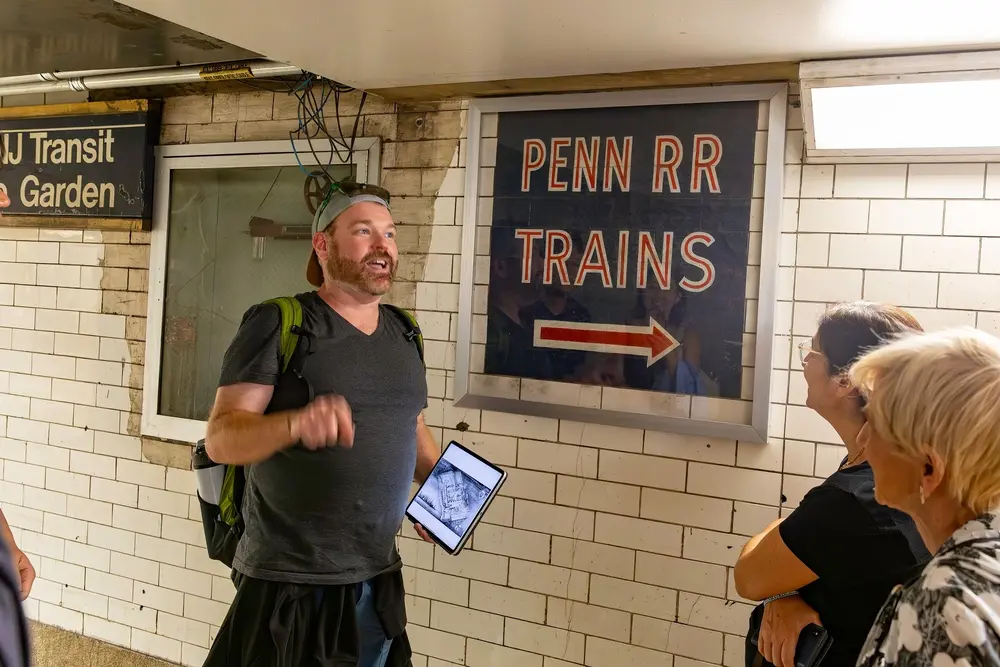
Rivers’ play was about the 1963 demolition of the “much more beautiful” Penn Station and he identified visible remnants of that highly ornate historic building. This very niche tour held people’s interest, and kicked off his partnership with Untapped New York.
The tour he gives today isn’t the same either. He has to change the route about every six months, as the space keeps evolving.
Rivers developed another “remnants” tour about Dutch New Amsterdam, because most people don’t realize the old Dutch street grid still exists in lower Manhattan.
“You can use a Dutch map from 1640 and still have the same street pattern embedded in, you know, 2026 New York,” he explained.
Even better, the route formed a loop, with the tour starting and ending in the same place. Rivers heard from seasoned tour guides that people “love a loop tour.” In addition to the ease of logistics, he said it adds some wonder.
“There's such a sense of, ‘what did you just do with us? and how did you bring us back here?’ It's kind of like magic for the guide.”
It’s impossible for all tours to be loops but Rivers said when it works, “it’s beautiful.”
What’s most important is to start in an easily accessible place and end in an equally accessible place, even if it’s not the same place. Consider spaces:
- Near a bathroom or coffee
- Parking or public transit
- Ending near good places to eat
- That might be a nice halfway spot, preferably with a restroom
“Now, if we went through all of the tours that I've created for Untapped I broke all those rules for most of them,” Rivers said. “And again, it goes back to how good your guide is.”
Find a ‘glass block floor’ moment
On the Penn Station tour, the route takes guests to the lowest level filled with train tracks. There is a moment where everyone is told to look up, in a very specific location, and they see the 1910 glass block floors covered over within the modern station.
At the beginning of the tour, guests don’t know the significance of these glass blocks, but after learning about the history of Penn Station, and then learning where to look, it all comes together.
“Everybody goes nuts over it, because it's like, ‘I didn't realize so much of this old station is still a part of this one.’ So internally, we always joke, there's always a glass block floor moment somewhere in the tour,” Rivers said.
“It's just a really great thing to have on a tour, no matter what your route is.”
Getting attendees talking
Once the questions start flowing, people will get engaged. But how do you get them started? Here are some of Rivers’ tips:
- Ask questions even if guests don’t. They don’t need to answer, but they can think about it, and eventually the guide will give them the answers.
- Gamify it: Offer a refund or free tickets to another tour if someone can answer a question.
- If someone asks a question between stops, repeat the question (especially if you’re using ear pieces) and then answer. This gets people thinking about their own questions too.
- Let people know there’s a lot to cover on the tour, but if they have a specific question or it’s not covered, encourage them to ask. If you don’t know the answer, it becomes homework.
- Give someone else the floor for a minute. If somebody has experience with what you’re talking about or the locations, let them share a story.
“Some guides do not want people involved. They want to talk, and…it's not part of my philosophy in giving tours,” Rivers said.
“You don't know what you're gonna pass up if you don't interact with your guests that way."
Activity: Assess if tours are right for your newsroom