Aging vessels swell demand for boat disposal programs
Boat disposal is ecologically positive but financially difficult.
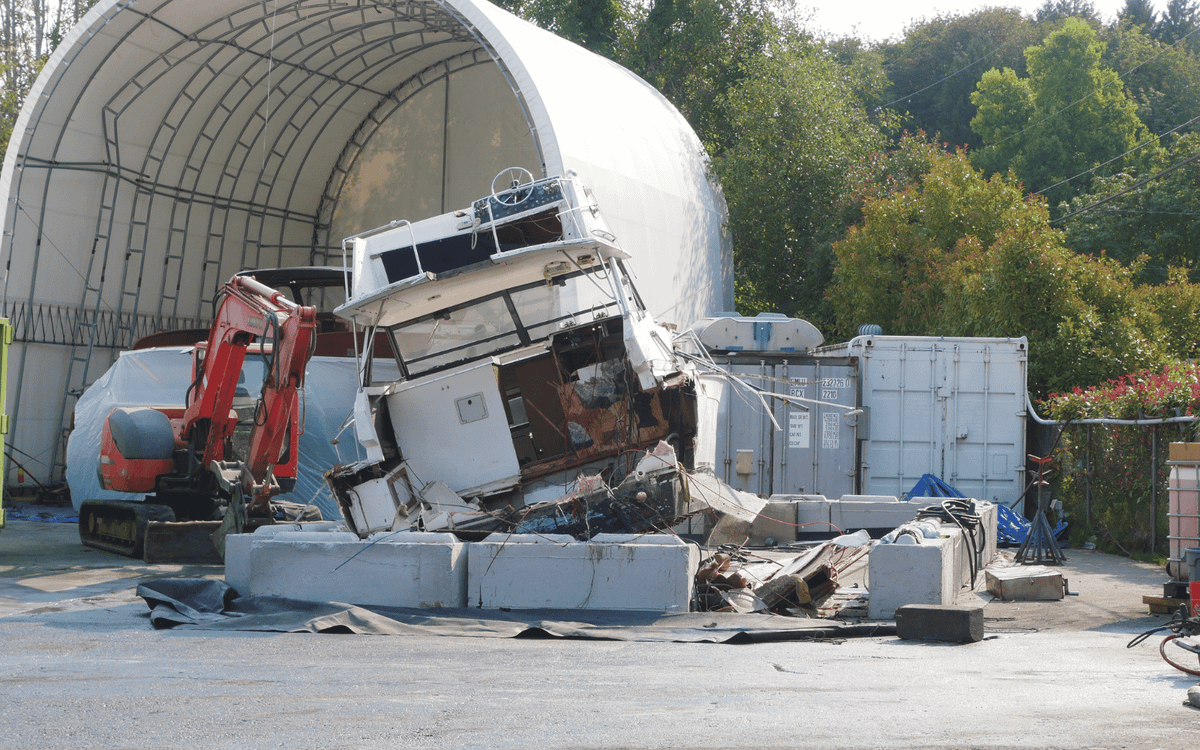
A Washington state program is helping some boat owners to voluntarily dispose of their nearly sunken boats. However, the program is only open to vessels that are in an advanced state of disrepair, and despite bipartisan support, the program receives more applications than can be funded.
Boat disposal is an ecologically positive and financially difficult project. There are un-recyclable and difficult-to-repair fiberglass hulls, hazardous fuels, heavy engines, and tiny but valuable parts. If a vessel does sink, it's even more harmful to the environment and more expensive to dispose of.
Private marine salvage can cost anywhere from $70 to over $450 per foot, and the upfront costs increase depending on the vessel’s condition and location.
Current marine salvage costs, based on vessel length or weight:
Washington state has two programs to deal with these vessels: When owners can’t be located, the Derelict Vessel Removal Program (DVRP), instituted in 2003 and partially revised in June 2026, allows the Department of Natural Resources to take control of vessels for disposal.
Another program, called the Vessel Turn-in Program (VTIP), instituted in 2020, is an option for when owners can’t afford to dispose of their boat.
Funding primarily comes from fees that recreational boaters pay annually:
- $3 of the annual recreational vessel registration fee
- $5 of the vessel visitor permit fee
- Commercial vessels pay an additional $1 per foot fee
“The VTIP is a preventive resource to deal with vessels, and it is a way for vessel owners to do something responsible with their vessel rather than sell them for a dollar, or gift them to a bad player, or abandon them and let the taxpayers cover the cost,” said Tammy Robbins, who coordinates the DNR program.
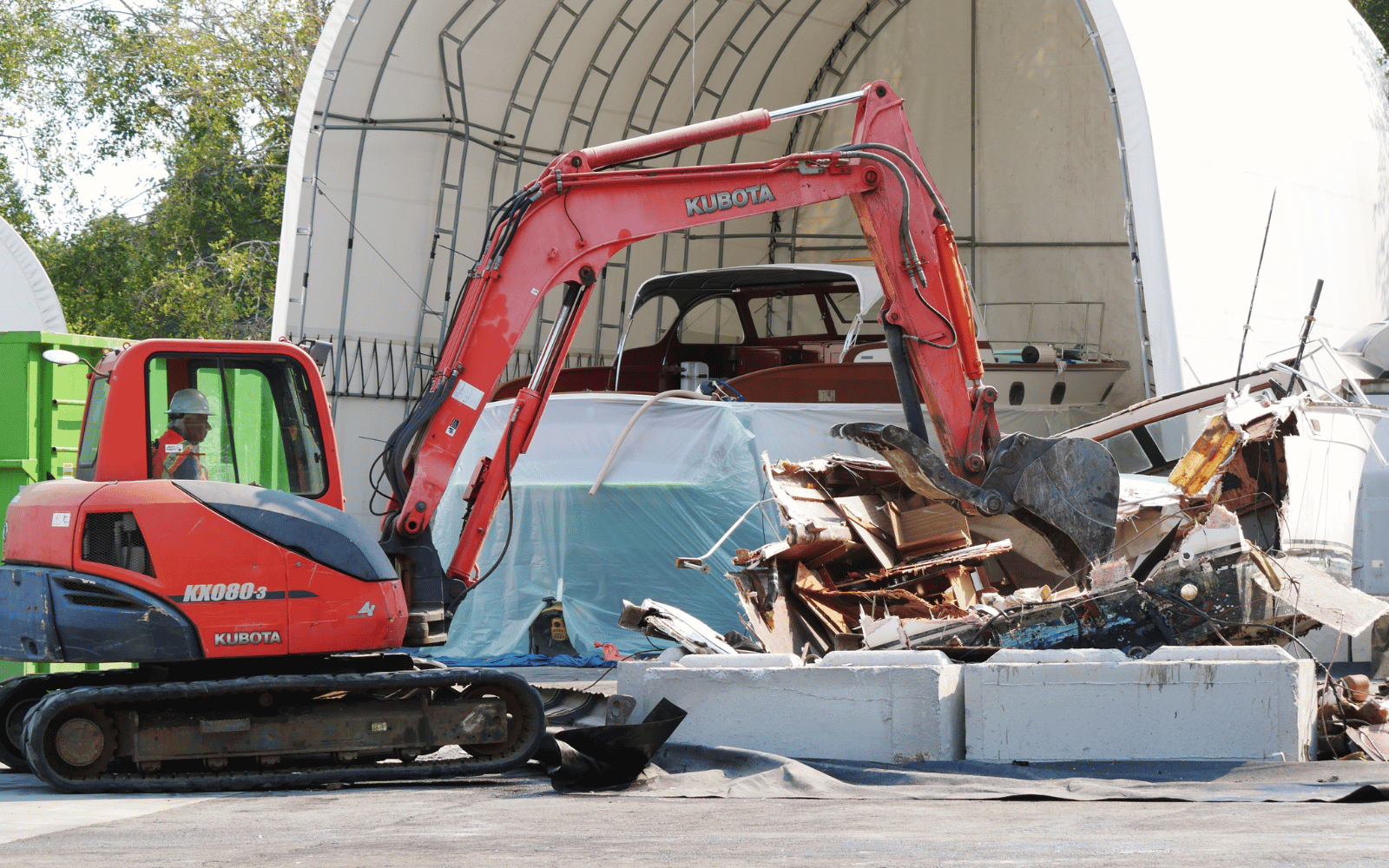
The program, which has received broad bipartisan support, held a summer turn-in event in Kitsap County, where the state paid contractors to dispose of 27 high-risk vessels.
DNR grants fund these turn-in events, organized with local partners, and federal funds supplement the program through the National Oceanic and Atmospheric Administration’s Marine Debris Program.
“We do this because it is cheaper and better to dispose of them safely before they sink and all of the gas and oil leaches into Puget Sound and causes pollution problems,” said Public Lands Commissioner Dave Upthegrove, speaking at a media day for the event.
The August turn-in event received close to 40 applications, some of which came in after the deadline. Over the last two years, 97 vessels have gone through the VTIP. This represents only a portion of the demand for disposal.
“I get so many calls for boats,” said Olive Theodore, founder of nonprofit boat recycler Walrus. She added that some vessels she had to pass on did end up going through the VTIP.
Vetting vessels and an owner's resources
The program isn’t perfect. To be eligible, boats must already be in an advanced state of disrepair, sometimes nearly sunk before their applications are reviewed, bids are placed, and the vessel retrieved. Owners must describe their boats as:
Owners must also submit a notarized “affidavit of insufficient resources,” However, according to Robbins, the DNR “will never be checking bank accounts to ensure their statement is true or not, but having them sign an affidavit helps keep people honest.”
There are no published guidelines for what insufficient resources might mean. The VTIP application cites average disposal costs between $2,500 and $62,000 for vessels between 15 and 60 feet.
|
Could you afford to dispose of your vessel?
Click an option to vote.
|
Given the limitations of the state's programs, and the high cost of boat moorage, there's demand for other solutions.
Gonzo Boat Recycling, one of the state’s VTIP contractors, is a private disposal business. Owner Frank Gonzales, said that a downside of that program “can be the speed, because you’ve got to submit it, you’ve got to show your financial things… it takes time.”
“There's not a lot of options is really what it comes down to, and a lot of dumps and landfills aren't even taking them,” Gonzales said. “There are still a few county-based [landfills], and if you're not from that county, they'll probably turn you away, even if they do accept them.”
Gonzo Boat Recycling processes between 100 and 200 vessels in a year, according to Gonzales.
“As far as I know, we're really the only ones truly doing recycling and salvage.”
Robbins at the DNR thinks there’s a better solution than having a state-run disposal program.
“Best-case scenario, before it becomes DNR’s problem, would be to require vessel owners to have insurance on their boats that will cover the end-of-life disposal expenses,” Robbins said.
Some boat insurance providers do offer salvage and wreck removal coverage, often as part of comprehensive insurance programs, which may be required by marinas or lenders. Currently, only Arkansas and Utah require boat insurance.
The case for intervening earlier
At the Kitsap County vessel turn-in event, Upthegrove connected the program to broader efforts to protect habitat, improve water quality and restore Washington's healthy salmon runs.
“We know Puget Sound is sick. Lots of people are working hard together to restore the health of Puget Sound, but we need to do more for water quality, more for habitat, and that’s what the Derelict Vessel Removal Program does," he said.
State Rep. Adison Richards represents District 26, which includes part of the Kitsap Peninsula, Bremerton and Port Orchard, where the event was held.
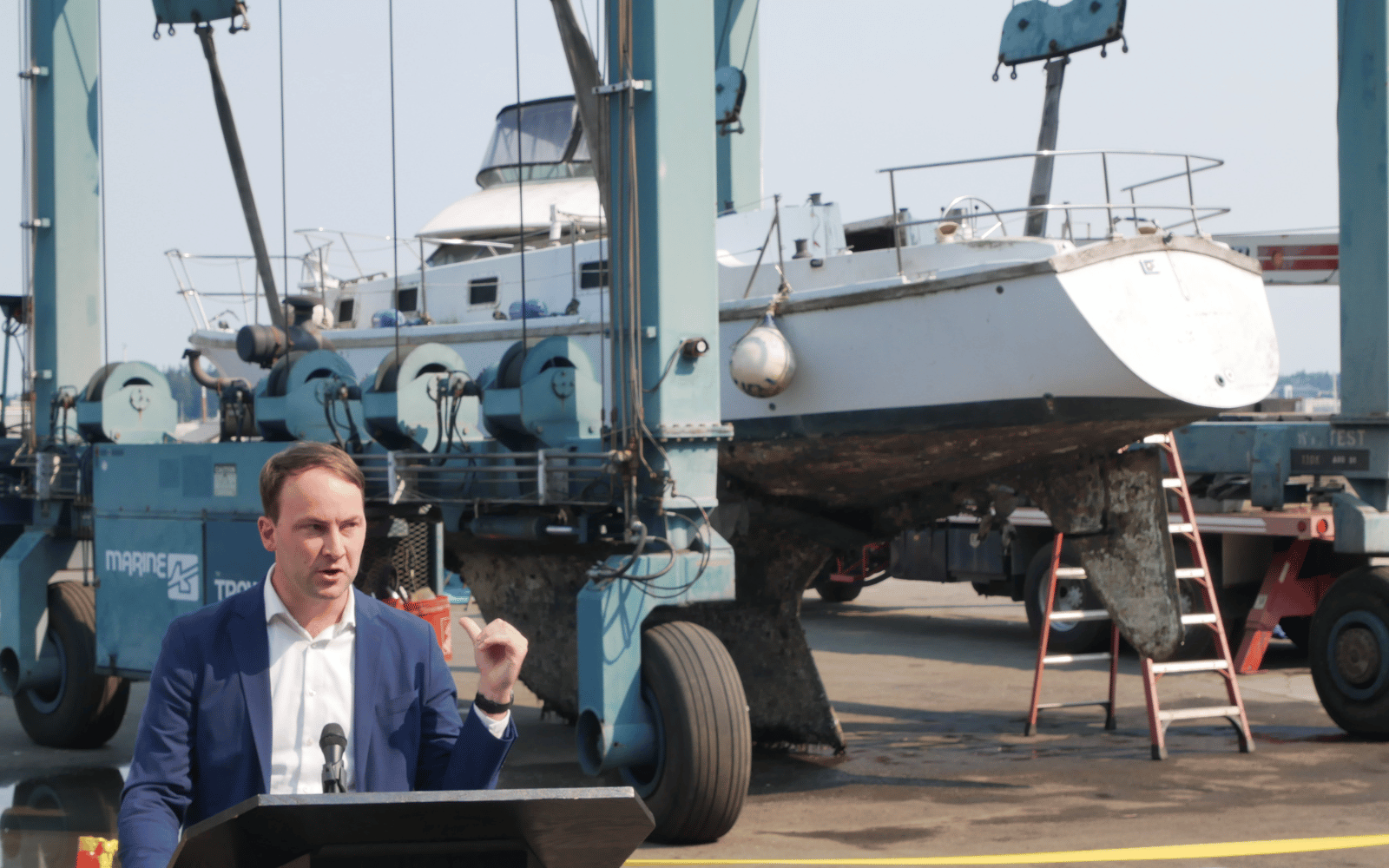
“It’s this kind of forward thinking that we need to continue to build upon and it’s the kind of positive example of this legislation and our work together that I think the people of this district and this state expected their government: that we’re working to solve problems before they become real major problems and by saving them money," Richards said.
The question of money, and future funding for numerous state programs like these, looms large over the upcoming Washington State Legislative session. Even with voters upholding the "millionaire's tax," the state continues to face a significant budget deficit.
The Recreational Boating Association of Washington, a lobbying and boating advocacy group, identified continuing support for the Derelict Vessel Removal Program as one of their potential 2027 Legislative & Regulatory Priorities, in addition to opposing increases in boater taxes or new fees.
After the November revenue forecast was released last week, Gov. Bob Ferguson directed state agencies, such as DNR, to reduce costs by 15% to address a $4 billion projected shortfall. He will release his proposed budget in December.
The creation of programs like the Derelict Vessel Removal Program and Vessel Turn-In Program, and the related Aquatic Derelict Structure Removal Program, is only the first legislative step. Each programs’ operations, and efficacy, are subject to funding and the state's budget. Those negotiations resume in Olympia on Jan. 11.