Getting There
How to launch a pilot
Before starting this section, you should:
- Complete the self-assessment to determine if tours are right for your organization
- Outline a tour itinerary in your copy of the Tour Pilot Workbook
Now, some advice before you prepare to launch your tour:

Treat tours like a product
The News Product Alliance defines a "product" as "a tangible solution to a real world problem that gives people value."
Tours are a solution for making people more informed about a specific place.
The definition continues: "It can be technical, like an app, system, or tool, or it can sit at the intersection of needs and goals that advance a business strategy, like membership."
Tours are like membership, in that they advance business strategy. By viewing tours like a product, which Untapped New York does, it helps with the development and growth of each tour.
Pilot: A short-term trial to test a new product or program.
Product/Market Fit: When the product satisfies the needs of a specific market or audience.
Use your tour MVP in a pilot program to confirm product/market fit.
Tips for getting started
- Imagine the absolute minimum needed to launch the pilot
- Don't hesitate to tell people it's something new (a pilot or a test)
- Constantly seek feedback to iterate within the set timeline
- Regularly check that the pilot is aligned with your strategy and mission
News Product Alliance
Google News Initiative: Build news products
Splice Media: Media product designers
American Press Institute: Adopt a product mindset for news
Case study: Future Tides
Founded in 2021, Future Tides covers how people work, play and live on the Pacific Northwest’s waterways to help the region’s maritime community navigate what’s next.
I’m Cara Kuhlman, founder and editor of Future Tides, and also the author of this guide. Future Tides is not my full-time job and I am a "solopreneur." This pushes me to be very strategic with my time and new initiatives.
Inspired by Untapped New York, I incorporated tours into Future Tides’ business plan from the start, but for several years it remained a “someday” idea. In 2024, nudged by a pending trademark filing, I decided to develop my tour MVP.
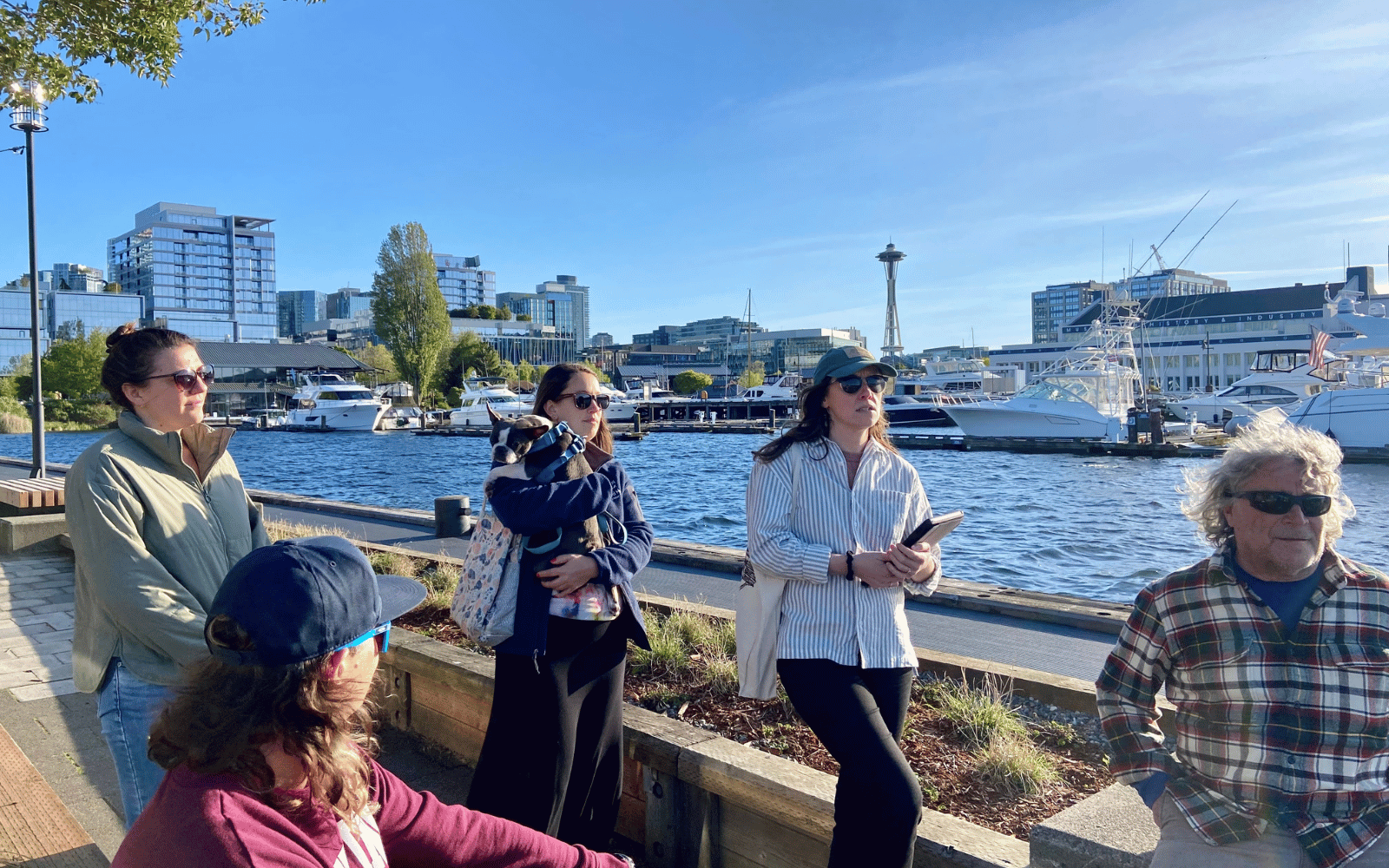
I led four tours the first summer with limited time and no funding. Approaching the tours as a “pilot” helped me get started and be transparent with attendees that this was new and an experiment.
The MVP
Here's how I did it:
- Scouted a tour route that showcased recreational and commercial maritime activities.
- Planned one tour per month for the “season.” Started with a friendly test audience for the first tour.
- Operated the tours for free to avoid needing a permit, reduce administrative work, and build confidence about the value.
- Gradually built out a pre- and post-tour workflow. Marketed via Future Tides email newsletter and social media accounts.
- Updated content between each tour, building on attendee questions and honing the narrative.
Time considerations
The systems for this MVP were pretty manual from sending email confirmations and surveys to updating the website. I felt that for the number of tours, using simple yet manual systems took less time than setting up automated or more complex systems.
I only posted two tour dates at a time to keep the schedule flexible. This helped me avoid burnout and consolidate sign ups. I also tested different days of the week.
To make running the tours sustainable, I developed a routine and really stuck to that. I noted observations and new ideas to revisit after the pilot.
Even thought tours are ripe for partnerships, I held off on establishing any due to my limited capacity and the experimental nature of the pilot.
Takeaways
- I estimate the pilot consisting of four tours over six months took 40 hours.
- 28 people and two dogs attended with one tour canceled due to weather.
- 25% of attendees subscribed to the newsletter. 50% were already subscribed.
- I personally enjoyed researching and leading tours, getting outside and meeting people.
- Doing multiple tours within the pilot provided more experience and data than a single test tour.
During the pilot, I quickly realized that beyond revenue, the tours created an avenue for community engagement and to inform what Future Tides' covers. The strategy expanded and became multi-faceted, as you’ve read in this guide.
Second time around
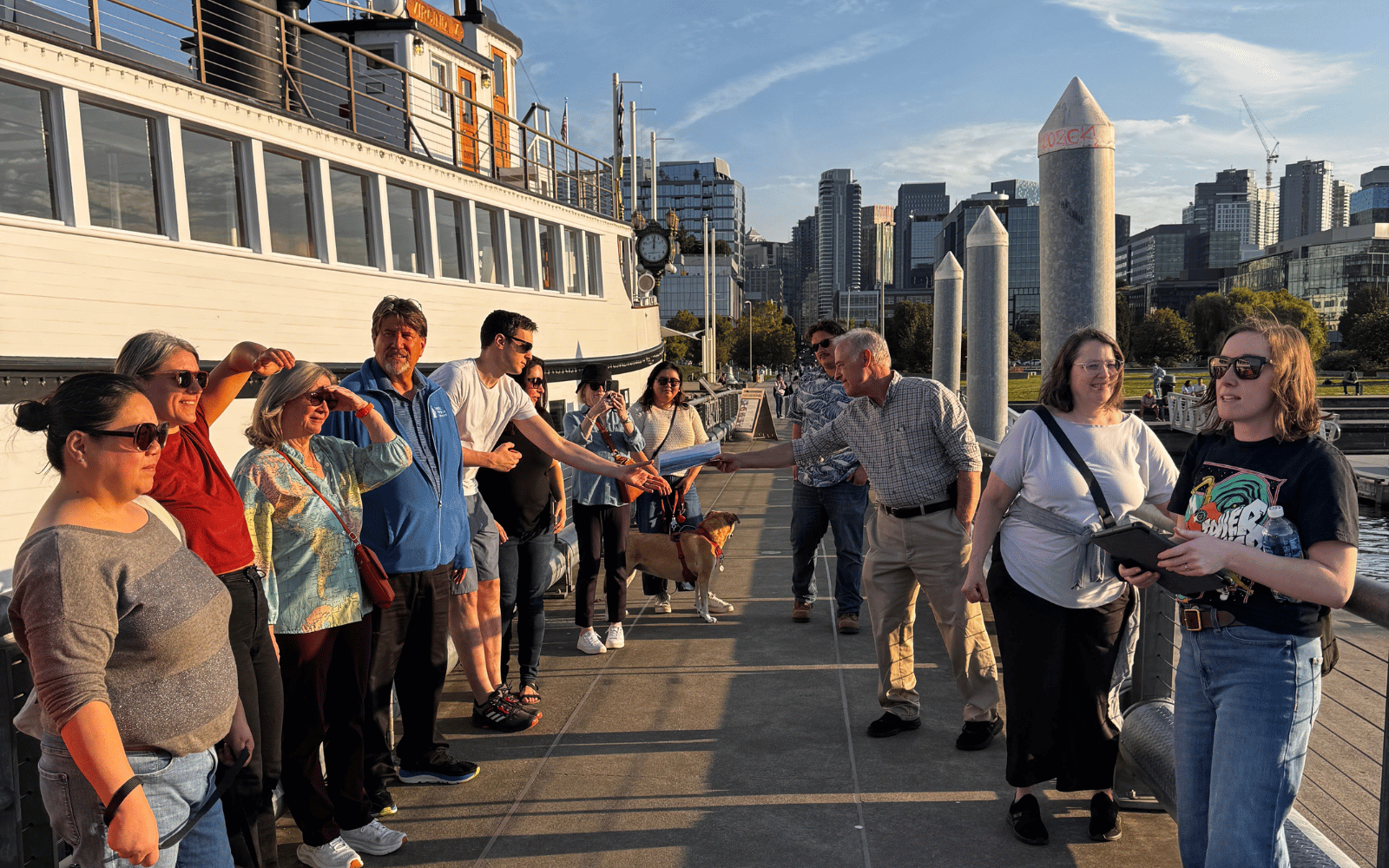
In 2025, for the second tour season, I decided to focus on increasing the impact and engagement over a similar number of tours. My goals were to: double attendance, test at least one revenue stream, and get more people from Future Tides’ target audience to attend.
Things that didn’t change:
- Location and route
- Sign up and email confirmation system (still manual)
- The script, with some updates
- No cost to attend
Schedule changes:
- Extended tour length from 60 to 90 minutes (an hour didn’t allow time for attendee questions).
- Tested new “special edition” versions of the tour for families and during a summer sailing race.
- Planned two tours per month over three summer months, instead of one per month.
Tour experience:
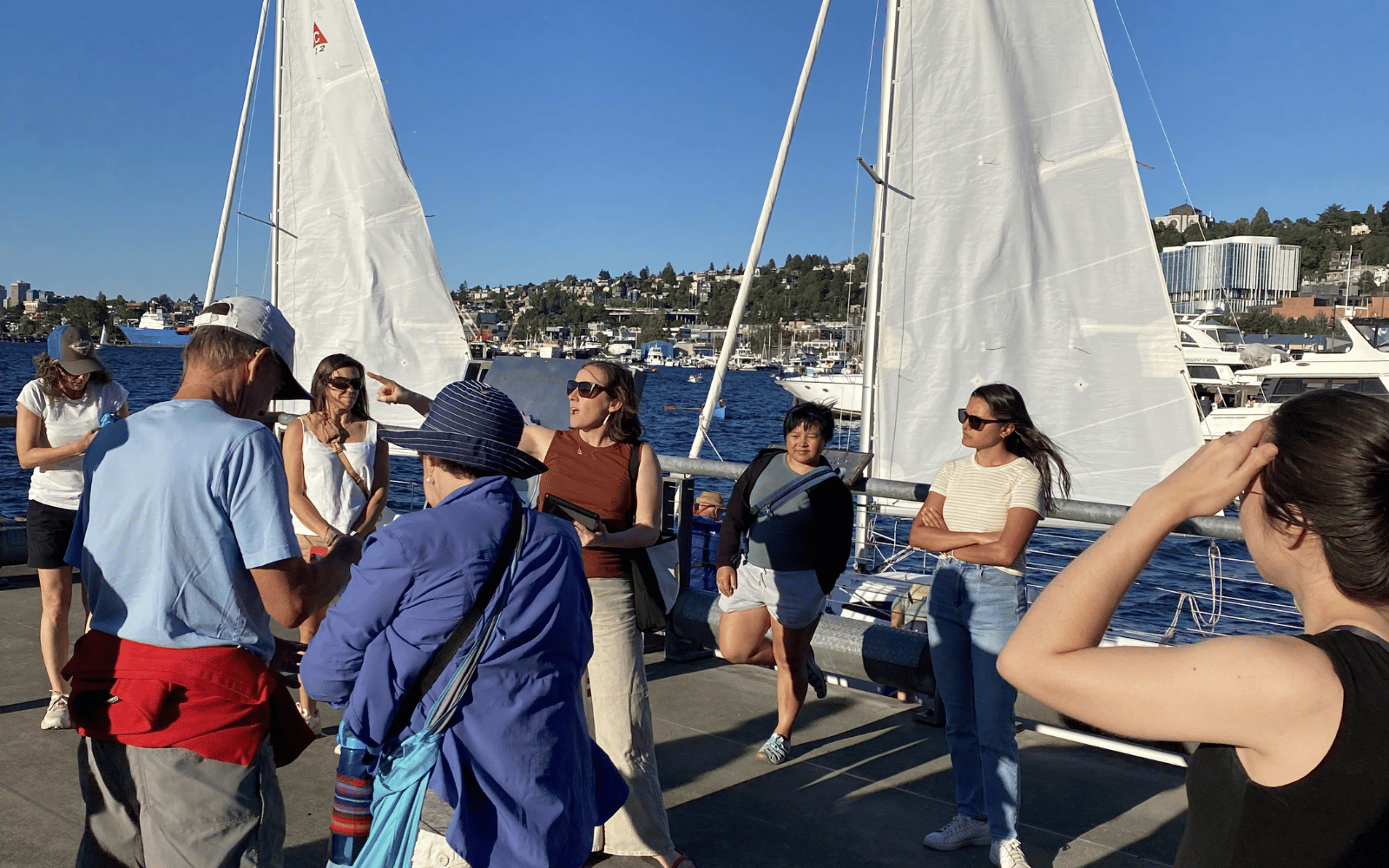
- Added printed visuals for attendees to pass around while listening.
- The average size of the tour groups doubled, changing the dynamic.
- I became a more confident, knowledgeable guide with better delivery.
More marketing:
- Direct outreach to local businesses near the tour route. This led to cross-promotion and kicked off partnership discussions.
- Submitted the tours to online community calendars including parent-focused ones.
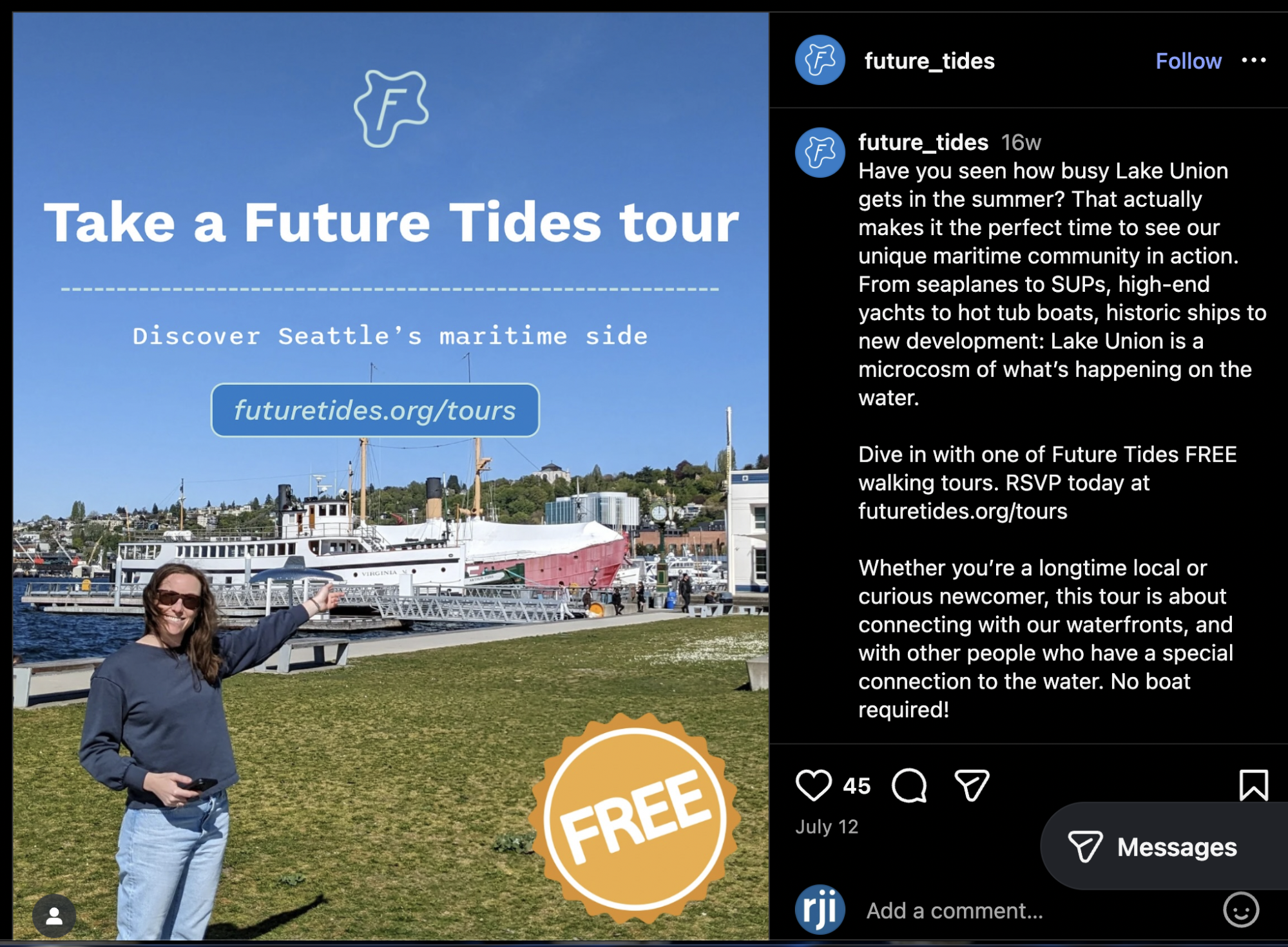
- Spent $350 to boost an Instagram Reel and Post about the tours, which was the most successful in terms of sign ups.
Revenue pilot
- Focused on how to generate revenue while keeping the tours free.
- Added an ask for support and debuted a QR code to make contributions (one-time donations or via a "tip jar").
- Received 13 contributions over four tours totaling $330.
- Excluding one larger donation, the average contribution was $14.
Takeaways
- The contributions signaled attendees found value in the tour. They chose to spend time and money with Future Tides.
- 69 people and eight dogs attended (2.5x the 2024 attendance!)
- Approximately 126 people signed up (a less than 50% attrition rate, OK for a free event)
- Tours continued to both engage current audience members and help people discover Future Tides.
- 36% of people who signed up became Future Tides subscribers.
- 20% of people who signed up were already subscribers.
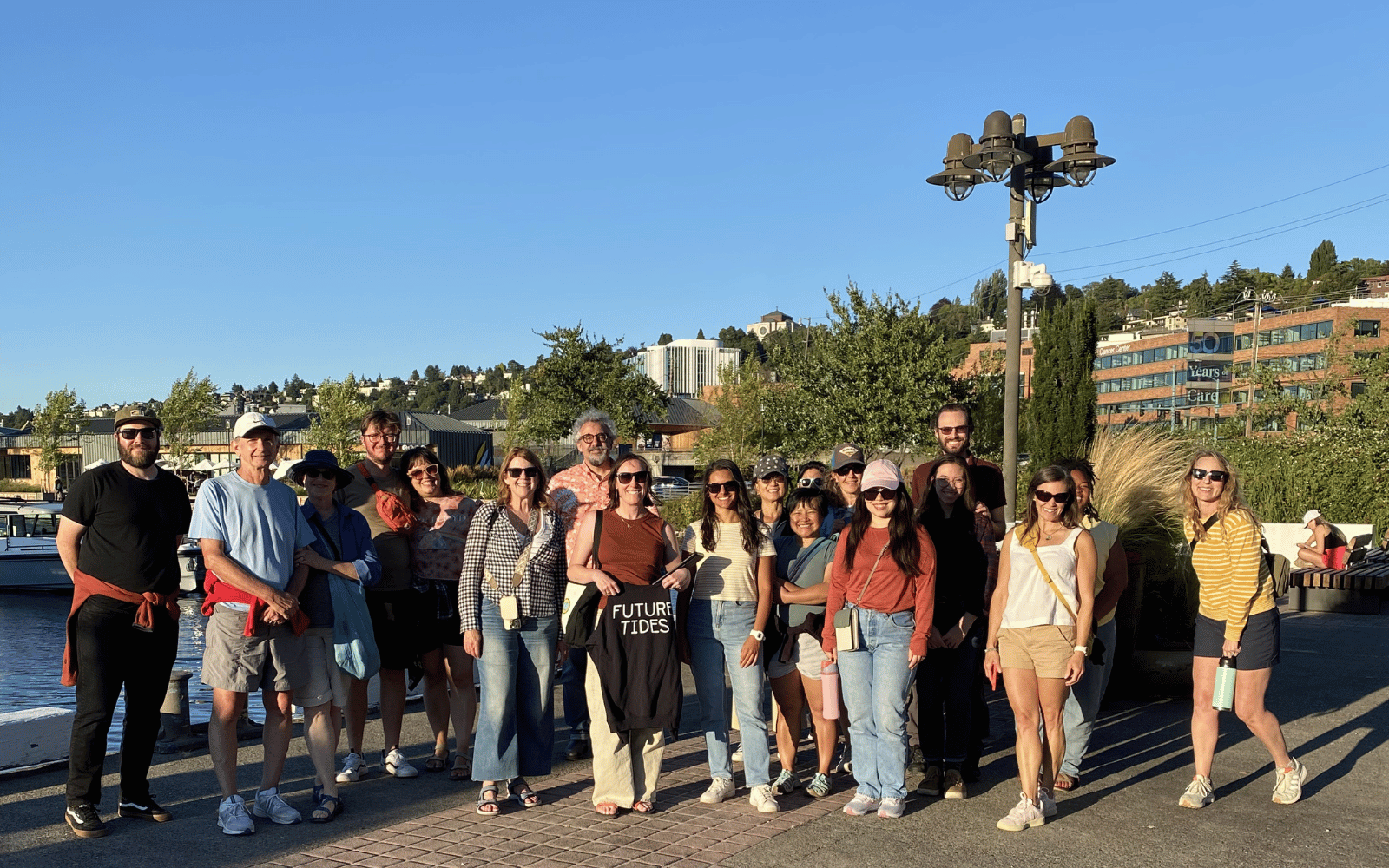
- Attendees who completed the post-tour survey expressed high levels of satisfaction with 75% giving the tour a “5 out of 5” and no low scores.
- 70% of respondents are “very likely” and 30% are “likely” to recommend the tour
- Attendees said key takeaways were the local history, the narrative about the changing area, learning new ways to interact with the community, and they enjoyed that the information included both commerce and recreation.
While I no longer consider Future Tides’ tours a “pilot,” the program remains lean and will keep iterating. I plan to continue investing in marketing to bring new people into the Future Tides community through the tours.
In 2026, the South Lake Union walking tours will resume with a goal to double attendance again. The next pilot will be a paid or members-only tour at a new location.
Marketing
In some ways, promoting tours is easier than promoting a news organization. The offer is clear: Come to this experience on this date at this time, for free or a price.
Then, once someone is on the tour, it's a good opportunity to promote the other things your organization does and the value you provide.
Many event marketing strategies will apply to tours, but one benefit of regular tours is time for ongoing promotion and more date options for interested parties.
Do
Budget and plan for paid marketing. In an industry long accustomed to collecting marketing dollars, be ready to spend some but it doesn't have to be a lot.
Create a one-pager of marketing copy. Make it short, snappy, and direct. Having it readily accessible will save time (copy/paste) and deliver a consistent message.
Announce tours far enough in advance to promote them, and make a marketing push closer to the date to capture last minute sign ups.
Track how you promote and use UTM codes. Consider starting with only a few marketing channels to more easily understand what works.
Don't
Skip marketing to a broader audience, unless tours are exclusively for members or subscribers, to bring new people to the top of the audience funnel.
Spend time marketing a tour that's sold out, almost sold out or already at your attendance goal. Save the effort and resources for next time.
Look for new marketing channels if the current ones are working. The exception is if you're not getting attendees from your target tour audience.
Let's launch
To be sure you're ready to launch your tour pilot, let's review the attendee experience.
Before the tour
How will a potential attendee hear about the tour?
How will they sign up or register for the tour?
What communications (email, text, etc.) will they receive? At what cadence?
Do the communications provide clear instructions about the meeting and ending location, transit and parking options?
If an attendee has an issue or question beforehand, how can they contact you?
When they arrive at the tour location, how will they identify the guide and check-in?
During the tour
How will they ask questions or participate?
What will they learn? What is the experience like?
Do they need a warning about any obstacles along the route?
Will there be a spot to get water or use the restroom they should know about?
Can they hear the guide?
Did they learn not just about the tour topic, but about your organization and mission?
Will the guide make an "ask" of some kind? For tips, donations, membership, etc.
After the tour
Will they leave with something physical like a handout, sticker or gift bag?
Is there a social hour nearby or will the guide be available for questions?
What communications will they receive? Will it include a survey?
How will they next interact with your organization?