Planning Your First Tour
Find the right itinerary
With a deeper understanding of how journalists can leverage tours and the basics of operating a tour, it’s time to plan the first route. Have fun, tap into your passions, and embrace the spirit of experimentation.
Sample itineraries
Here are five itineraries from publications featured in the case studies.
Secrets of Grand Central Tour
Untapped New York’s flagship walking tour takes 15-person groups through the iconic and active transit hub: “This tour focuses on how the terminal was designed, how it functions, and the historical forces that shaped it.”
Here’s how they describe the highlights:
Hidden-in-Plain-Sight: A concealed tennis court, a lost movie theater, and overlooked spaces even daily commuters miss.
Iconic Architecture, Decoded: The celestial ceiling, underground systems, and design choices that transformed rail travel.
Power Players & Big Fortunes: The Vanderbilt empire—and the legal battle led by Jacqueline Kennedy Onassis that saved the terminal.
Strange & Surprising Stories: A rocket in the Main Concourse? A secret party on an abandoned track?
Guests are directed to meet the guide inside the Terminal, 10 minutes before the tour starts. The 90-minute itinerary includes eight stops within Grand Central and concludes near the starting point. Untapped New York uses wireless earpieces on most tours to ensure guests can hear the guide.
Other things to note:
- The indoor venue allows tours to happen rain or shine
- It’s an easily accessible transit center with restrooms and restaurants
- The tour is not strenuous and is ADA accessible
Downtown Newberg Walking Tour
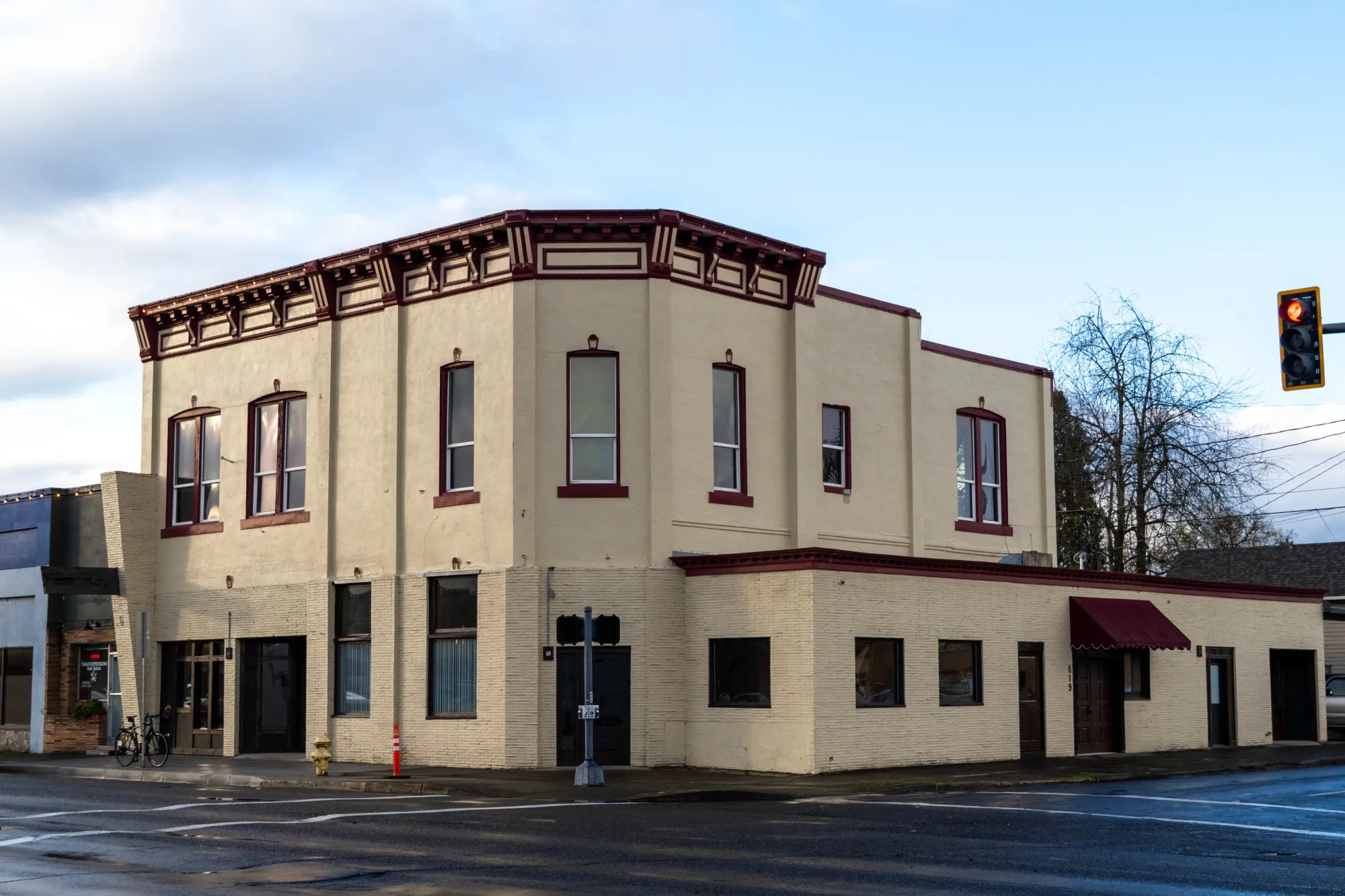
Newberg, population 25,000, is one of the oldest communities in Oregon’s Willamette Valley, known for hazelnuts, berries and Pinot Noir grapes. Independent media outlet Newsberg organized a walking tour of the downtown.
The 10-stop route started in a public park and ended near a local restaurant for a “Post-Tour Pint.” Designed to take less than an hour, stops included a cultural center, historic buildings and city hall.

Other things to note:
- Attendees received a handout with a map of the route, information about Newsberg and the town's origins, with space to take notes.
- The route crossed the city’s main thoroughfares which are loud.
- After the first walking tour in 2025, Newsberg paused to assess and evaluate before offering recurring tours.
Seattle Waterfront Walking Tour
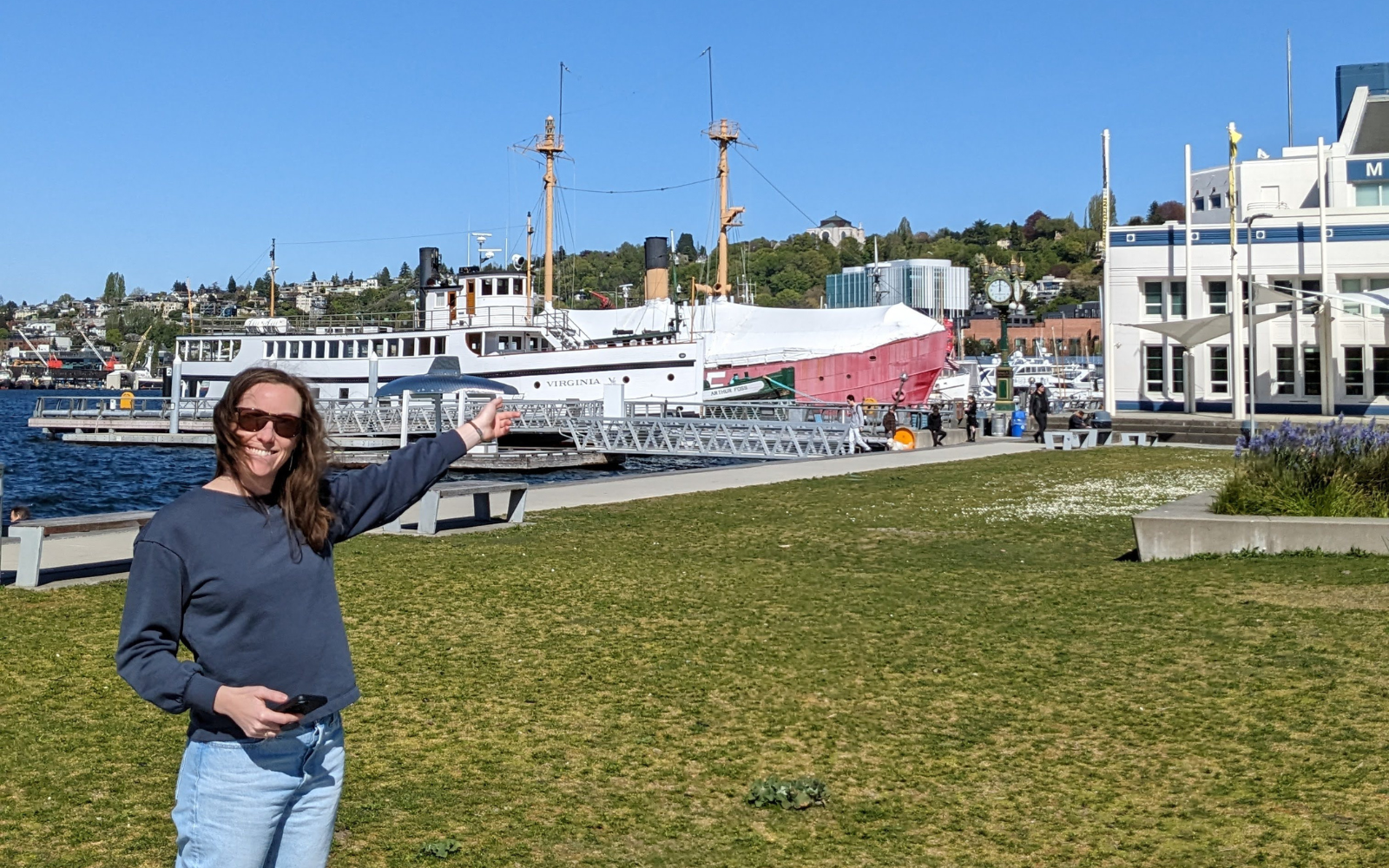
Future Tides’ walking tours start in Lake Union Park, at a historic clock marked on Google Maps, making it easy to find in the 12-acre park.
The tour focuses on “unveiling Seattle’s modern maritime community to locals and curious visitors who might otherwise pass it by.” Highlights include:
- How Lake Union is used today
- Recreational boating around Seattle
- Navigating seaplanes and SUPs
- Businesses and nonprofits based on the waterfront
- Adoption of new technology like electric propulsion
- Public and private development along the lake
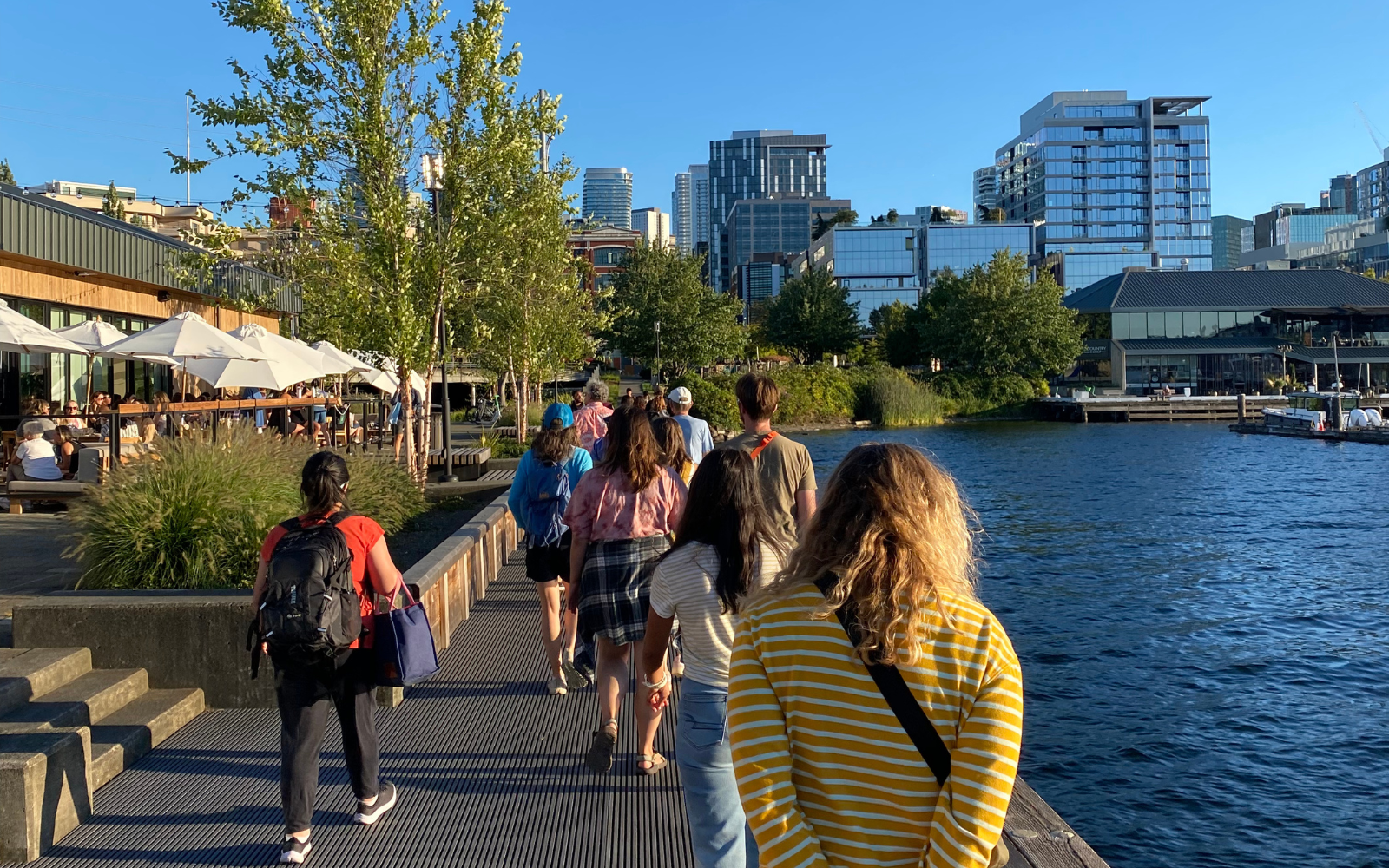
The tour route goes around Lake Union Park then along an urban trail to Lake Union Piers, a private waterfront development with public spaces, and back. The route is flat and covers 1.5 miles. The tour takes approximately 90-minutes covering 11 topics over eight stops.
Other things to note:
- The tour is free and under 50 people so it does not require a permit from Seattle Parks.
- Transit access is good but the area can be hard to reach due to gridlock.
- The park hosts different events and the lake is a runway for seaplanes, so it can be loud.
- Public restrooms are limited.
A Downtown Geographical Tour
“Where You At?” is a 1.1 mile one-way walking tour included in the first edition of David B. Williams’ Seattle Walks book. In addition to the self-guided versions included in his book, Williams leads tours along some of these routes (see case study).
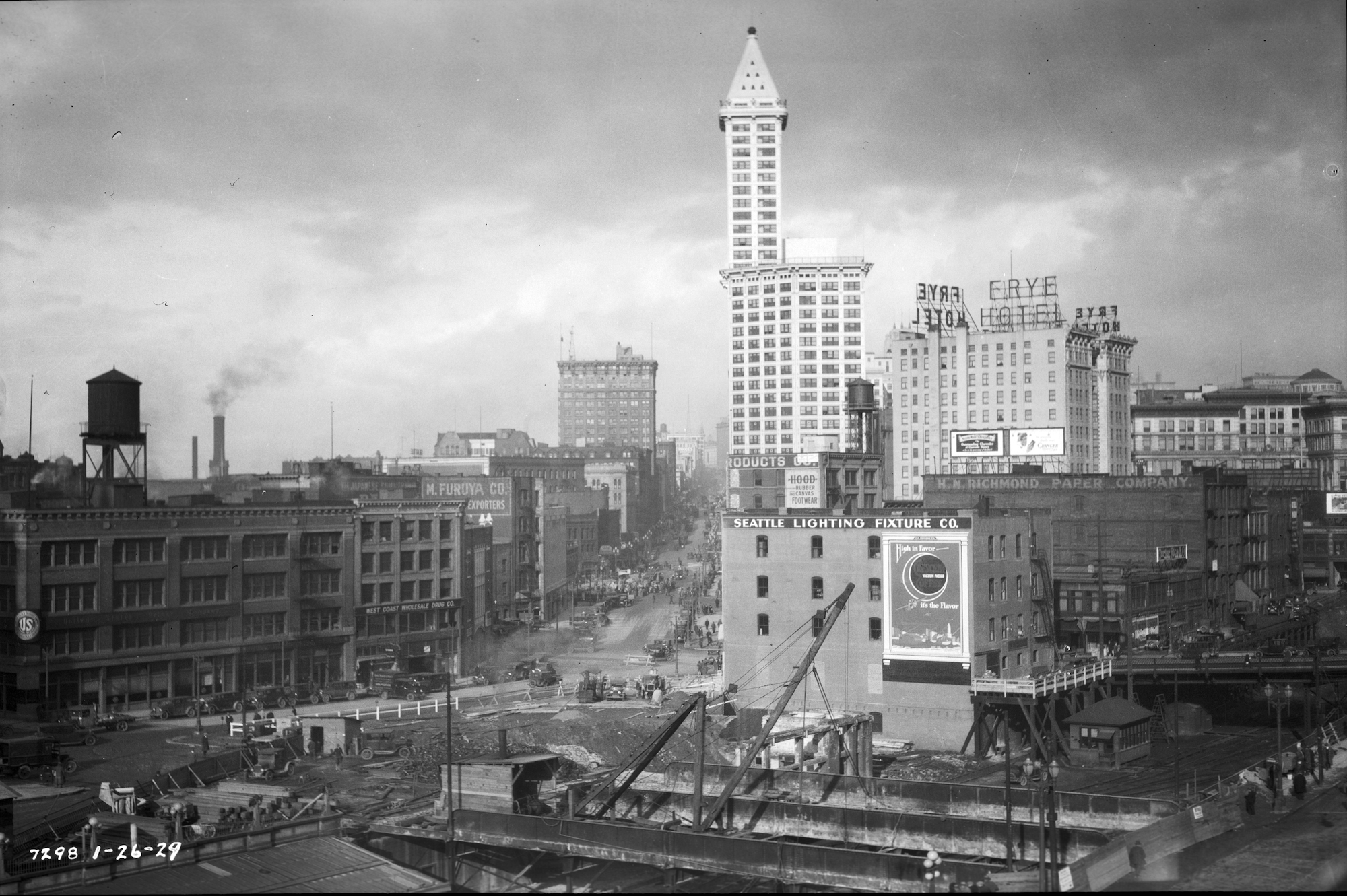
The walk starts and ends in two different parks with seven stops. Williams points out overlooked features underfoot like decorative manhole covers and patterned pavers. Above eye level, he calls out street clocks, lobby art and architecture.
Other things to note:
- The route includes going into office buildings, some of which are closed on weekends.
- In an urban environment, public restrooms may be less of an issue.
- Williams keeps downtown tour groups on the same block, waiting for everyone before crossing the street.
One Good Bus Tour
In partnership with City Institute, Outlier Media offered a three-hour bus tour exploring Detroit buildings and landmarks featured in their One Good editorial series. It took place in January and the $50 tickets included a year of membership in Outlier’s membership program.
The tour drove by or stopped at five locations:
- Clark Park — a 31-acre park that underwent a multi-million dollar renovation in 2023.
- Pope Francis Center — The new campus of a nonprofit providing assistance to people experiencing homelessness.
- United Sound Systems — A historic recording studio in the path of an interstate expansion project.
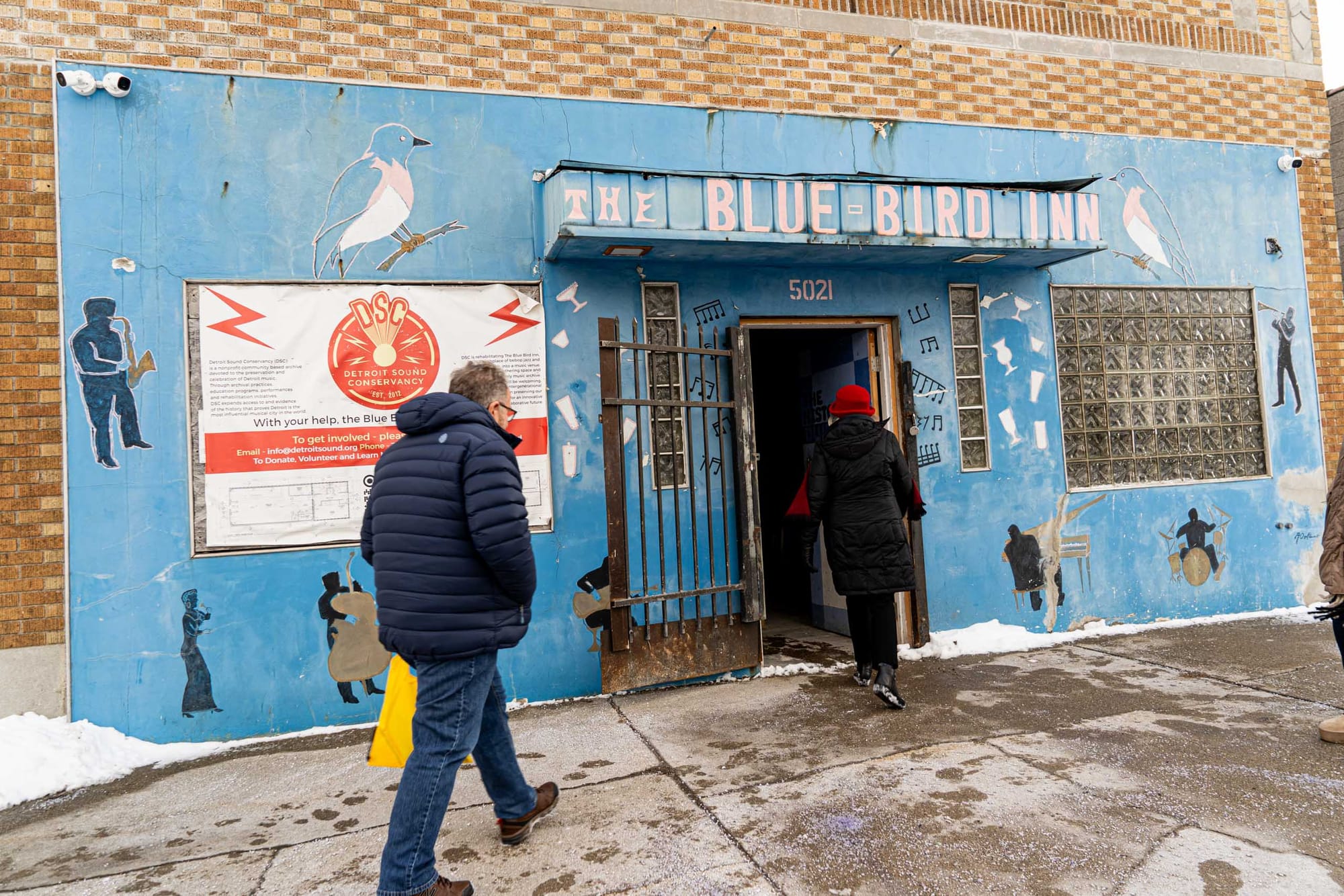
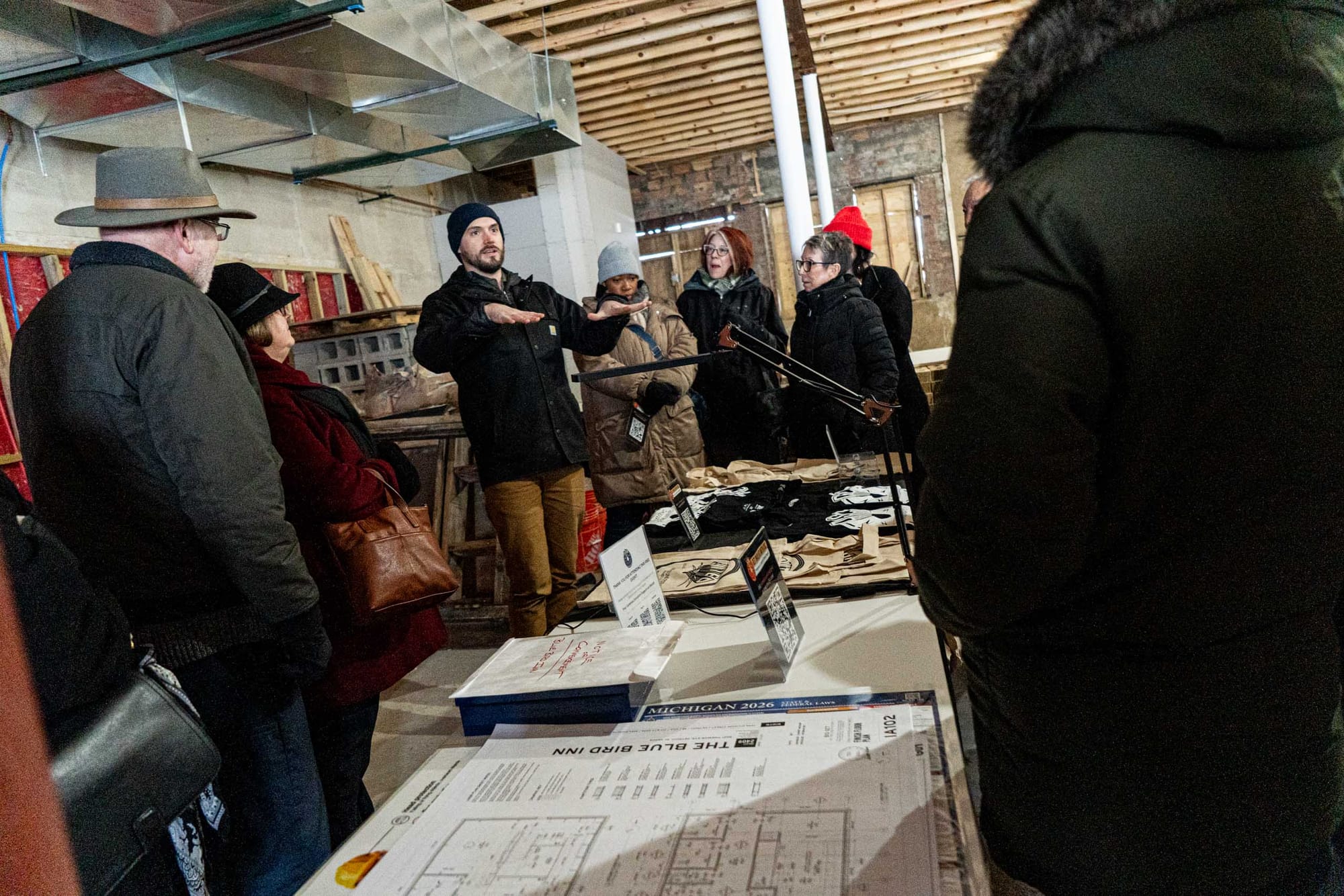
- Blue Bird Inn — A long neglected legendary jazz venue that a conservation group is working to preserve and renovate.
- Westin Book Cadillac — A recently renovated Neo-Renaissance style hotel built in 1924.
Other things to note:
- Due to the bus capacity, the tour was limited to 28 spots.
- It ended with an optional happy hour.
- City Institute Founder and President Jeanette Pierce led the tour with Outlier reporter Aaron Mondry contributing.
Inspiration for other itineraries
Food and drink
Consider food either as the focus of a tour or an added element. It’s ubiquitous and an opportunity to partner with local businesses or food influencers.
Examples:
- Greenwich Village Coffee Tour & Tasting
- The Houston Chronicle’s Asiantown food tour
- Savor Seattle’s Pike Place Market food tour
Explore development-in-progress
Communities are constantly changing, and that’s newsy. Public spaces may overlook new developments or a certain neighborhood may be an example of gentrification, past or present.
In Oakland, California, for example, there’s new housing and commercial spaces going up near the Oakland Estuary, which could be incorporated into a route along the nearby San Francisco Bay Trail.
A Seattle arts ensemble created a “hyperlocal theatrical walking tour” in a neighborhood of million-dollar homes to highlight income inequality in the city’s South End. The guide tied imaginary wealth to each step along a hilly two-mile loop, a metaphor for accumulating wealth.
Abandoned buildings
Untapped New York leads tours in the abandoned Ellis Island Hospital and abandoned subway stations. In Seattle, one of the most popular tours takes visitors to underground tunnels.
A theater or performance space
Theaters and other arts spaces literally can offer a “backstage” experience. Untapped New York, for example, takes guests to the Metropolitan Opera House.
Not all communities have a Met, but most have a performance arts venue. In Seattle, there’s a dozen venues that might fit the bill. While in nearby North Bend, Washington, population 8,000, there’s a historic theater built in 1941 that continues to be a community hub.
From volatile ticket sales to a rapidly shifting grant landscape, arts organizations around the U.S. are also navigating uncertainty, making them prime partners for a tour initiative.
Attractions (but in the offseason)
Locals might avoid the “tourist destinations” in their own backyard, but these sites are often intertwined with the community through both history and economics. Tap into a nearby attraction during the offseason using a different angle to connect local residents with a local landmark in a new light.
Activity: Customize an itinerary for your community
⏰ — Set a 15, 20 or 30 minute timer for a no limits brainstorm. Collect all the ideas on a piece of paper or online whiteboard like Miro or Canva.
⏰ — Spend another 30 minutes honing in on the top ideas, the ones with synergy and strategic alignment. Don't spend too much time on details, but be sure the top itineraries are practical and uniquely showcase your community.
Planning the MVP
It's helpful to keep all information related to the tour in one place:
This Workbook will document the "Minimal Viable Product" for your tour. This is the most basic version possible. There are only essential features.
The tour pilot tests your MVP. You can't move forward without feedback. Attendees must find the experience valuable.
The MVP helps you:
- Avoid perfection.
- Embrace constraints.
- Test assumptions.
- Not do extra work.
- Stay focused on what's working.
A pilot that includes multiple tours allows for rapid iteration. After every tour, reflect on the experience and collect attendee feedback to create a cycle of constant improvement. It's not about a big "revamp" but regularly making small adjustments.
Case study: Author David B. Williams
David B. Williams is a Seattle author who writes about geology, nature and history.
Williams leads “walks and talks” and his book Seattle Walks features 18 walking routes around the city. He’s also written field guides, an award-winning book about Seattle’s steep topography, and pens the weekly Street Smart Naturalist newsletter.
As an independent writer, he demonstrates the potential for individual journalists to leverage tours as part of their own brand. Williams develops and runs his own tours, but also leverages partnerships to fund and organize walks.
The backstory
After studying geology in college, Williams worked at an educational field institute and then as a national parks ranger. From these experiences, he found tours a “really wonderful way” to share information.
In 1998, he started thinking about tours again but this time for one particular subject: building stone.
He wrote a book about how stone is used as a building material and put together a related tour in downtown Seattle which he took friends on. As a writer, he found it really satisfying, especially being able to get feedback.
“They wanted to learn. They wanted to be outside. And not that I was seeking praise, but it was really nice to...see people so energized and excited about a subject that I was excited about,” Williams recalled.
Writing walks
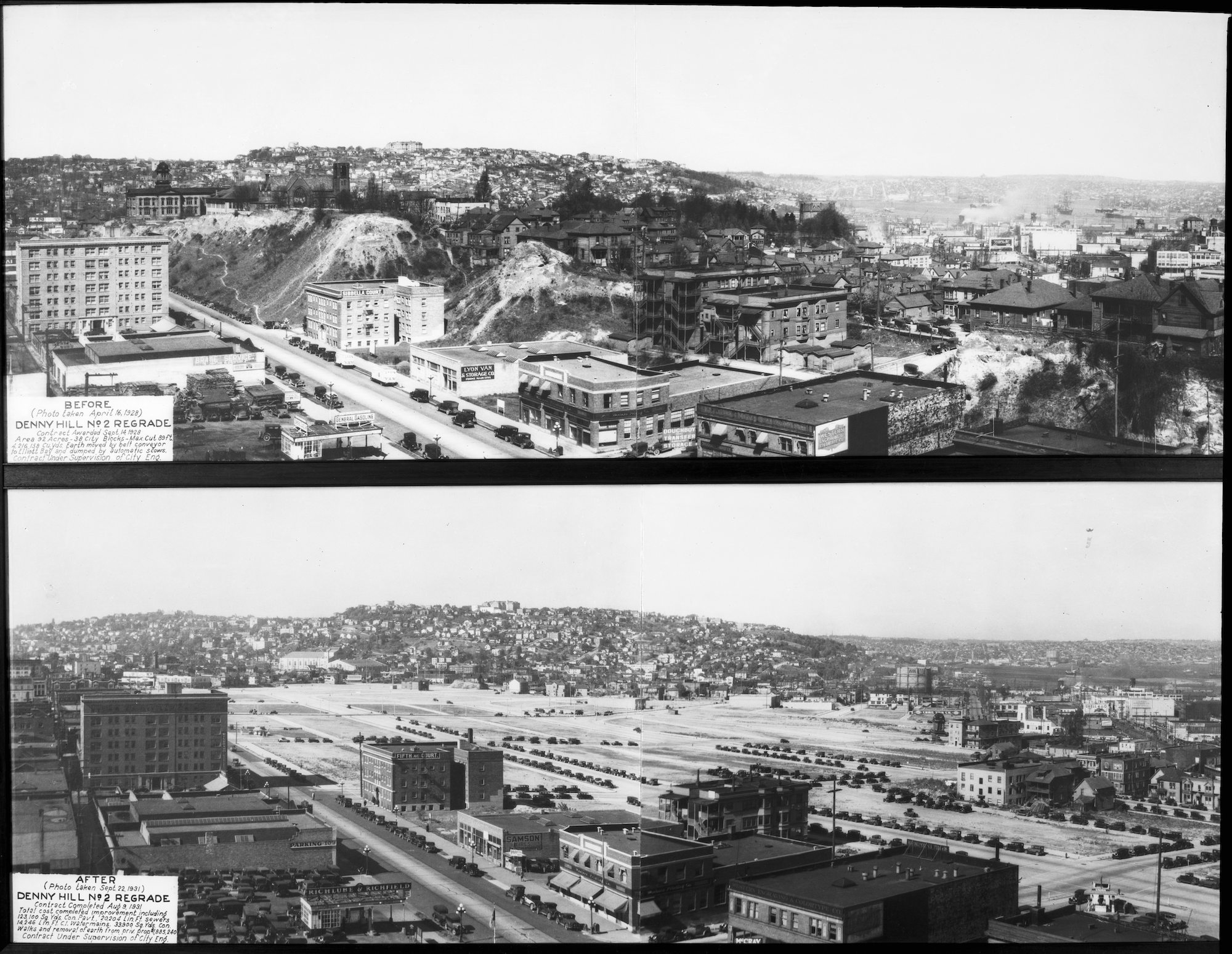
One of Williams’ most well-known books is Too High & Too Steep: Reshaping Seattle’s Topography. However, he originally planned to write it as a walk, with each section having a corresponding walk or bike ride.
“I wanted to be able to engage people in the subject,” Williams said.
He wanted them to go out and see what he had seen, to spark new questions, and consider things they’d never thought about.
“It was really a way I hoped to connect people to place.”
Next, after regularly gathering friends for more tours, he wrote Seattle Walks, fulfilling his vision for a book to help readers discover the past, present and nature of the city. That led to additional tours and Williams now does six walks based on the book.
Williams estimates he’s now led more than 100 walks over the years.
The benefits of tours
Williams does a mix of paid and free tours, largely depending on the organization he’s working with. When there is a charge, it's typically $15-50 per person. He also periodically gets requests for private tours and charges for those.
Partnering with other organizations, such as the Northwest Science Writers Association or Pacific Northwest Historians Guild, provides operational support. They may help handle registration, collection of any fees, and in some cases, insurance.
Some of his partners, like the Seattle Architecture Foundation, also offer tours but that’s not always the case. Being with an organization also may bring a second set of eyes, which Williams finds helpful for staying aware as the group moves through the street.
Williams said what is key is the combination of subject matter expertise and tour experience he brings.
A typical tour
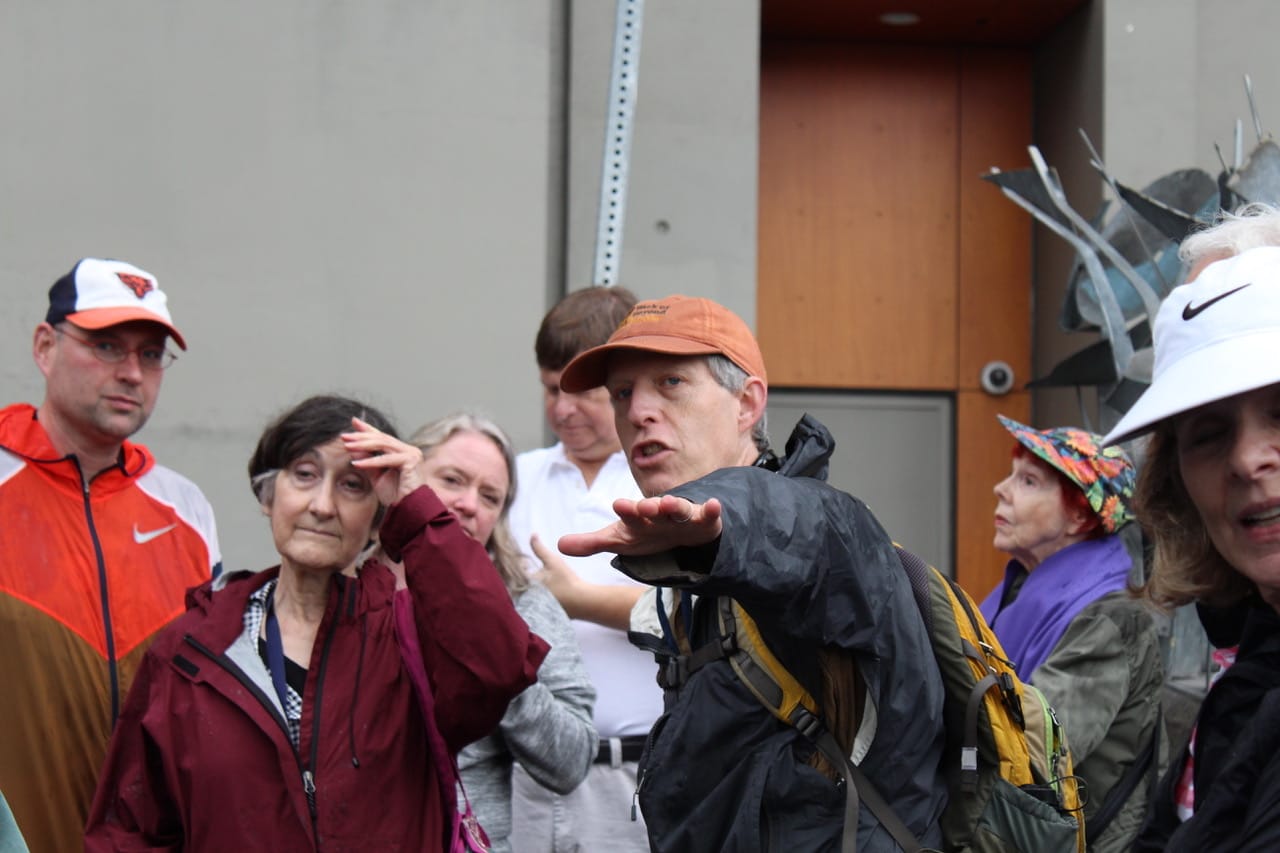
Williams limits his walks to 1-1.5 miles, 60-90 minutes and tops out at about 15 people. He tries to keep the route relatively flat, which can be tricky given Seattle’s hills. The longest talk is at the start, laying the groundwork and telling attendees what they’re getting into.
While Williams is very used to projecting his voice, he’s started using a small microphone and speaker, especially in noisier environments or with larger groups, to avoid yelling the entire time.
He walks a handful of minutes between each stop, and does not go too far without people seeing something. In between spots, people have a chance to interact, which he said is a really important part of the experience.
Another important part is the tangible aspect, being out “in the field.” During the COVID-19 pandemic when he shifted his talks online, Williams created short videos to take people from a quarry site back to a downtown building, or view the same location over a historical period.
“I'd actually sort of, if you will, fly the people through the streets to try and give them more of a visceral feel,” he said.
Williams’ tour attendees are “almost always locals” and are typically an older demographic. Like many in the media industry, he’s always excited to see a younger attendee and would like to bring in younger participants.
While walks are Williams’ signature tour format, he’s also done a few bus and boat tours. He said the bus tours are more similar to a walk, with attendees locked in and that’s the reason they’re on board.
Tips for a first-time tour guide:
- Time your stops well: Don’t go too far between stops, and you don’t want any stop to be that long. Use the first stop to lay the ground work, that can be a little bit longer.
- Broadcast your voice, or use some type of amplification to help broadcast it.
- Consider detail: How many photos do you need?
- Always be open for questions, and willing to say “I don’t know.” You can follow up on the question later, too.
- Practice with a group, maybe your friends, to get a feel for it.
- Scout your route, and be ready with backup plans if it rains or you need to detour. Be aware of the schedule of what else is going on where your tour is located.
- Safety is critical. Stay aware of where your group is and follow the street laws.
- And don’t forget about bathrooms, depending on the length and environment of the tour.
“I think part of the reason that people like my walks, generally, is I'm just, I'm enthusiastic about my subjects,” Williams said.
“If you don't have that enthusiasm, it's going to show and you're not going to…create a good walk.”
If your group is slow to engage or ask questions, Williams said to “be persistent in asking, at some point…you’re going to break the ice.”
Be available for people to come up with questions as you walk between stops. Williams said this is an advantage of the walking format and he hopes people feel comfortable coming up to him.
Williams never mentions tips, but knows that’s a common refrain on other tours. Even without saying anything, he does still get a handful of tips. He does have books for sale, if people want to purchase one after the tour, which is especially easy now with mobile payment solutions.
Some attendees know about the book beforehand, others learn about Williams’ other work as a result of the tour.
“You don't want it too complex. You want there to be some fun in it. I think it helps if it's a walk or it's a topic that people can use elsewhere,” Williams said. “I like to think that people can take what I've done and sort of think about it in other places they go.”
Self-guided vs. Guided tours
As the author of Seattle Walks, Williams has both led walks from the book, and heard from readers who guided themselves. He thinks both approaches can work.
“With the self-guided, keeping it fairly tight. And again, testing, testing,” Williams said.
Each walk was tested multiple times. The directions and text must be accurate and clear. Even with maps on our phones, he sees a map specific to the self-guided tour as critical.
With the book, Williams is also packaging multiple walks instead of trying to sell or promote one self-guided walk. Readers (and walkers) responded. A second edition was released in 2025 and Williams said over 18,000 copies have been sold.
“People like walking. I mean, it's such an engaging way to connect with place,” Williams said. “The other aspect that I like about walks…there’s the serendipity that you get with being out in the field again.”